Poincaré conjecture
A theorem stating that the three-dimensional sphere is the only closed, simply connected three-dimensional shape, first posed by Poincaré in 1904 and proved by Grigori Perelman in 2006.
- Year
- 1904
- People involved
- Henri Poincaré
- Section
- Mathematics
History
The Poincaré conjecture concerns the possible shapes of a three-dimensional space. Put simply, it asks whether a finite space with no edges, in which every closed loop can be shrunk to a single point, must necessarily be a three-dimensional sphere, the boundary of a ball in four dimensions. It mattered because for more than a century it stood at the centre of topology, the branch of mathematics that studies the properties of shapes that survive stretching and bending without tearing, and because solving it closed one of the field's central questions.
Before Poincaré, in the nineteenth century, Bernhard Riemann and Enrico Betti had begun studying topological invariants, properties of shapes that do not change under deformation. Betti introduced numbers attached to each shape, and Riemann showed that a closed, connected two-dimensional surface is completely determined by them. In his 1895 paper Analysis Situs, Poincaré showed that this result did not carry over to higher dimensions. He introduced the fundamental group, a tool that records which loops can be contracted to a point, and built three-dimensional spaces with the same Betti numbers but different fundamental groups. He asked whether the fundamental group alone was enough to tell manifolds apart, though he did not attempt an answer at the time.
In later supplements Poincaré refined these ideas and also made mistakes, some of which he corrected himself. In his fifth supplement, published in 1904, he gave a counterexample, the Poincaré homology sphere, a three-dimensional space with the same Betti numbers as the sphere whose fundamental group has 120 elements. This showed that homology alone could not characterise a shape. In the same work he restated the question using the fundamental group. His wording was ambiguous, and it is unclear whether he was asserting a conjecture or simply posing an open question. The version now called the Poincaré conjecture is a later reading of his remarks, written in the modern language of topology.
For decades mathematicians tried and failed to prove it. In the 1930s J. H. C. Whitehead announced a proof and then withdrew it after finding an error, though in the process he discovered a non-compact space that is simply connected yet not equivalent to ordinary three-dimensional space, now called the Whitehead manifold. In 1958 R. H. Bing proved a weaker version. Stephen Smale proved the generalised statement for high dimensions in 1961, and Michael Freedman settled the four-dimensional case in 1982. The three-dimensional case, Poincaré's original, remained stubbornly open. William Thurston's geometrization conjecture later placed it within a broader framework describing all three-dimensional manifolds.
In 1982 Richard S. Hamilton had introduced Ricci flow, a process that deforms a shape in a way that resembles heat spreading through a solid, smoothing out uneven curvature over time. Hamilton used it to prove special cases, but he met singularities, points where the shape stops being smooth, such as pinches or cusps, and could not control them. His programme also required surgery, cutting the shape at these points and capping the openings so the flow could continue.
Between late 2002 and 2003 Grigori Perelman posted three papers on the arXiv repository that completed Hamilton's programme. He showed that the singularities that arise are of very simple types, essentially spheres or shrinking cylinders. To do this he used a quantity called reduced volume, linked to an eigenvalue, which can be thought of as a note the shape sounds, and he proved that this quantity increases during the flow, helping rule out troublesome singularities such as the cigar soliton. He also used minimal surfaces, which behave like soap films, whose area shrinks during the flow, to show that the surgery procedure does not have to be repeated forever. Christina Sormani compared the task to fighting a hydra, since every cut seemed to grow new problems.
Between May and July 2006 several groups published detailed expositions. Bruce Kleiner and John Lott, and separately John Morgan and Gang Tian, confirmed that the gaps in Perelman's papers were minor and could be filled with his own methods. Cao Huaidong and Zhu Xiping also published a full account, but their paper caused controversy over credit, because some passages closely resembled earlier drafts and many mathematicians felt the achievement belonged to Perelman. The journal Science named the proof its Breakthrough of the Year for 2006. Perelman was awarded the Fields Medal in August 2006, but he refused it and did not attend the congress in Madrid.
In 2010 the Clay Mathematics Institute offered him its Millennium Prize of one million dollars, which he also declined, saying Hamilton's contribution was equal to his own. The Poincaré conjecture remains the only Millennium Prize Problem with a verified solution.
The proof's impact is mainly conceptual. It gave a complete picture of how three-dimensional manifolds can look, and Ricci flow with surgery has become a standard tool in modern geometry. Three-dimensional topology also bears on physics, for instance in questions about the shape of space and in some field theories, though its exact role depends on the context. The result also showed that a century-old problem could yield to ideas combining partial differential equations and geometry.
Timeline
- 1895Poincaré publishes Analysis Situs and introduces the fundamental group, showing Betti numbers are not enough in three dimensions.
- 1904In his fifth supplement Poincaré poses the question that became the conjecture, after presenting the homology sphere as a counterexample.
- 1958R. H. Bing proves a weak version of the statement for three-dimensional spaces.
- 1982Hamilton introduces Ricci flow as a tool against the conjecture, and Freedman settles the four-dimensional case.
- 2002Perelman posts the first of three papers online, completing Hamilton's programme.
- 2006Several groups confirm the proof, Science names it Breakthrough of the Year, and Perelman declines the Fields Medal.
- 2010The Clay Mathematics Institute offers Perelman the one-million-dollar Millennium Prize, which he declines.
Trivia and anecdotes
A prize declined twice
Perelman turned down both the 2006 Fields Medal and the one-million-dollar Clay Institute prize in 2010. He said Hamilton's contribution was equal to his own.
Poincaré's own counterexample
Poincaré made an error in a 1900 theorem and later corrected it. His counterexample, the homology sphere with a fundamental group of 120 elements, showed that Betti numbers do not characterise a shape.
A mathematical hydra
Christina Sormani described Perelman's proof as a battle with a hydra, since each cut seemed to create new problems that had to be controlled.
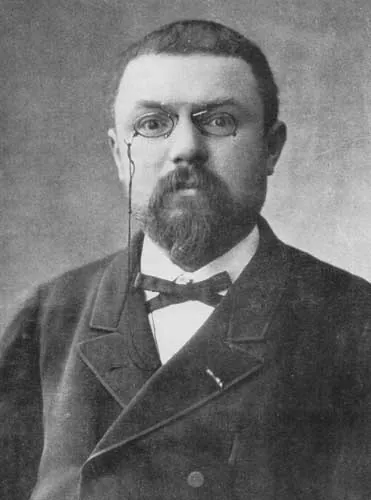 Henri Poincaré1854–1912 · Mathematics