Mathematics
From Euclid's numbers to the theory of computation: the people who shaped the language of science. 688 people · 168 milestones · Page 1
Discoveries and inventions
- 35000 BCLebombo boneA roughly eight-centimetre bone tool made from a baboon's fibula, with notches carved into it that are read as an early numerical record.
- 3000 BCPositional notationA number system in which the value of each digit depends on its position within the number, set by a base.
- 3000 BCEgyptian numeralAncient Egyptian number system: a base-ten, additive notation that used a separate sign for each power of ten.
- 2000 BCQuadratic equationAn equation of the form ax² + bx + c = 0 whose solutions can be found with a general formula built from its coefficients a, b and c.
- 2000 BCBabylonian numeralsAncient Mesopotamian number system, base 60, with place value.
- 1800 BCPlimpton 322A Babylonian clay tablet, written around 1800 BC, containing a table of numbers that lists Pythagorean triples, whole-number sets that satisfy the Pythagorean theorem.
- 1800 BCYBC 7289A Babylonian clay tablet giving a sexagesimal approximation of the square root of 2, accurate to about six decimal digits.
- 1650 BCPapyrus Berlin 6619An Egyptian papyrus from around 1650 BC containing a two-square problem whose solution may suggest knowledge of the Pythagorean theorem.
- 1550 BCRhind Mathematical PapyrusAn ancient Egyptian mathematical papyrus copied around 1550 BC by the scribe Ahmes, with 87 problems on arithmetic, fractions, equations, geometry and pyramids.
- 600 BCThales' theoremA theorem stating that an angle inscribed in a semicircle, one whose sides span a diameter of a circle, is always a right angle.
- 350 BCAristotelian logicA system of formal reasoning created by Aristotle that tests whether arguments are valid, using propositions built from two terms, a subject and a predicate.
- 300 BCEuclidean algorithmA step-by-step method for finding the greatest common divisor of two whole numbers, one of the oldest algorithms still in use.
- 300 BCPrime numberA natural number greater than 1 that has no divisors other than 1 and itself.
- 300 BCEuclid's theoremA theorem stating that there are infinitely many prime numbers, so the list of primes never ends.
- 150 BCTrigonometryA branch of mathematics that studies the relationships between the angles and side lengths of triangles, especially right triangles, using ratios such as sine, cosine and tangent.
- 500Hindu-Arabic numeral systemA positional, base-ten numeral system that uses ten digits, from 0 to 9, where each digit's value depends on its place within the number.
- 600Chakravala methodA cyclic algorithm for finding whole-number solutions to indeterminate quadratic equations, such as Pell's equation.
- 628ZeroA numerical symbol for the absence of quantity that marks empty places in positional notation, making it possible to write any number unambiguously.
- 820AlgorismA technique for basic arithmetic that writes numbers in place-value form and applies a set of memorized rules to their digits.
- 900Frequency analysisA codebreaking technique that deciphers a coded text by counting how often its letters appear and comparing those counts with the usual letter patterns of the language.
- 1247Tusi coupleA mathematical device in which a small circle rolls inside a larger one so that a point on the small circle moves back and forth in a straight line.
- 1300Cistercian numeralsA notation system devised by the Cistercian order in the early thirteenth century, writing any whole number from 1 to 9,999 as a single symbol built on a five-line stave.
- 1494Double-entry bookkeepingAn accounting method in which every transaction is recorded twice, as a debit and a credit of equal amount, so that the books always balance.
- 1545Vieta's formulasFormulas linking the coefficients of a polynomial to the sums and products of its roots, without having to compute the roots themselves.
- 1557Equals signThe mathematical symbol «=» that shows two expressions have the same value.
- 1593Viète's formulaA 1593 formula expressing π as an infinite product of nested square roots, the first exact formula for π in European mathematics.
- 1614LogarithmA mathematical function giving the exponent to which a fixed base must be raised to produce a given number.
- 1637Fermat's Last TheoremA statement that no positive whole numbers a, b, c satisfy a^n + b^n = c^n when n is greater than 2; Fermat conjectured it around 1637, and Andrew Wiles proved it in 1994-1995.
- 1637Discourse on the MethodRené Descartes's 1637 treatise setting out a method for guiding reason toward certain knowledge.
- 1637Descartes' rule of signsA theorem that counts the positive and negative roots of a polynomial by looking at the sign changes in its coefficients.
- 1653Pascal's triangleA triangular array of numbers, arranged in rows, that lists the binomial coefficients and is built by adding adjacent pairs.
- 1654ProbabilityA numerical measure, between 0 and 1, of how likely an event is to occur.
- 1668Mercator seriesAn infinite power series that lets you compute the natural logarithm of 1+x.
- 1670IntegralA mathematical operation that adds up a continuous stream of infinitesimally small pieces to compute areas, volumes and accumulated quantities; it is the inverse of differentiation.
- 1674Leibniz formula for πAn infinite series of alternating fractions (1 - 1/3 + 1/5 - 1/7 + ...) whose sum is π/4, giving a way to express π.
- 1675CalculusThe branch of mathematics that studies continuous change and quantities that accumulate or vary smoothly, split into differential and integral calculus.
- 1676Newton polynomialA method for building, step by step, the polynomial that passes through a set of known points, using divided differences.
- 1683Euler's numberA mathematical constant, about 2.71828, that is the base of natural logarithms and the exponential function.
- 1710Bernoulli numberA sequence of rational numbers that arises when summing powers of natural numbers and plays a major role in number theory and analysis.
- 1715Taylor seriesA way to write a function as an infinite sum of powers, built from its derivatives at a single point.
- 1729Gamma functionA function that extends the factorial to real and complex numbers, matching n! at positive integers.
- 1736Graph theoryA branch of mathematics that studies networks of points joined by lines, used to model routes, connections and relationships.
- 1736Eulerian pathA route that passes through every edge of a network exactly once; it is one of the founding concepts of graph theory.
- 1748Euler's identityA mathematical equality, e^{iπ} + 1 = 0, that links five fundamental constants (0, 1, π, e and i) through the basic operations of addition, multiplication and exponentiation.
- 1748Euler's formulaAn identity linking the complex exponential to sine and cosine: e raised to ix equals cos x plus i sin x.
- 1748Euler's four-square identityAn algebraic identity stating that the product of two sums of four squares is again a sum of four squares.
- 1752Cauchy–Riemann equationsTwo partial differential equations that tell whether a complex-valued function is complex-differentiable.
- 1755Euler–Lagrange equationEquations giving the conditions under which a function or path makes a global quantity, such as an action integral, stationary.
- 1763Bayes' theoremA formula in probability theory that reverses a conditional probability, letting you work out the chance of a cause from an observed effect.
- 1763Euler's totient functionEuler's totient function counts how many positive integers up to n share no common factor greater than 1 with n.
- 1763Bayesian probabilityA way of treating probability as a degree of belief that is updated as new evidence arrives, using Bayes' theorem.
- 1768Euler methodA step-by-step numerical procedure that approximates the solution of a differential equation by following the slope of the tangent line at each point.
- 1799Descriptive geometryA set of graphic methods for drawing three-dimensional objects on a flat surface, so that spatial problems can be solved in two dimensions.
- 1800Shoelace formulaAn algorithm that computes the area of a polygon from the coordinates of its vertices, using a cross-multiplication and subtraction procedure.
- 1805Regression analysisA statistical method for describing and estimating how one variable depends on one or more others, by fitting the line or surface that best matches the data.
- 1805Least squares methodA mathematical method that finds the curve or function that best fits a set of data by minimizing the sum of the squared differences between observed and predicted values.
- 1805Ordinary least squaresA statistical method that fits a line, plane or hyperplane to data by minimizing the sum of squared vertical distances between the points and the model.
- 1805Linear regressionA statistical method that models the relationship between a response variable and one or more explanatory variables as a linear combination, used to predict or quantify that relationship.
- 1807Fourier seriesA Fourier series is an infinite sum of sines and cosines that can reproduce a periodic function.
- 1809Gaussian integralThe integral of the Gaussian function e^(-x²) over the whole real line, whose value is the square root of pi.
- 1820(ε, δ)-definition of limitA precise definition of what it means for a function to approach a value L as its input nears a point, using two tolerances called epsilon and delta.
- 1821Cauchy–Schwarz inequalityAn inequality that bounds the inner product of two vectors by the product of their lengths, a basic tool in linear algebra, analysis and probability.
- 1822Fourier transformA mathematical transform that breaks a signal or function into the frequencies it contains, moving from the time (or space) domain to the frequency domain.
- 1822Heat equationA partial differential equation describing how heat, or temperature, spreads through a region over time.
- 1824Bessel functionA family of mathematical functions that solve a differential equation tied to problems with circular or cylindrical symmetry, such as waves, heat flow and vibrations.
- 1827Barycentric coordinate systemA coordinate system that locates a point using weights placed at the vertices of a simplex such as a triangle or tetrahedron, so that the point is the centre of mass of those weights.
- 1829Non-Euclidean geometryA geometry that modifies Euclid's fifth postulate, so that parallel lines behave differently from the way they do on the flat plane of school geometry.
- 1829Hyperbolic geometryA consistent geometry that replaces Euclid's fifth postulate with one stating that through a point outside a line pass at least two lines that never meet it; in it, triangles add up to less than 180 degrees.
- 1830GroupAn algebraic structure made of a set and an operation combining its elements, satisfying associativity, an identity element and inverses.
- 1843QuaternionA four-component extension of the real numbers, devised by Hamilton in 1843, used to describe rotations in three-dimensional space.
- 1843OctonionAn eight-component number system extending the quaternions, whose multiplication is neither commutative nor associative.
- 1846Jacobi eigenvalue algorithmAn iterative method that finds the eigenvalues and eigenvectors of a real symmetric matrix by applying rotations that cancel its off-diagonal entries.
- 1847Boolean algebraAn algebraic system that works with true and false (1 and 0) through the operations and, or and not, the foundation of digital logic and computers.
- 1854Chebyshev polynomialA family of polynomials tied to the cosine and sine functions, used to approximate functions and to choose well-placed interpolation points.
- 1861Riemann curvature tensorA tensor that describes the curvature of a space of any number of dimensions, measuring how a vector fails to return unchanged after being carried around a closed loop.
- 1867Chebyshev's inequalityAn inequality that bounds how likely a random variable is to stray from its mean by a given distance, measured in standard deviations.
- 1870Lie groupA mathematical structure that is both a group and a smooth manifold: a continuous space in which elements can be combined and inverted in a smooth way, used to describe continuous symmetries.
- 1873Lie algebraAn algebraic structure made of a vector space and an operation called the Lie bracket, which describes the infinitesimal transformations of Lie groups.
- 1874Set theoryThe branch of mathematical logic that studies collections of objects, called sets, and their properties and relations, treating the sets themselves as objects.
- 1877Continuum hypothesisA statement in set theory asserting that no infinite size lies strictly between that of the natural numbers and that of the real numbers.
- 1877Korteweg–De Vries equationA partial differential equation that describes long waves in dispersive media, such as solitary waves in shallow channels, and serves as the basic model of integrable nonlinear systems.
- 1883Transfinite numberInfinite numbers, introduced by Georg Cantor, that extend counting and ordering beyond the natural numbers to measure infinite sets.
- 1888Vector spaceAn abstract mathematical structure: a set of elements called vectors that can be added together and multiplied by numbers called scalars, following eight basic rules.
- 1890Padé approximantA way of approximating a function by the ratio of two polynomials so that the approximation matches the function near a given point.
- 1892Lyapunov stabilityA property of an equilibrium point in a dynamical system: solutions that start near it stay near it forever.
- 1893Poincaré dualityA result in topology relating the homology and cohomology groups of a closed oriented manifold, where holes of dimension k pair with holes of dimension n minus k.
- 1894Geometry of numbersA branch of number theory that uses geometry, especially lattices of points in space, to study algebraic numbers.
- 1899Simpson's paradoxA statistical effect in which a trend seen in several groups of data disappears or reverses when the groups are combined.
- 1900Ricci curvatureA tensor that summarizes how a curved space bends, by measuring on average how nearby geodesics spread apart or come together.
- 1901Lebesgue measureA standard way of assigning length, area or volume to sets of points in a line, plane or space, including many irregular sets.
- 1901Russell's paradoxA contradiction in naive set theory: the collection of all sets that do not contain themselves cannot consistently exist.
- 1904Poincaré conjectureA theorem stating that the three-dimensional sphere is the only closed, simply connected three-dimensional shape, first posed by Poincaré in 1904 and proved by Grigori Perelman in 2006.
- 1904Axiom of choiceA principle of set theory stating that, given any collection of nonempty sets, one can form a set containing exactly one element from each of them.
- 1904Koch snowflakeA closed fractal curve, built by repeating a simple rule on an equilateral triangle, that encloses a finite area but has an infinite perimeter.
- 1905Vitali setA set of real numbers that has no well-defined length (Lebesgue measure), the classic example of a non-measurable set.
- 1908Student's t-testA statistical test that compares averages to decide whether an observed difference is likely real or due to chance, especially with small samples.
- 1914Fokker–Planck equationA partial differential equation that describes how the probability of finding a particle at each position or velocity changes over time when it is subject to drag and random kicks.
- 1914Law of the iterated logarithmA theorem giving the precise size of the largest fluctuations of a random walk as it runs on indefinitely.
- 1915Sierpiński triangleA fractal built by repeatedly removing triangles from an equilateral triangle, producing an infinitely self-similar figure.
- 1915Löwenheim–Skolem theoremA result in mathematical logic stating that a consistent countable first-order theory with an infinite model also has models of many different sizes, so such theories cannot fix the size of their models.
- 1915Galerkin methodA family of numerical methods that turn a continuous problem, such as a differential equation, into a finite system of equations that a computer can solve.
- 1919Fractal dimensionA non-integer number that indicates how completely an irregular shape fills space as we look at it at finer and finer scales.
- 1919Gronwall's inequalityAn inequality that bounds a non-negative function by an exponential, starting from a linear bound on its integral.
- 1920Moore–Penrose inverseA generalization of the matrix inverse that exists for any matrix, including non-square ones or those without an inverse, used to find optimal solutions to linear systems.
- 1922Banach fixed-point theoremA theorem guaranteeing that a contraction on a complete metric space has exactly one fixed point, which can be found by repeatedly applying the map.
- 1924Banach–Tarski paradoxA theorem of set-theoretic geometry stating that a solid ball can be cut into finitely many pieces that, moved only by rotations and translations, reassemble into two copies of the original ball.
- 1924Postfix notationA way of writing calculations in which each operator follows its operands, so no parentheses are needed.
- 1925Fisher informationA measure of how much information an observation carries about an unknown parameter of the distribution that generates it.
- 1928Dirac spinorIt is a four-component complex mathematical construction that describes fundamental particles such as the electron and quarks, in a way consistent with special relativity.
- 1928Ramsey–Cass–Koopmans modelA mathematical model showing how an economy builds up capital and chooses how much to consume and save over time, with saving arising from an optimal decision rather than a fixed share.
- 1928Krull's principal ideal theoremA theorem in commutative algebra that bounds the height of a principal ideal in a Noetherian ring, that is, how many steps of prime ideals can lie beneath it.
- 1929Gödel's completeness theoremA theorem of first-order logic stating that every formula true in all possible models can be proved by a formal deduction, linking semantic truth with syntactic provability.
- 1930Prim's algorithmA method that builds, step by step, the cheapest tree connecting all the points of a network whose links have costs.
- 1931Lie derivativeAn operator that measures how a tensor field (a scalar, a vector field or a form) changes along the flow generated by another vector field.
- 1933Probability axiomsThe basic rules that any assignment of probabilities must satisfy to be consistent.
- 1933Kolmogorov–Smirnov testA statistical test that checks whether a sample fits a reference probability distribution, or whether two samples come from the same distribution, by measuring the largest gap between their cumulative distribution functions.
- 1933Neyman–Pearson lemmaAn optimal rule for choosing between two simple statistical hypotheses, based on the ratio of their likelihoods.
- 1934Fisher's exact testA statistical test that checks whether two ways of classifying the same data are associated, valid even with small samples.
- 1936Lambda calculusA formal system of mathematical logic that describes computation through anonymous functions, function application and variable substitution.
- 1937Pólya enumeration theoremA formula that counts how many distinct colored arrangements exist when arrangements that can be turned into one another by symmetry are treated as the same.
- 1938Kakutani fixed-point theoremA theorem giving conditions under which a set-valued function defined on a compact convex set has a fixed point, meaning a point that belongs to the set the function assigns to it.
- 1940Von Neumann–Bernays–Gödel set theoryAn axiomatic set theory that takes the notion of class as its basic concept and can be stated with finitely many axioms.
- 1943Finite element methodA numerical technique that splits a complex body or domain into simple pieces to approximate how a physical system behaves, such as stresses, heat or fluid flow.
- 1944Stochastic differential equationAn equation describing how a quantity changes over time when part of its evolution is random.
- 1945CategoryAn abstract structure made of objects and arrows (morphisms) that can be composed associatively and that has an identity arrow for each object; it is the basis of category theory.
- 1946Monte Carlo methodA numerical method that estimates results through repeated random sampling, used to solve problems too complex for an exact answer.
- 1948Information theoryA mathematical theory for measuring, storing and sending information, and for finding how much can be reliably transmitted over a noisy channel.
- 1948Hyperreal numberAn extension of the real numbers that adds infinite and infinitesimal quantities while keeping the basic rules of algebra.
- 1949Weil conjecturesA set of conjectures proposed by André Weil in 1949 about how to count points on algebraic varieties over finite fields, linking algebraic geometry, number theory and topology.
- 1950Hamming distanceThe number of positions at which two equal-length strings differ, used to detect and correct errors in data transmission.
- 1950Arrow's impossibility theoremA 1950 mathematical result showing that no voting or preference-aggregation method can meet a minimal set of rational and democratic criteria at once when there are three or more alternatives.
- 1952Conjugate gradient methodAn iterative procedure for solving large systems of linear equations with a symmetric, positive-definite matrix, and for minimizing quadratic functions.
- 1953Metropolis–Hastings algorithmA method for generating random samples from a probability distribution that is hard to sample directly, by building a chain of values that gradually approximates it.
- 1954Kolmogorov–Arnold–Moser theoremA theorem explaining what happens to the regular, quasiperiodic motions of an idealized mechanical system when a small perturbation is applied: some survive and others are destroyed.
- 1955Hungarian algorithmA method that finds the lowest-cost (or highest-profit) pairing of workers with tasks in polynomial time.
- 1956Solow–Swan modelA macroeconomic model explaining how a country's output grows over the long run through capital accumulation, population growth and technological progress.
- 1957Henstock–Kurzweil integralA method for calculating the area under a curve for very irregular functions, generalizing the Riemann integral.
- 1957Grothendieck topologyAn abstract structure on a category that generalizes open covers, allowing sheaves and cohomology theories to be defined beyond ordinary topological spaces.
- 1958Modigliani–Miller theoremA finance principle stating that, in an ideal market, a firm's total value does not depend on whether it is funded by shares or by debt.
- 1960Birch and Swinnerton-Dyer conjectureA conjecture in number theory linking the number of rational solutions of an elliptic curve to the behaviour of its L-function at s = 1; it remains unproven in general.
- 1960Karatsuba algorithmA recursive method for multiplying very large numbers with fewer elementary operations than the schoolbook procedure, reducing the cost from about n² steps to about n^1.585.
- 1963Chaos theoryA branch of mathematics and physics studying deterministic systems so sensitive to their starting conditions that their long-term behaviour is, in practice, impossible to predict.
- 1963ForcingA set-theory technique, introduced by Paul Cohen in 1963, for proving that certain statements are independent of the standard axioms of mathematics.
- 1963ToposA mathematical category that behaves like the category of sets and generalizes the idea of sheaves on a space.
- 1969Strassen algorithmA 1969 procedure that multiplies large matrices using seven block multiplications instead of eight, trading them for extra additions and subtractions.
- 1970Monster groupIt is the largest of the 26 sporadic simple groups, a mathematical symmetry structure of enormous size, with roughly 8 times 10 to the 53rd power elements.
- 1972Generalized linear modelA statistical model that generalizes linear regression to response variables whose errors follow distributions other than the normal, such as counts or probabilities.
- 1974Akaike information criterionA statistical measure that compares models fitted to the same data and helps pick the one that best balances fit and simplicity.
- 1975Feigenbaum constantsTwo mathematical constants that measure how regularly a system moves from orderly behaviour into chaos as a parameter changes.
- 1975Chaitin's constantThe probability that a randomly built program will halt, a real number between 0 and 1 that cannot be computed or compressed.
- 1975Kuramoto modelA mathematical model describing how a large group of coupled oscillators ends up synchronizing their rhythms.
- 1976Public-key cryptographyA method of encryption in which each person has two related keys: a public key that can be shared openly and a private key that must stay secret.
- 1976Discrete logarithmThe exponent to which an element of a finite group must be raised to obtain a given element.
- 1977Expectation–maximization algorithmAn iterative statistical method that estimates model parameters when part of the data is not directly observed.
- 1978Bayesian information criterionA statistical criterion for choosing, among several models, the one that best explains a set of data while penalising models with too many parameters.
- 1979BootstrappingA statistical method that estimates the uncertainty of a result by repeating calculations on resamples drawn from the data itself.
- 1979Monstrous moonshineAn unexpected link, found in the late 1970s, between group theory (the monster group) and modular functions from number theory.
- 1983Faltings' theoremA theorem stating that an algebraic curve of genus greater than 1 over the rational numbers has only finitely many rational points.
- 1984Jones polynomialA knot invariant that assigns a Laurent polynomial to each knot or link, discovered by Vaughan Jones in 1984.
- 1984Gibbs samplingA randomized algorithm that draws samples from a joint probability distribution of several variables by sampling each one in turn from its conditional distribution given the others.
- 1985Abc conjectureA number theory conjecture stating that, for coprime positive integers a + b = c, the product of the distinct primes dividing abc cannot be much smaller than c except in finitely many cases.
- 1990Mirror symmetryA relationship between two geometrically different Calabi–Yau manifolds that, used as extra dimensions in string theory, describe the same physics; in mathematics it lets researchers count rational curves.
- 1996LassoA regression method that forces some coefficients of a statistical model to exactly zero, keeping only the most relevant variables and improving predictions.
- —DimensionThe number of independent coordinates needed to locate a point within an object or space, a central concept in mathematics and physics.
- —Formal systemA formal system is a set of symbols, formation rules, axioms and inference rules used to derive theorems in a strictly mechanical way, without relying on what the symbols mean.
- —Napoleon's theoremTheorem stating that the centres of equilateral triangles built on the sides of any triangle form an equilateral triangle.
- —Elliptic functionA complex-variable function that repeats in two independent directions in the plane, generalizing trigonometric functions.
- —Axiomatic systemA set of starting statements, accepted without proof, from which all the theorems of a mathematical theory are derived by logical rules.
People
 Gottfried Wilhelm Leibniz1646–1716 · Mathematics
 Euclid333 BC–284 BC · Mathematics
 Carl Friedrich Gauss1777–1855 · Mathematics
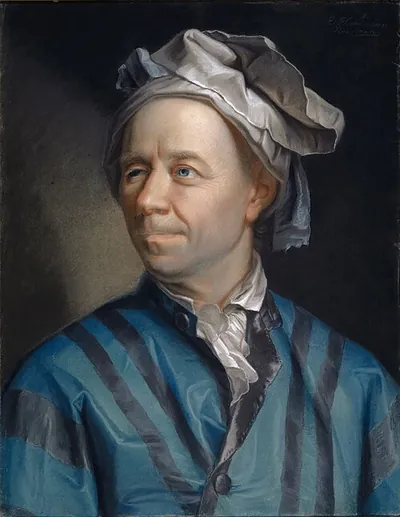 Leonhard Euler1707–1783 · Mathematics
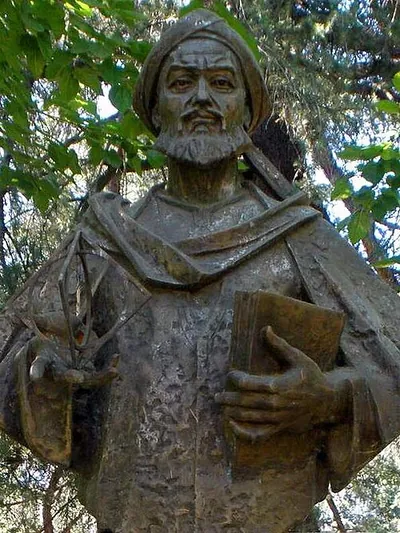 Muḥammad ibn Musa al-Khwarizmi780–850 · Mathematics
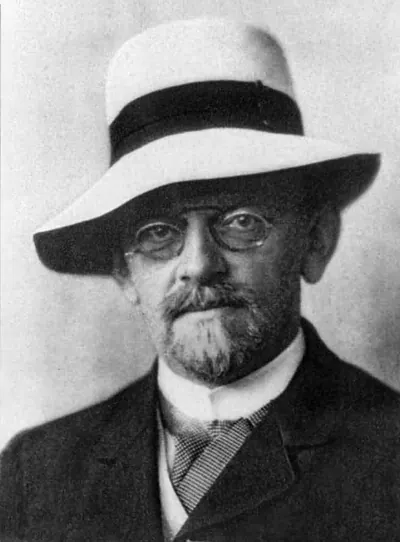 David Hilbert1862–1943 · Mathematics
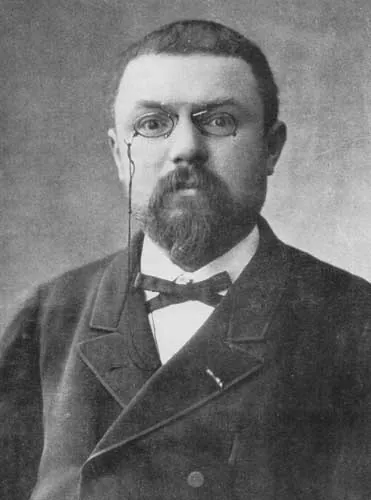 Henri Poincaré1854–1912 · Mathematics
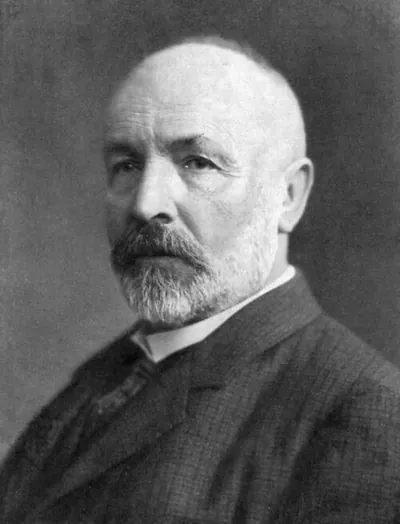 Georg Cantor1845–1918 · Mathematics
 Bernhard Riemann1826–1866 · Mathematics
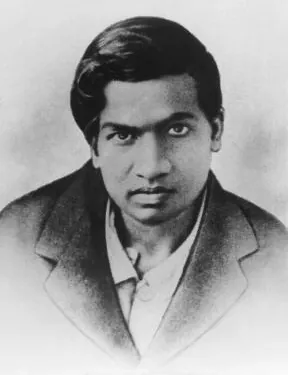 Srinivasa Ramanujan1887–1920 · Mathematics
 Emmy Noether1882–1935 · Mathematics
 Karl Weierstraß1815–1897 · Mathematics
 Andrey Kolmogorov1903–1987 · Mathematics
 Andrew Wiles1953 · Mathematics
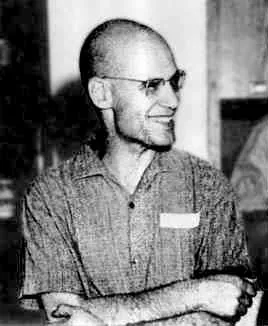 Alexander Grothendieck1928–2014 · Mathematics
 Henri Lebesgue1875–1941 · Mathematics
 John Tate1925–2019 · Mathematics
 René Descartes1596–1650 · Mathematics
 Pythagoras582 BC–490 BC · Mathematics
 Blaise Pascal1623–1662 · Mathematics
 Bertrand Russell1872–1970 · Mathematics
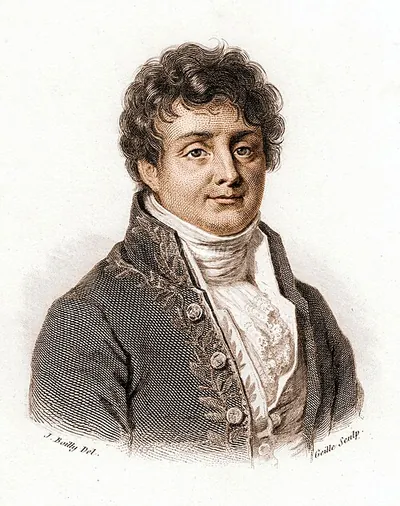 Joseph Fourier1768–1830 · Mathematics
 Pierre-Simon Laplace1749–1827 · Mathematics
 Brahmagupta598–670 · Mathematics
 Fibonacci1170–1240 · Mathematics
 Pierre de Fermat1607–1665 · Mathematics
 Joseph-Louis Lagrange1736–1813 · Mathematics
 Aryabhata476–550 · Mathematics
 Nikolai Ivanovich Lobachevsky1792–1856 · Mathematics
 Niels Henrik Abel1802–1829 · Mathematics
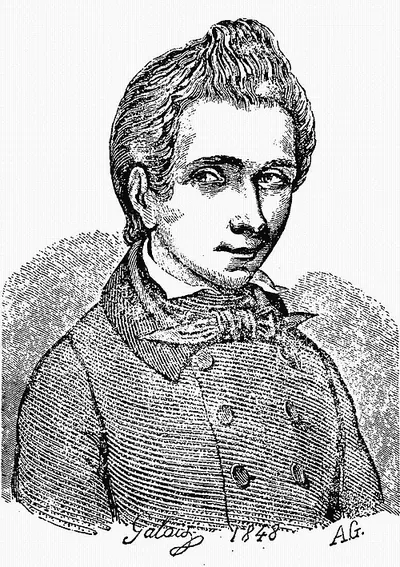 Évariste Galois1811–1832 · Mathematics
 Maryam Mirzakhani1977–2017 · Mathematics
 George Boole1815–1864 · Mathematics
 Daniel Bernoulli1700–1782 · Mathematics
 John Napier1550–1617 · Mathematics
 G.H. Hardy1877–1947 · Mathematics
 Paul Erdős1913–1996 · Mathematics
 Augustin-Louis Cauchy1789–1857 · Mathematics
 William Rowan Hamilton1805–1865 · Mathematics
 Benoit Mandelbrot1924–2010 · Mathematics
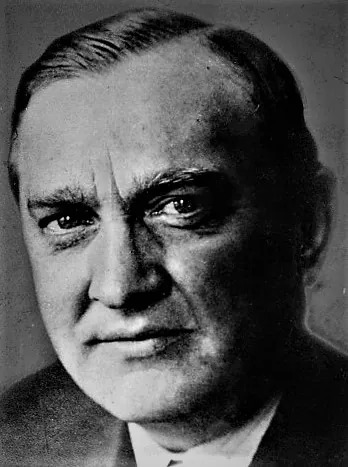 Stefan Banach1892–1945 · Mathematics
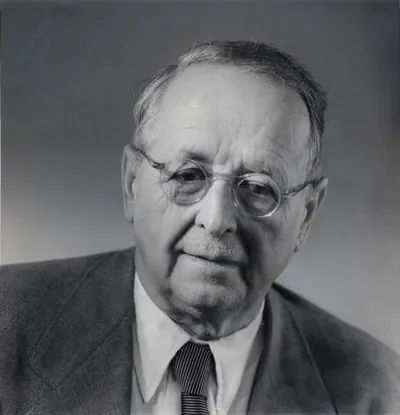 Hermann Weyl1885–1955 · Mathematics
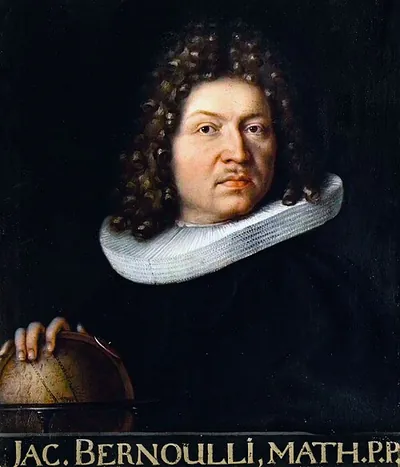 Jacob Bernoulli1654–1705 · Mathematics
 Apollonius of Perga261 BC–189 BC · Mathematics
 Hermann Minkowski1864–1909 · Mathematics
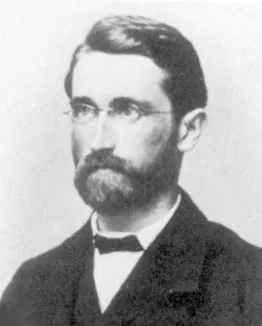 Richard Dedekind1831–1916 · Mathematics
 Johann Bernoulli1667–1748 · Mathematics
 Felix Klein1849–1925 · Mathematics
 Johann Peter Gustav Lejeune Dirichlet1805–1859 · Mathematics
 Carl Gustav Jacob Jacobi1804–1851 · Mathematics
 Leonid Kantorovich1912–1986 · Mathematics
 Sophie Germain1776–1831 · Mathematics
 François Viète1540–1603 · Mathematics
 Giuseppe Peano1858–1932 · MathematicsBIBhaskara II1114–1185 · Mathematics
 Ronald Fisher1890–1962 · Mathematics
 Vladimir Arnold1937–2010 · Mathematics
 Robert Aumann1930 · Mathematics
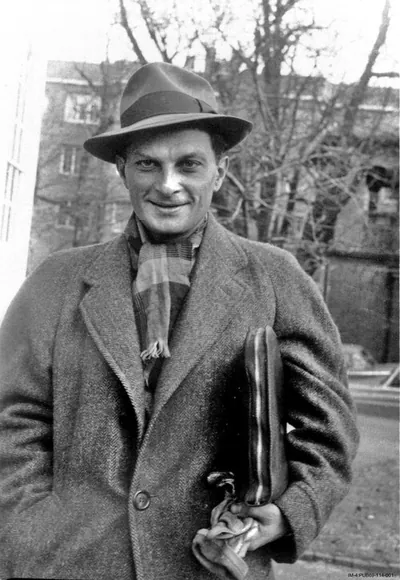 Stanisław Ulam1909–1984 · Mathematics
 Gaspard Monge1746–1818 · Mathematics