
Allen Hatcher
American mathematician specializing in geometric topology, author of a proof of the Smale conjecture · 1944
- Born
- October 23, 1944
- Country
- United States
- Section
- Mathematics
Biography
Allen Edward Hatcher (born in Indianapolis, October 23, 1944) is an American mathematician who works in topology, the branch of mathematics that studies the properties of shapes that survive stretching and bending without tearing. His work in the 1970s and 1980s helped clarify how surfaces and three-dimensional spaces are built, and his name is attached to one of the most cited proofs in the topology of his era.
Hatcher grew up in Indianapolis, Indiana. He earned his undergraduate degrees at Oberlin College in 1966 and went on to graduate study at Stanford University, where he received his doctorate in 1971. His thesis, A K2 Obstruction for Pseudo-Isotopies, was supervised by Hans Samelson, a mathematician who shaped the topology of his generation. The theme of that thesis, the relation between pseudoisotopies (deformations between two shapes that are not quite identical) and algebraic K-theory (a tool that attaches numerical invariants to a space), would recur throughout his early work.
After his doctorate he moved to Princeton University, first as a one-year postdoctoral fellow funded by the National Science Foundation, then briefly as a lecturer, and from 1973 to 1979 as an assistant professor. He was also a member of the Institute for Advanced Study in 1975–76 and again in 1979–80, a center where researchers are free from teaching duties. In 1977 he joined the University of California, Los Angeles, and since 1983 he has been a professor at Cornell University, where he is now professor emeritus. In 1978 he was an invited speaker at the International Congress of Mathematicians in Helsinki, a notable honor for a mathematician of his generation.
His research divides into two broad areas. In high dimensions he worked on pseudoisotopies and algebraic K-theory. In low dimensions he studied surfaces and three-dimensional manifolds, spaces that look locally like ordinary three-dimensional space. A central theme was incompressible surfaces, those that cannot be shrunk to a point without leaving the space that contains them. With William Floyd he classified all such surfaces in punctured-torus bundles, and with William Thurston he did the same for the complements of two-bridge knots, a family of knots with a particularly simple structure. These results provided new examples of three-dimensional spaces with distinct properties and extended a line of inquiry started in Thurston's lecture notes at Princeton.
Hatcher also showed that, for certain spaces whose boundary is a torus (the surface of a doughnut), only a limited number of boundary slopes can come from essential surfaces; in the torus case, that number is finite. He introduced the notion of final incompressibility, which his students Mark Brittenham, Charles Delman and Rachel Roberts later developed further. With Thurston he also devised a procedure for producing a presentation of the mapping class group of a closed orientable surface, a compact way of describing all the ways that surface can be mapped onto itself. The method relied on cutting systems and on moves that relate any two such systems.
He is best remembered for his proof of the Smale conjecture, published in 1983 in the Annals of Mathematics. The conjecture, proposed by Stephen Smale, concerns the symmetries of the three-dimensional sphere and states that its group of smooth transformations has the same structure as the group of four-dimensional rotations and reflections. Hatcher's geometric argument remains a standard reference on the subject.
His legacy lies in the combination of technical rigor, a body of work on low-dimensional topology that is still studied, and a lasting influence on the students he trained.
Main contributions
- 1971Stanford doctoral thesis on the AK2 obstruction for pseudoisotopies, linking deformations between shapes to algebraic K-theory.
- 1980A presentation of the mapping class group of a closed orientable surface, obtained with William Thurston, a compact way of describing all the ways the surface can be mapped onto itself.
- 1982Classification of incompressible surfaces in punctured-torus bundles, worked out with William Floyd.
- 1983Proof of the Smale conjecture, comparing the diffeomorphism group of the three-dimensional sphere with the four-dimensional orthogonal group.
- 1985Classification of incompressible surfaces in the complements of two-bridge knots, with William Thurston.
Teachers and students
Studied under:
Taught:
Trivia and anecdotes
A congress in Helsinki
In 1978 he was an invited speaker at the International Congress of Mathematicians in Helsinki.
Training in music
His Oberlin College degrees include a bachelor of music alongside his bachelor of arts.
Their contemporaries
While Allen Hatcher was alive (1944–)…
Alive at the same time
Discovered or invented in those years
- 1945ComputerA programmable machine that takes in data, processes it by following stored instructions, and produces results, able to switch tasks simply by running different software.
- 1957Artificial satelliteAn artificial satellite is a human-made object placed in orbit around a celestial body, usually Earth, to collect information, relay signals, or carry out a specific task.
- 1969InternetA global network of interconnected computer networks that communicate using the TCP/IP protocol suite.
- 1971EmailA network service that lets users send and receive digital messages through addressed mailboxes, much like postal mail but electronic.
- 1973Mobile phoneA handheld wireless phone that lets people make and receive calls while moving across a cellular network area.
- 1989World Wide WebA system of linked documents and resources, connected by hyperlinks and accessed over the Internet with web browsers.
 Vladimir Arnold1937–2010 · Mathematics
 Andrew Wiles1953 · Mathematics
 Robert Aumann1930 · Mathematics
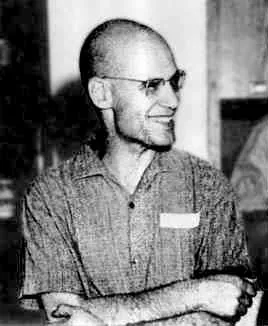 Alexander Grothendieck1928–2014 · Mathematics
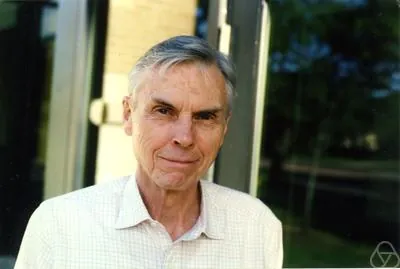 John Tate1925–2019 · Mathematics
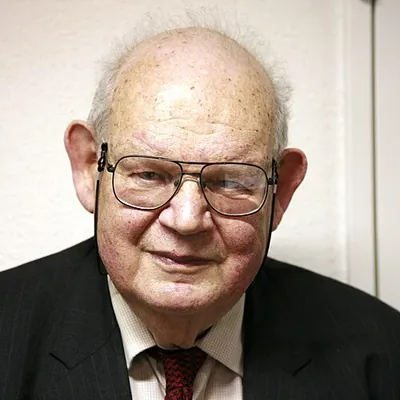 Benoit Mandelbrot1924–2010 · Mathematics
