
Andrés Manuel del Río
Spanish-born Mexican chemist and mineralogist who discovered vanadium, which he named erythronium · 1764–1849
- Born
- November 10, 1764
- Died
- March 23, 1849
- Country
- Spain, Mexico, New Spain
- Section
- Chemistry
Biography
Andrés Manuel del Río (Madrid, 1764 – Mexico City, 1849) was a Spanish-born chemist, mineralogist and naturalist, later naturalized Mexican, who in 1801 identified a new metallic element that is now known as vanadium. His work helped shape mineralogy and analytical chemistry in New Spain at the moment when that territory was moving toward independence, and his name is tied both to the history of vanadium and to the founding of scientific mining education in the Americas.
Del Río studied analytical chemistry and metallurgy in Spain. He took his bachelor's degree at the University of Alcalá de Henares in 1780, at only fifteen, and then entered the Royal Mining Academy at Almadén. A travel grant from the Spanish mining authorities took him to Paris, where he worked with the chemist Jean d'Arcet. He later trained at the mining academies of Schemnitz, in what is now Slovakia, and Freiberg, where he studied under Abraham Gottlob Werner, a leading geology teacher of the period. In Freiberg he met Alexander von Humboldt, beginning a friendship that would last for decades. Back in Paris he worked alongside Antoine Lavoisier, regarded as the founder of modern chemistry, and the crystallographer René Just Haüy. When Lavoisier was arrested during the French Revolution, Del Río fled to England.
In 1792 the Royal Seminary of Mining was founded in New Spain by decree of King Charles III, aiming to modernize mining and metallurgy in the colony. Fausto Elhúyar, the discoverer of tungsten, led it at first. Del Río turned down the chair of chemistry he was offered and accepted the chair of mineralogy. He reached the port of Veracruz in October 1794, and on 27 April 1795 he gave the first course in mineralogy ever taught in New Spain. His textbook Elementos de Orictognosia, issued in two volumes in 1795 and 1805, is regarded as the first mineralogy textbook published in America and the first in Spanish rather than German or English. Humboldt, surveying the resources of Spain's American colonies, praised it as the finest mineralogical work published in Spanish. During his stay in Mexico City from 1803 to 1804, Humboldt joined Del Río on field trips to Chapultepec, the Pedregal de San Ángel and the Peñón de los Baños, collecting rocks and minerals that were then tested chemically.
Vanadium came to light in 1801, when Del Río examined ore samples from the Purísima del Cardenal mine at Zimapán, in today's state of Hidalgo. He concluded that they held a new metal and, because its compounds showed many colors, he called it panchromium. Noticing that its salts turned red when heated, he renamed it erythronium, from the Greek for
Main contributions
- 1795Elementos de Orictognosia, the first mineralogy textbook written in America and in Spanish.
- 1801Identification of a new metallic element in samples from Zimapán, which he called panchromium and then erythronium; today it is known as vanadium.
- 1807First iron produced in Mexico, at the Coalcomán ironworks.
- 1829Study of two new mineral species made of zinc selenide and mercury sulfide.
Trivia and anecdotes
A Greek name
Panchromium means 'all colors' and erythronium 'red', both from Greek, reflecting the shades of its compounds.
An element with two names
Sefström named it vanadium in 1830, after the Scandinavian goddess Vanadis, even though Del Río had made the first identification.
Related discoveries and inventions
- 1801VanadiumA hard, ductile, silvery-grey metallic element with atomic number 23, used mainly in steel alloys.
Their contemporaries
While Andrés Manuel del Río was alive (1764–1849)…
Alive at the same time
Discovered or invented in those years
- 1766HydrogenThe lightest and most abundant chemical element in the universe, atomic number 1, which under normal conditions is a colourless, odourless and highly flammable gas.
- 1774OxygenA colorless, odorless gas, symbol O and atomic number 8, that forms the dioxygen in air and is essential for respiration in most living things.
- 1803AtomThe basic unit of a chemical element: a nucleus of protons and usually neutrons surrounded by a cloud of electrons.
- 1821ElectricityThe set of physical phenomena linked to the presence and movement of electric charge, and one of the most versatile forms of energy in modern life.
- 1839PhotographyA technique for creating lasting images by recording light, either on a light-sensitive material or with an electronic sensor.
- 1846NeptuneThe eighth and most distant planet of the Solar System, an ice giant found through mathematical prediction before any direct sighting.
 John Dalton1766–1844 · Chemistry
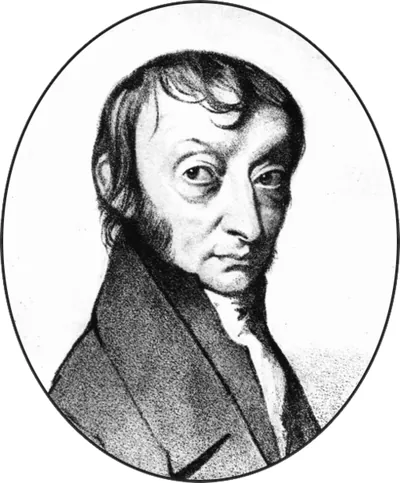 Amedeo Avogadro1776–1856 · Chemistry
 Humphry Davy1778–1829 · Chemistry
 Jöns Jacob Berzelius1779–1848 · Chemistry
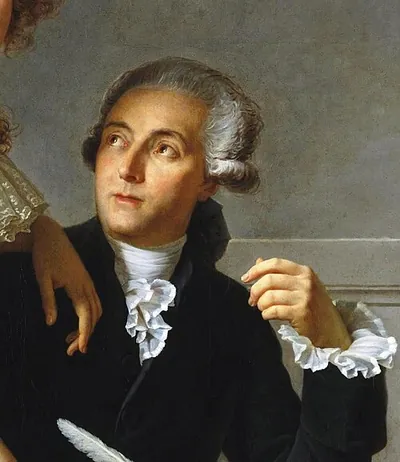 Antoine Lavoisier1743–1794 · Chemistry
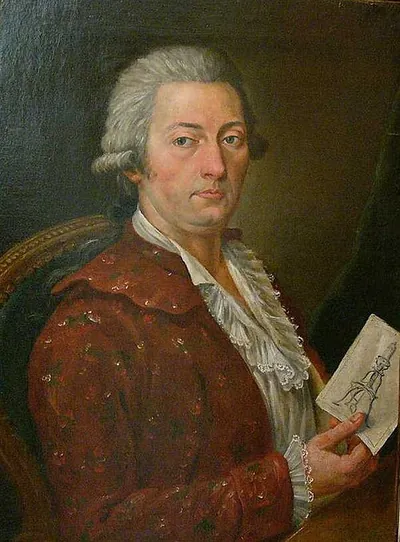 Carl Wilhelm Scheele1742–1786 · Chemistry
