Daniel Quillen
American mathematician, one of the principal architects of higher algebraic K-theory and Fields Medal winner in 1978 · 1940–2011
- Born
- June 22, 1940
- Died
- April 30, 2011
- Country
- United States
- Section
- Mathematics
- Awards
- Fields Medal
Biography
Daniel Gray Quillen was an American mathematician whose work shaped higher algebraic K-theory, a field that studies certain quantities attached to algebraic structures using tools borrowed from topology. He worked in the second half of the twentieth century, when the boundaries between algebra and topology were becoming increasingly blurred. In 1978 he received the Fields Medal for this contribution, and his work remains a reference for anyone interested in how the two disciplines connect.
He was born on June 22, 1940, in Orange, New Jersey, although some references give June 21 as his birth date. He attended Newark Academy before entering Harvard University, where he earned his AB in 1961 and his PhD in 1964. His doctoral thesis, written under Raoul Bott, dealt with partial differential equations, the equations that describe how quantities change across space and time. As early as 1959 he had been a Putnam Fellow, an honour given by the Putnam competition to its strongest university participants in mathematics.
After his doctorate he took a position at the Massachusetts Institute of Technology and later spent several years at other universities. France played a decisive part in his development. As a Sloan Fellow he spent the 1968-1969 academic year in Paris, where he was strongly influenced by Alexander Grothendieck, one of the central figures of modern algebraic geometry. He returned to France in 1973-1974 as a Guggenheim Fellow. In 1969-1970 he was a visiting member of the Institute for Advanced Study in Princeton, where he came into contact with Michael Atiyah, another leading figure in topology.
His early work concerned homotopy theory, which studies the ways a shape can be continuously deformed. Quillen proved a conjecture formulated by Frank Adams in this area, drawing on techniques from the modular representation theory of groups, a line of thought he later applied to the cohomology of groups and to K-theory. He also studied complex cobordism and showed that its formal group law is, in essence, the most general one possible. He further supplied a proof of a conjecture by Jean-Pierre Serre about algebraic vector bundles over affine space, which in turn led to the Bass-Quillen conjecture.
His best-known contribution, cited specifically in the reasoning behind his Fields Medal, was his formulation of higher algebraic K-theory in 1972. Expressed through homotopy theory, this tool proved effective for posing and solving problems in algebra, especially in ring theory and module theory. He received the Cole Prize in 1975 for this work. Beyond it, he developed instruments such as the theory of model categories, in particular the Kan-Quillen model structure, which allowed algebro-topological methods to be used in other settings. Together with Dennis Sullivan he was an architect of rational homotopy theory, and he introduced the Quillen determinant line bundle and the Mathai-Quillen formalism.
From 1984 to 2006 he held the Waynflete Chair of Pure Mathematics at Magdalen College, Oxford, and he retired at the end of 2006. He died on April 30, 2011, aged 70, from complications of Alzheimer's disease. His legacy lies in the way he linked algebra and topology, and in the fact that his tools still appear in current research in pure mathematics.
Main contributions
- 1972Formulation of higher algebraic K-theory, expressed through homotopy theory and useful for problems in algebra.
- Proof of a conjecture by Frank Adams in homotopy theory, obtained with techniques from modular representation theory of groups.
- Theory of model categories, including the Kan-Quillen model structure, which allows topological methods to be applied in other fields.
- Result showing that the formal group law of complex cobordism is, in essence, the most general one possible.
- Proof of a conjecture of Serre about algebraic vector bundles over affine space, which led to the Bass-Quillen conjecture.
- Rational homotopy theory, developed together with Dennis Sullivan.
- The Quillen determinant line bundle and the Mathai-Quillen formalism.
Teachers and students
Studied under:
Taught:
Trivia and anecdotes
An early prize
As early as 1959, while still a student, he was a Putnam Fellow, an honour for the strongest university participants in the Putnam competition.
A decisive stay in Paris
His time in Paris as a Sloan Fellow in 1968-1969 was decisive for his development, thanks to the influence of Grothendieck.
Their contemporaries
While Daniel Quillen was alive (1940–2011)…
Alive at the same time
Discovered or invented in those years
- 1945ComputerA programmable machine that takes in data, processes it by following stored instructions, and produces results, able to switch tasks simply by running different software.
- 1957Artificial satelliteAn artificial satellite is a human-made object placed in orbit around a celestial body, usually Earth, to collect information, relay signals, or carry out a specific task.
- 1969InternetA global network of interconnected computer networks that communicate using the TCP/IP protocol suite.
- 1971EmailA network service that lets users send and receive digital messages through addressed mailboxes, much like postal mail but electronic.
- 1973Mobile phoneA handheld wireless phone that lets people make and receive calls while moving across a cellular network area.
- 1989World Wide WebA system of linked documents and resources, connected by hyperlinks and accessed over the Internet with web browsers.
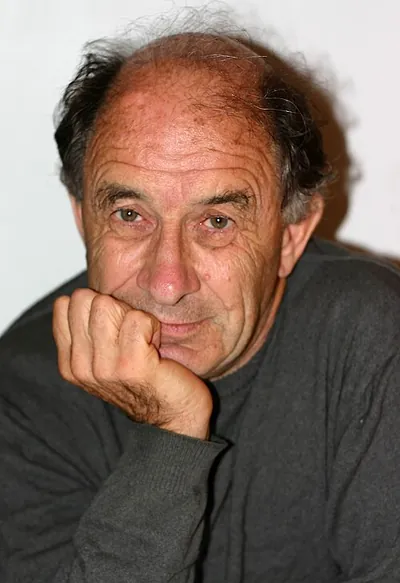 Vladimir Arnold1937–2010 · Mathematics
 Robert Aumann1930 · Mathematics
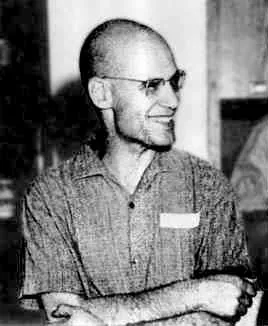 Alexander Grothendieck1928–2014 · Mathematics
 Andrew Wiles1953 · Mathematics
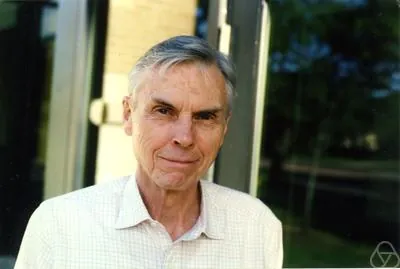 John Tate1925–2019 · Mathematics
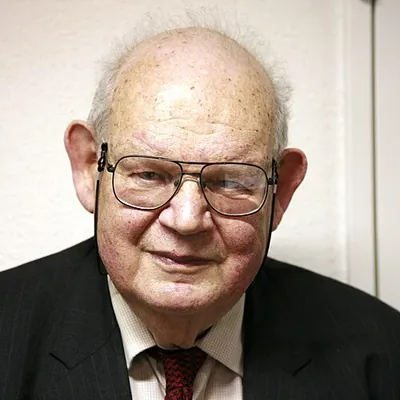 Benoit Mandelbrot1924–2010 · Mathematics