
Dusa McDuff
British mathematician specialising in symplectic geometry, first recipient of the Satter Prize · 1945
- Born
- October 18, 1945
- Country
- United States, United Kingdom
- Section
- Mathematics
Biography
Dusa McDuff, born Margaret Dusa Waddington in London on 18 October 1945, is a British mathematician who works on symplectic geometry, the branch of mathematics that studies geometric structures linked to classical mechanics. Over several decades her work has made her one of the most recognised figures in contemporary symplectic topology.
She grew up in Scotland, where her father, the biologist Conrad Hal Waddington, was Professor of Genetics at the University of Edinburgh. Her mother, the architect Margaret Justin Blanco White, was Waddington's second wife and the daughter of the feminist writer Amber Reeves. McDuff attended St George's School for Girls in Edinburgh. Its standards were lower than those of the boys' school, the Edinburgh Academy, but it had an exceptional mathematics teacher. She had wanted to be a mathematician since childhood, though she later admitted she had little idea how to combine a career with the life she would lead as a woman. She turned down a Cambridge scholarship to stay with her boyfriend in Scotland and enrolled at the University of Edinburgh, graduating in 1967.
At Cambridge, under the supervision of George A. Reid, she worked on functional analysis. She solved a problem about von Neumann algebras by constructing infinitely many different factors of type II1, and published the result in the Annals of Mathematics. After her doctorate in 1971 she held a postdoctoral fellowship and joined her husband, the literary translator David McDuff, on a six-month stay in Moscow. There she met Israel Gelfand, whose way of speaking about mathematics as if it were poetry left a lasting impression. She then moved on to the University of York, where she worked with Graeme Segal, and to MIT and the Institute for Advanced Study in Princeton, where she collaborated with Segal on the Atiyah-Segal completion theorem. Later she took a post at Warwick and moved to Stony Brook University to live near John Milnor, whom she married in 1984.
At Stony Brook she began working independently on the link between diffeomorphisms and classifying spaces for foliations, and from then on focused largely on symplectic topology. Her best-known contribution is the first example of symplectic forms on a closed manifold that are cohomologous but not diffeomorphic. With François Lalonde she also classified the rational and ruled symplectic four-manifolds. With Dietmar Salamon she wrote two textbooks that are standard references in the field. Since 2007 she has held the Helen Lyttle Kimmel chair at Barnard College.
Her legacy lies largely in building up the research community in symplectic geometry and in her textbooks, as well as in the honours she has received, including the first Satter Prize in 1991 and membership of the Royal Society and the United States National Academy of Sciences.
Main contributions
- 1970Construction of infinitely many different type II1 factors in von Neumann algebras, solving a functional analysis problem from her doctorate.
- 1991First Satter Prize, for her work in symplectic geometry.
- First example of symplectic forms on a closed manifold that are cohomologous but not diffeomorphic, meaning equivalent algebraically but not in their geometric shape.
- With François Lalonde, classification of rational and ruled symplectic four-manifolds.
- With Susan Tolman, study of Hamiltonian torus actions using methods of symplectic topology.
- With Felix Schlenk, work on embedding capacities of four-dimensional symplectic ellipsoids, linked to number-theoretical questions.
- Textbooks Introduction to Symplectic Topology and J-Holomorphic Curves and Symplectic Topology, written with Dietmar Salamon.
Teachers and students
Studied under:
Taught:
Trivia and anecdotes
A meeting in Moscow
In her own account, her collaboration with Israel Gelfand arose almost by chance, as his was the only name that came to mind when she had to fill in a form at an office in Moscow.
Hedgehogs in spectral sequences
Gelfand described a paper full of formulas, which only hinted at an idea, with a poetic image that McDuff remembers with admiration.
Their contemporaries
While Dusa McDuff was alive (1945–)…
Alive at the same time
Discovered or invented in those years
- 1945ComputerA programmable machine that takes in data, processes it by following stored instructions, and produces results, able to switch tasks simply by running different software.
- 1957Artificial satelliteAn artificial satellite is a human-made object placed in orbit around a celestial body, usually Earth, to collect information, relay signals, or carry out a specific task.
- 1969InternetA global network of interconnected computer networks that communicate using the TCP/IP protocol suite.
- 1971EmailA network service that lets users send and receive digital messages through addressed mailboxes, much like postal mail but electronic.
- 1973Mobile phoneA handheld wireless phone that lets people make and receive calls while moving across a cellular network area.
- 1989World Wide WebA system of linked documents and resources, connected by hyperlinks and accessed over the Internet with web browsers.
 Andrew Wiles1953 · Mathematics
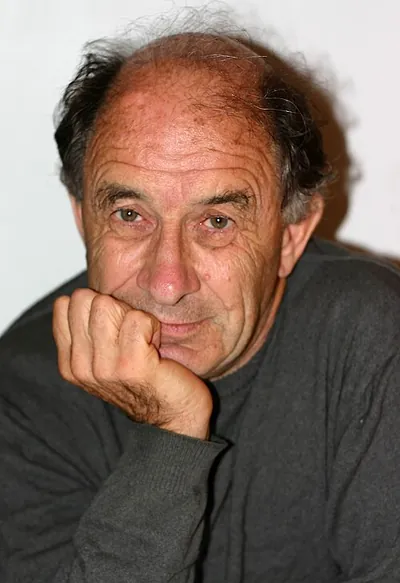 Vladimir Arnold1937–2010 · Mathematics
 Robert Aumann1930 · Mathematics
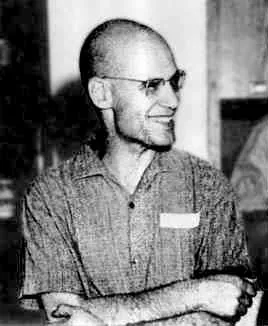 Alexander Grothendieck1928–2014 · Mathematics
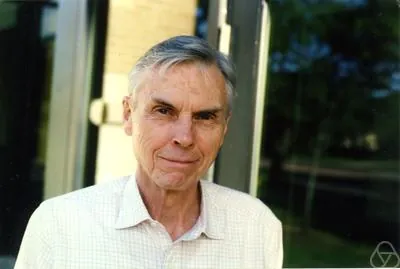 John Tate1925–2019 · Mathematics
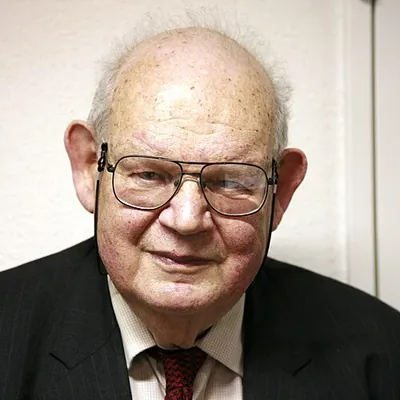 Benoit Mandelbrot1924–2010 · Mathematics
