
Edgeworth David
Welsh-born Australian geologist, Antarctic explorer and military veteran, discoverer of the major Hunter Valley coalfield · 1858–1934
- Born
- January 28, 1858
- Died
- August 28, 1934
- Country
- Australia, United Kingdom of Great Britain and Ireland
- Section
- Earth sciences
Biography
Sir Tannatt William Edgeworth David, known as Edgeworth David (Wales, 1858 – Sydney, 1934), was a Welsh-born Australian geologist whose career spanned three very different fields: mapping the coal resources of New South Wales, reaching the south magnetic pole in Antarctica, and serving in the tunnelling units of the First World War. He was one of the best-known Australians of his lifetime, and his work shows how geology, once concerned mainly with the deep history of the Earth, became a practical tool for mining, engineering and polar exploration.
He was born on 28 January 1858 at St Fagans, near Cardiff. His father, William David, was a scholar linked to Jesus College, Oxford, and his mother was Margaret Harriette Thomson. A cousin of his mother, the geologist William Ussher, was among the first to take an interest in his future. He went to Magdalen College School in Oxford at the age of twelve and in 1876 won a classical scholarship to New College, where he was taught by John Ruskin and William Spooner. A breakdown in health in 1878 sent him travelling to Canada and Australia to recover. Back in Oxford, geology lectures given by Joseph Prestwich fired his enthusiasm. He graduated in 1880 without honours and spent the next two years doing fieldwork in Wales, where he studied traces of ancient glaciers. In 1882 he spent a short time at the Royal School of Mines in London, under John Wesley Judd, before accepting a post as assistant geological surveyor for the government of New South Wales.
In 1891 he became professor of geology at the University of Sydney, a post he held until 1924. From there he investigated glaciation on the Kosciusko plateau and the ancient Precambrian glaciation of South Australia. He also mentored Douglas Mawson, who trained in mining engineering and who, in 1904, with T. H. Laby, was among the first to identify radium-bearing ore in Australia. David presented their paper to the Royal Society of New South Wales. In 1906 Mawson described the mineral davidite, which was named after David.
In 1907 Ernest Shackleton invited him to join the Nimrod Antarctic expedition, and David secured Australian government funding for it. On 16 January 1909 he, Mawson and Mackay reached the south magnetic pole and claimed the region for the British Crown. The return journey was brutal. By the end of January all three men were badly weakened, and David could no longer lead. Mackay, the party's doctor, threatened to declare him unfit unless he handed over command in writing, and Mawson took charge. Collected by the Nimrod in time, the three men had covered a distance that stood for decades as the longest unsupported sledge journey. In 1910 he was made a Companion of the Order of St Michael and St George.
When the First World War began, David strongly backed the war effort. After reading reports of mining and tunnelling during the Gallipoli campaign, he proposed to the Australian Defence Minister that a force of miners and tunnellers be raised. With that backing he set up the Australian Mining Corps and, in October 1915, at the age of 57, was appointed a major. As geological adviser to the British armies on the Western Front, he gave advice on dugouts, trenches, tunnels and the siting of wells for clean water, and he produced maps. His work culminated in June 1917 with the mining of German positions at the Battle of Messines. He received the Distinguished Service Order and was promoted to lieutenant colonel before being demobilised in 1919.
The family had a cottage at Woodford in the Blue Mountains since 1896, which David named Tyn-y-Coed, meaning roughly 'house in the trees', a nod to his Welsh roots. In 1920 he was made a Knight Commander of the Order of the British Empire. That year he gave up his chair in favour of his former student Leo Cotton, and in 1921–22 he helped found the Australian National Research Council, serving as its first president. In 1928 he claimed to have found Precambrian fossils, a claim that remained controversial until his death. He left unfinished his major work, The Geology of the Commonwealth of Australia, which William R. Browne completed in 1950. Today the Edgeworth David Medal, awarded to young scientists, and David Island in the Shackleton Ice Shelf keep his name alive.
Main contributions
- 1891Appointment as professor of geology at the University of Sydney, a chair he held until 1924.
- 1904Presentation of the discovery of radium-bearing ore in Australia, made by Mawson and Laby.
- 1909First expedition to reach the south magnetic pole, with Mawson and Mackay.
- 1915Creation of the Australian Mining Corps during the First World War.
- 1921Founding of the Australian National Research Council, of which he was the first president.
Teachers and students
Trivia and anecdotes
The name of his house
He named his Woodford cottage Tyn-y-Coed, a Welsh phrase usually rendered as 'the house in the trees'.
Command handed over
According to accounts of the journey, Mackay threatened to declare him unfit unless he handed command to Mawson in writing.
Their contemporaries
While Edgeworth David was alive (1858–1934)…
Alive at the same time
Discovered or invented in those years
- 1859EvolutionThe process by which the heritable traits of living populations change over generations, explaining the diversity of life from common ancestors.
- 1869Periodic tableAn arrangement of the chemical elements into rows (periods) and columns (groups), ordered by atomic number, that reveals recurring chemical behaviour and lets scientists predict properties.
- 1876TelephoneA device that carries the human voice over distance by turning sound into electrical signals and back into sound at the other end of the line.
- 1884CarA road vehicle with four wheels and its own engine, mainly built to carry people.
- 1903AirplaneA fixed-wing aircraft, heavier than air, powered by engines or rockets, that stays aloft because its wings generate lift.
- 1925TelevisionA system that sends moving pictures and sound over distance and shows them on a receiver, the television set.
 Andrija Mohorovičić1857–1936 · Earth sciences
 Henry Fairfield Osborn1857–1935 · Earth sciences
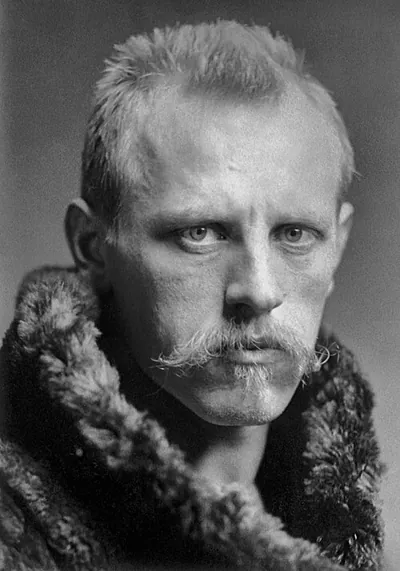 Fridtjof Nansen1861–1930 · Earth sciences
 Vilhelm Bjerknes1862–1951 · Earth sciences
 Vladimir Vernadsky1863–1945 · Earth sciences
 Vladimir A. Obruchev1863–1956 · Earth sciences
