
Esther Orozco
Mexican chemist, bacteriologist and parasitologist who studies the amoeba behind amoebiasis · 1945
- Born
- April 25, 1945
- Country
- Mexico
- Section
- Biology
Biography
María Esther Orozco Orozco is a Mexican chemist, bacteriologist, parasitologist and teacher whose work centres on Entamoeba histolytica, the amoeba that causes amoebiasis, an intestinal infection common in tropical regions. Over several decades of research in Mexico, her work has helped explain how this parasite causes damage and which routes could lead to a vaccine and better treatments.
She was born on 25 April 1945 in San Isidro Pascual Orozco, in the state of Chihuahua. She trained first as a primary school teacher and then as a chemist and bacteriologist at the Autonomous University of Chihuahua. She later earned a master's degree and a doctorate in cell biology at the Center for Research and Advanced Studies of the National Polytechnic Institute (Cinvestav-IPN) in Mexico City, where she joined in 1981 and where she remains affiliated.
Her work applies molecular biology, the study of the genes and proteins that operate inside living cells. In the amoeba, she has focused on virulence factors, the molecules that let the parasite invade tissue, on phagocytosis, the process by which a cell engulfs and digests other material, and on resistance to drugs. One of her most cited papers, from 1983, showed that phagocytosis is a virulence factor, meaning that the amoeba's ability to engulf cells helps it cause disease. Later studies by her groups examined surface proteins and enzymes that damage tissue, clarifying how the infection unfolds.
Since 1990 she has worked in the Department of Infectomics and Molecular Pathogenesis at Cinvestav. For a decade she was a researcher at the Howard Hughes Medical Institute, and she held fellowships from the John Simon Guggenheim foundation and the Fogarty International Center. She has also been a visiting professor at Harvard University and the Weizmann Institute. In Mexico she co-founded a research center for applied science and technology at the IPN and set up a postgraduate programme in genomic sciences at the Autonomous University of Mexico City in 2003.
Her career also includes public service. She was planning secretary at Cinvestav from 1990 to 1994 and, in 1998, an external candidate for governor of Chihuahua for the Party of the Democratic Revolution, an experience she describes in her book Si la mujer está. From 2006 to 2010 she directed the Science and Technology Institute of the Federal District, and from 2010 to 2013 she was rector of the Autonomous University of Mexico City. Between 2019 and 2021 she was scientific adviser to the Ministry of Foreign Affairs, where she coordinated Mexico's group in the Coalition for Epidemic Preparedness Innovations (CEPI) during the COVID-19 pandemic. Since September 2021 she has served as Minister for Science and Technology Cooperation at the Mexican Embassy in France.
Her honours include the Miguel Otero National Award (1985), the Louis Pasteur Medal, awarded by the Pasteur Institute and UNESCO in 1997, and the UNESCO and L'Oréal Women in Science award (2006). Her legacy lies mainly in the molecular understanding of amoebiasis and in training a generation of Mexican researchers.
Main contributions
- 1983Showed that phagocytosis is a virulence factor: the amoeba's ability to engulf cells helps it cause disease.
- 1987Localisation and identification of an adhesin of Entamoeba histolytica, a molecule that lets it attach to host cells.
- 1990Linked the cell-damaging effect of virulent amoebae to the secretion of a cysteine protease, an enzyme that breaks down proteins.
- 1999Described a novel cysteine protease and an adhesin that together form a 112 kDa surface protein of the parasite.
- 2012High-throughput drug screen against E. histolytica that identified a new lead compound and a drug target.
Trivia and anecdotes
An unusual candidacy
In 1998 she ran as an external candidate for governor of Chihuahua for the PRD, and later described the experience in her book Si la mujer está.
An award bearing her name
The Chihuahua State Congress and the state women's institute created an annual award for outstanding women, and its scientific category is named after María Esther Orozco Orozco.
Their contemporaries
While Esther Orozco was alive (1945–)…
Alive at the same time
Discovered or invented in those years
- 1945ComputerA programmable machine that takes in data, processes it by following stored instructions, and produces results, able to switch tasks simply by running different software.
- 1957Artificial satelliteAn artificial satellite is a human-made object placed in orbit around a celestial body, usually Earth, to collect information, relay signals, or carry out a specific task.
- 1969InternetA global network of interconnected computer networks that communicate using the TCP/IP protocol suite.
- 1971EmailA network service that lets users send and receive digital messages through addressed mailboxes, much like postal mail but electronic.
- 1973Mobile phoneA handheld wireless phone that lets people make and receive calls while moving across a cellular network area.
- 1989World Wide WebA system of linked documents and resources, connected by hyperlinks and accessed over the Internet with web browsers.
 Yoshinori Ohsumi1945 · Biology
 Kary Mullis1944–2019 · Biology
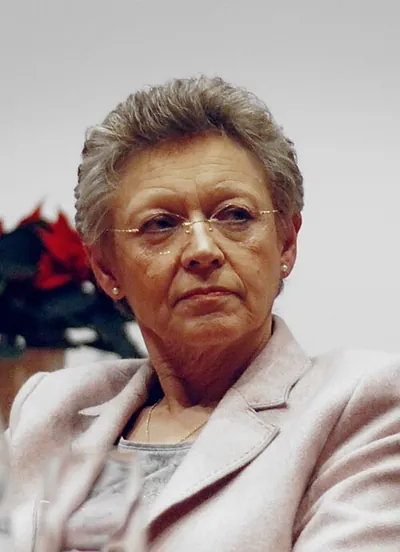 Françoise Barré-Sinoussi1947 · Biology
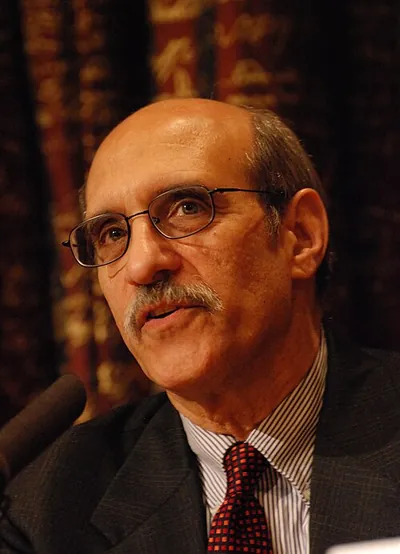 Martin Chalfie1947 · Biology
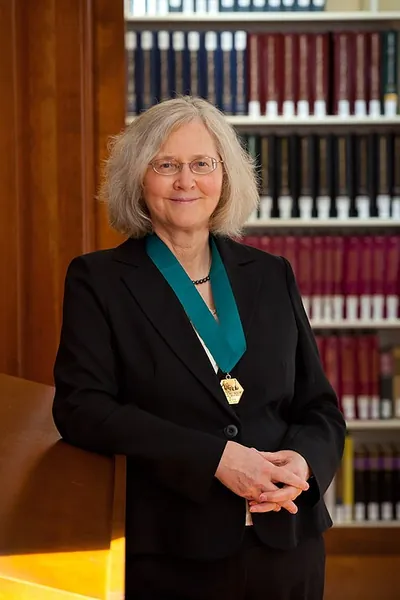 Elizabeth Blackburn1948 · Biology
 Christiane Nüsslein-Volhard1942 · Biology
