
Irina Beletskaya
Russian chemist, professor at Moscow State University specializing in organometallic chemistry · 1933
- Born
- March 10, 1933
- Country
- Russia, Soviet Union
- Section
- Chemistry
Biography
Irina Petrovna Beletskaya is a Russian chemist, born in Leningrad (now St. Petersburg) on 10 March 1933, and one of the leading figures in organic and organometallic chemistry in the second half of the twentieth century. Her work helped establish methods for building bonds between carbon atoms, a central task when chemists make complex molecules in the laboratory.
She graduated from the Chemistry Department of Lomonosov Moscow State University in 1955, where her early research focused on organoarsenic chemistry. In 1958 she earned the degree of Candidate of Chemistry, roughly equivalent to a PhD, with a thesis on electrophilic substitution reactions, in which a positively charged species attacks a molecule rich in electrons. In 1963 she received her higher doctorate from the same institution. She worked alongside Professor O. Reutov, studying electrophilic reactions at saturated carbon atoms, and devoted much of her career to reaction mechanisms, meaning the sequence of steps by which reactants turn into products.
A central strand of her research was the reactivity of carbanions, species in which a carbon atom carries a pair of unshared electrons. She paid close attention to ion pairs, loosely bound combinations of a positive and a negative ion, because they strongly influence the speed and outcome of a reaction. Later she turned to transition metal catalysts, substances that speed up a reaction without being used up, especially those based on palladium and nickel. With them she developed some of the first methods for forming carbon-carbon bonds and extended these reactions to work in water, which is cheaper and gentler on the environment. Her work also helped open up the chemistry of organolanthanides, compounds that combine rare-earth elements with carbon.
Her institutional career advanced steadily. She became a full professor in 1970 and headed the Laboratory of Organoelement Chemistry at the university. She was elected a corresponding member of the Academy of Sciences of the USSR in 1974 and became a full member of the Russian Academy of Sciences in 1992. She chaired the IUPAC Division of Organic Chemistry from 1991 to 1993 and served on the IUPAC committee on chemical weapons destruction technology until 2001. She is also editor-in-chief of the Russian Journal of Organic Chemistry. Her contributions have been recognized with several awards, including the Lomonosov Medal (1974), the Mendeleev Prize (1979) and the State Prize (2004).
Her legacy works on two levels. Her metal-catalyzed methods for forming bonds are now part of the standard toolkit of synthetic chemistry. Her career also helped open doors for women in Russian chemistry, a field where they were still a minority.
Main contributions
- Pioneering methods for forming carbon-carbon bonds using palladium or nickel catalysts, which she extended to aqueous media.
- Studies of aromatic reaction mechanisms, for which she is best known.
- Research on carbanion acidity and reactivity, with emphasis on ion pairs.
- Contribution to opening up the chemistry of organolanthanides.
Teachers and students
Trivia and anecdotes
Honorary doctorate
In 2015 she received an honorary doctorate from the University of Alicante.
A pioneer in Russian chemistry
She is regarded as one of the first prominent women chemists in her country, paving the way for others in the scientific community.
Their contemporaries
While Irina Beletskaya was alive (1933–)…
Alive at the same time
Discovered or invented in those years
- 1945ComputerA programmable machine that takes in data, processes it by following stored instructions, and produces results, able to switch tasks simply by running different software.
- 1957Artificial satelliteAn artificial satellite is a human-made object placed in orbit around a celestial body, usually Earth, to collect information, relay signals, or carry out a specific task.
- 1969InternetA global network of interconnected computer networks that communicate using the TCP/IP protocol suite.
- 1971EmailA network service that lets users send and receive digital messages through addressed mailboxes, much like postal mail but electronic.
- 1973Mobile phoneA handheld wireless phone that lets people make and receive calls while moving across a cellular network area.
- 1989World Wide WebA system of linked documents and resources, connected by hyperlinks and accessed over the Internet with web browsers.
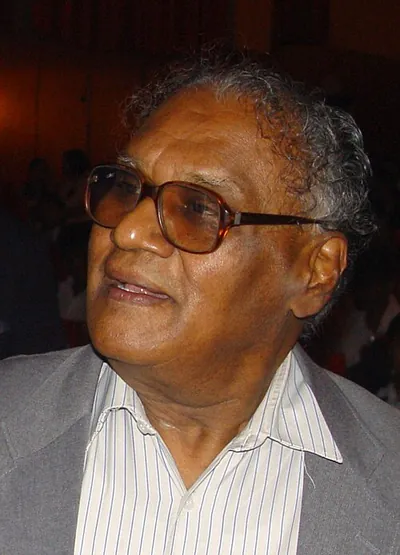 Chintamani Nagesa Ramachandra Rao1934 · Chemistry
 Alan J. Heeger1936 · Chemistry
 Paul Lauterbur1929–2007 · Chemistry
 Elias James Corey1928 · Chemistry
 Manfred Eigen1927–2019 · Chemistry
 Karl Barry Sharpless1941 · Chemistry
