
Jim Simons
American mathematician turned hedge fund manager and philanthropist, founder of Renaissance Technologies · 1938–2024
- Born
- April 25, 1938
- Died
- May 10, 2024
- Country
- United States
- Section
- Mathematics
Biography
James Harris Simons, known as Jim Simons, was an American mathematician who, after a distinguished academic career, became one of the most successful investment fund managers in history. Born on April 25, 1938, in Newton, Massachusetts, he died on May 10, 2024, in New York City. He matters for two reasons: his work in geometry left a mathematical tool that theoretical physics still uses, and his company showed that mathematical models could be applied successfully to financial markets.
He grew up as an only child in Brookline, Massachusetts, in a Jewish family. He studied mathematics at the Massachusetts Institute of Technology, earning his bachelor's degree in 1958, and completed it in three years. He then earned his PhD at the University of California, Berkeley, in 1961, at only 23, under the supervision of Bertram Kostant. His thesis gave a new proof of Berger's classification of holonomy groups of Riemannian manifolds, which describes how a curved space can change as you carry a direction around a closed loop.
During these years he began working with Shiing-Shen Chern on characteristic classes, a family of numerical invariants that describe geometric properties of spaces without depending on how they are measured. Their collaboration produced the Chern-Simons forms, published in 1974 as Characteristic Forms and Geometric Invariants. Physicists later used the idea in theoretical physics, especially in string theory, and mathematical physicist Albert Schwarz drew on it to develop early topological quantum field theory. In 1976 he received the American Mathematical Society's Oswald Veblen Prize in Geometry for his work on minimal surfaces, the shapes that minimize area for a given boundary, like a soap film.
Between 1964 and 1968 he worked at the Communications Research Division of the Institute for Defense Analyses, and in 1964 he took part in code-breaking work. He left that post after publicly opposing the Vietnam War and joined Stony Brook University, where he chaired the mathematics department from 1968 to 1978. In 1973 IBM asked him to analyse the Lucifer cipher, a direct forerunner of the Data Encryption Standard.
In 1978 he left academia to set up an investment firm that eventually became Renaissance Technologies, based on Long Island. The idea was to apply to markets the same approach he used in mathematics: collect large amounts of data, look for non-random patterns in prices, and automate trades. He hired mathematicians, physicists and statisticians with no financial background. In 1988 the Medallion Fund was created, closed to outside investors, and it earned very high returns for decades. Simons stepped back as chief executive in 2010 but stayed on as non-executive chairman.
His personal life was marked by tragedy. His son Paul was killed by a car while cycling in 1996, and his son Nick drowned in Bali in 2003. These losses shaped much of his philanthropy. With his second wife, Marilyn, he co-founded the Simons Foundation in 1994, which supports education, health and scientific research. Through it he funded autism research, becoming its largest private investor, and he founded Math for America in 2004 to improve maths teaching in public schools. His gifts to Stony Brook University and MIT were also substantial.
Simons avoided public attention and rarely gave interviews. His fortune also drew controversy: in 2014 a US Senate subcommittee criticised the use of complex options to treat day-to-day trades as long-term capital gains, and in 2021 the firm agreed to pay billions in back taxes. His legacy lives on in the Chern-Simons theory used in modern physics, in the use of mathematical models in finance, and in the foundations that bear his name.
Main contributions
- 1961PhD in mathematics at Berkeley, with a new proof of Berger's classification of holonomy groups.
- 1974Chern-Simons forms, geometric tools describing properties of three-dimensional spaces that later found uses in theoretical physics.
- 1976Oswald Veblen Prize in Geometry, for his work on minimal surfaces.
- 1978Founding of the investment firm that would become Renaissance Technologies, based on mathematical models of markets.
- 1988Medallion Fund, closed to outside investors, with very high profits for decades.
- 2004Founding of Math for America to improve maths teaching in public schools.
Teachers and students
Studied under:
Taught:
Trivia and anecdotes
A donkey as a motto
Simons avoided publicity and quoted Benjamin the donkey from Animal Farm: he had a tail to keep off flies, but would rather have had neither.
An asteroid named after him
In 2016 the International Astronomical Union named asteroid 6618 Jimsimons after him; Clyde Tombaugh had discovered it in 1936.
Their contemporaries
While Jim Simons was alive (1938–2024)…
Alive at the same time
Discovered or invented in those years
- 1945ComputerA programmable machine that takes in data, processes it by following stored instructions, and produces results, able to switch tasks simply by running different software.
- 1957Artificial satelliteAn artificial satellite is a human-made object placed in orbit around a celestial body, usually Earth, to collect information, relay signals, or carry out a specific task.
- 1969InternetA global network of interconnected computer networks that communicate using the TCP/IP protocol suite.
- 1971EmailA network service that lets users send and receive digital messages through addressed mailboxes, much like postal mail but electronic.
- 1973Mobile phoneA handheld wireless phone that lets people make and receive calls while moving across a cellular network area.
- 1989World Wide WebA system of linked documents and resources, connected by hyperlinks and accessed over the Internet with web browsers.
 Vladimir Arnold1937–2010 · Mathematics
 Robert Aumann1930 · Mathematics
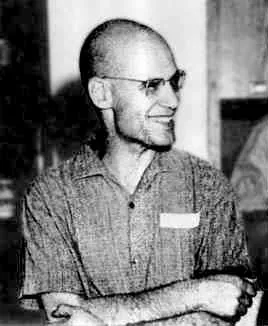 Alexander Grothendieck1928–2014 · Mathematics
 John Tate1925–2019 · Mathematics
 Benoit Mandelbrot1924–2010 · Mathematics
 Andrew Wiles1953 · Mathematics
