
Nancy Hafkin
American computer scientist and communications expert, pioneer of email and information development in Africa · 1942
- Born
- 1942
- Country
- South Africa
- Section
- Computing
Biography
Nancy Jane Hafkin is an American computer and electronic communications specialist who helped bring email and information systems to Africa, a continent where access to data was long very limited. Her work, carried out mainly from the late 1980s into the early 1990s, made her a key figure in the story of how digital networks reached countries that had barely any access to information.
Hafkin studied history and anthropology at Brandeis University in Boston between 1960 and 1965. She then did graduate work at Boston University, where she found a mentor in Professor Ruth Morgenthau, who encouraged her to focus on African history, a young field in which many women were active. She earned her doctorate with a thesis on trade, society and politics in northern Mozambique between 1753 and 1913.
In 1975 she moved to Ethiopia with her husband, Berhanu Abebe, a classmate from Brandeis, and they lived in Addis Ababa for nearly twenty-five years, until 2000. There she taught as a visiting professor at the University of Addis Ababa and chaired its history department from 1980 to 1981. Her work at the United Nations Economic Commission for Africa showed her how little information moved across the continent: data travelled by fax and by post, and the country had not even one public library. To tackle this, she launched the Pan African Development Information System (PADIS) in 1986 and led it until 1997.
Through PADIS she helped set up the first electronic communication networks in ten African countries and persuaded many government officials of the value of the Internet. Her sources note that her work also raised global awareness of gender issues in information technology and made fast, low-cost access to information easier across the continent. She also contributed to the Association for Progressive Communications, whose efforts enabled email links in more than ten countries in the early 1990s, before full Internet access arrived in most of Africa.
In 2000 she left the UN and returned to the United States with her husband, to pursue her long-standing aim of improving women's access to information. After leaving academia she has continued to give keynote talks on women's participation in information technology.
Her legacy lives on in her writing and in the awards named after her. In 2006 she co-edited with Sophia Huyer Cinderella or Cyberella?, a collection of essays on how information technology empowers women. The idea inspired EU Commissioner Viviane Reding's campaign to increase the number of women in the European ICT sector. The Association for Progressive Communications, based in Johannesburg, created an annual prize in her name for innovation in information technology in Africa. In 2012 she was inducted into the Internet Society's Internet Hall of Fame.
Main contributions
- 1986Launch of the Pan African Development Information System (PADIS), a network for sharing economic data among African countries.
- 1990Help in bringing email to more than ten African countries, working with the Association for Progressive Communications.
- 2006Co-editing of Cinderella or Cyberella?, a collection of essays on how information technologies empower women.
- 2012Induction into the Internet Hall of Fame of the Internet Society.
Trivia and anecdotes
A prize in her name
The Association for Progressive Communications created the annual Nancy Hafkin Prize for innovation in information technology in Africa.
A European campaign inspired by her book
The 'cyberella' idea from her book inspired EU Commissioner Viviane Reding's 'Cyberellas are IT!' campaign.
Their contemporaries
While Nancy Hafkin was alive (1942–)…
Alive at the same time
Discovered or invented in those years
- 1945ComputerA programmable machine that takes in data, processes it by following stored instructions, and produces results, able to switch tasks simply by running different software.
- 1957Artificial satelliteAn artificial satellite is a human-made object placed in orbit around a celestial body, usually Earth, to collect information, relay signals, or carry out a specific task.
- 1969InternetA global network of interconnected computer networks that communicate using the TCP/IP protocol suite.
- 1971EmailA network service that lets users send and receive digital messages through addressed mailboxes, much like postal mail but electronic.
- 1973Mobile phoneA handheld wireless phone that lets people make and receive calls while moving across a cellular network area.
- 1989World Wide WebA system of linked documents and resources, connected by hyperlinks and accessed over the Internet with web browsers.
 Dennis M. Ritchie1941–2011 · Computing
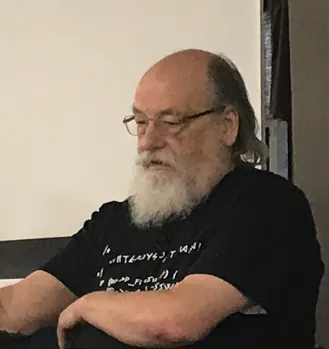 Ken Thompson1943 · Computing
 Vint Cerf1943 · Computing
 Leslie Lamport1941 · Computing
