
Nicolas Théodore de Saussure
Franco-Swiss chemist and plant physiologist, a pioneer in photosynthesis research · 1767–1845
- Born
- October 14, 1767
- Died
- April 18, 1845
- Country
- Switzerland, France, Republic of Geneva
- Section
- Chemistry
Biography
Nicolas-Théodore de Saussure (Geneva, 1767–1845) was a Swiss chemist and plant physiologist whose experiments laid the groundwork for modern phytochemistry. Living through the years when Lavoisier was reshaping chemistry, he helped establish how plants feed themselves from air, water and soil, and he is counted among the early pioneers of photosynthesis, the process by which green plants turn light into chemical energy.
He came from a wealthy Genevan family with a strong scientific tradition. His father, Horace-Bénédict de Saussure, was a geologist, meteorologist and explorer of the Alps, and his great-uncle Charles Bonnet had studied leaves. Like his sister Albertine and brother Alphonse, he was taught at home, since his father thought schools of the period were poor. He attended the University of Geneva from 1782 to 1786, then accompanied his father on mountain expeditions and helped with measurements of physics and meteorology. In one of them he tested Boyle's law, which links the pressure and volume of a gas, by weighing a sealed flask at different altitudes; the changes in weight matched the changes in air pressure. With his father he also helped identify the mineral dolomite, which he named after Déodat de Dolomieu in 1792.
During the French Revolution he travelled abroad, meeting scientists in London, and in 1800 he took chemistry courses and gave a paper in Paris. Back in Geneva in 1802 he received an honorary chair in mineralogy and geology, which he held until 1835 while teaching very little. Drawn to Lavoisier's discoveries, he adopted the new chemistry early on. Like many scientists of his day he worked in a private laboratory, and although he lived quietly and largely apart from society, he took part in public affairs as a member of Geneva's representative council.
His best-known work, Recherches chimiques sur la Végétation, appeared in 1804 and was built on years of careful measurement. Saussure showed that a plant's growing mass could not come only from the carbon dioxide it absorbs from the air; a large share came from the water it takes in. In experiments, plants rooted in water and exposed to air enriched with CO2 gained far more dry weight than the gas could explain. He also found that the carbon came from the air rather than from humus in the soil, as many believed, and that plants need minerals and nitrogen taken from the ground. These results completed the basic chemical equation of photosynthesis and closed the early pioneering period that began with van Helmont, Priestley, Ingenhousz and Senebier. For decades his findings were largely forgotten until Justus von Liebig revived them, and Jean-Baptiste Boussingault's field work supported his conclusions about soil minerals.
He also advanced the analysis of organic substances, determining the composition of alcohol and ether and studying fermentation and the conversion of starch into sugar. In 1815 he helped found the Swiss Society of Natural Sciences. He died in his native Geneva in 1845. His legacy spans chemistry, plant physiology and soil science, and he is often regarded as one of the forerunners of modern agriculture.
Main contributions
- 1792Identification of dolomite, a mineral he named with his father after Déodat de Dolomieu.
- 1804Recherches chimiques sur la Végétation: showed that plants gain mass from water as well as from atmospheric CO2.
- 1804Source of plant carbon: concluded it comes from atmospheric carbon dioxide rather than soil humus.
- 1804Mineral nutrients: showed that plants absorb minerals and nitrogen from soil, rejecting supposed internal transmutations.
- Organic analysis: determined the composition of alcohol and ether and studied fermentation and the conversion of starch into sugars.
Trivia and anecdotes
Testing Boyle's law
He weighed a sealed flask at different altitudes to check Boyle's law by a new method.
A famous great-nephew
He was the great-uncle of the linguist Ferdinand de Saussure.
Their contemporaries
While Nicolas Théodore de Saussure was alive (1767–1845)…
Alive at the same time
Discovered or invented in those years
- 1772NitrogenChemical element with atomic number 7, a colourless, odourless gas that makes up about 78% of Earth's air and is an essential part of proteins and nucleic acids.
- 1774OxygenA colorless, odorless gas, symbol O and atomic number 8, that forms the dioxygen in air and is essential for respiration in most living things.
- 1781UranusThe seventh planet from the Sun, an ice giant discovered by William Herschel in 1781, the first planet found with a telescope.
- 1803AtomThe basic unit of a chemical element: a nucleus of protons and usually neutrons surrounded by a cloud of electrons.
- 1821ElectricityThe set of physical phenomena linked to the presence and movement of electric charge, and one of the most versatile forms of energy in modern life.
- 1839PhotographyA technique for creating lasting images by recording light, either on a light-sensitive material or with an electronic sensor.
 John Dalton1766–1844 · Chemistry
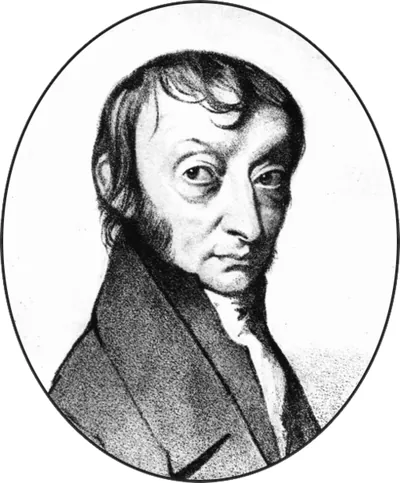 Amedeo Avogadro1776–1856 · Chemistry
 Humphry Davy1778–1829 · Chemistry
 Jöns Jacob Berzelius1779–1848 · Chemistry
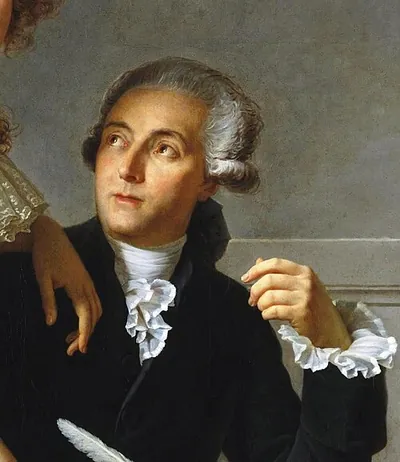 Antoine Lavoisier1743–1794 · Chemistry
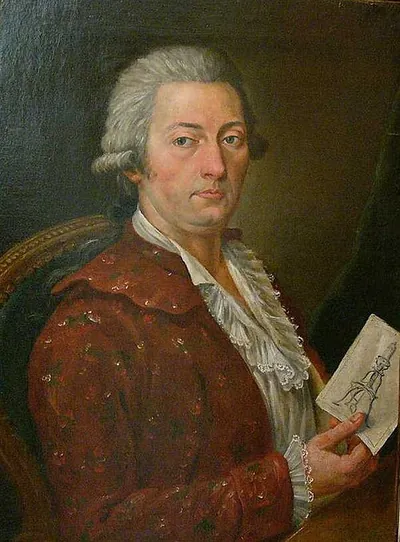 Carl Wilhelm Scheele1742–1786 · Chemistry
