Sergei Novikov
Russian mathematician known for his work in algebraic topology and soliton theory · 1938–2024
- Born
- March 20, 1938
- Died
- June 6, 2024
- Country
- Russia
- Section
- Mathematics
- Awards
- Fields Medal
Biography
Sergei Petrovich Novikov (born in Gorky, now Nizhny Novgorod, 20 March 1938; died 6 June 2024) was a Soviet and Russian mathematician. He was the first Soviet mathematician to win the Fields Medal, the most prestigious prize in mathematics. His work spanned algebraic topology, which studies the shapes of spaces through properties that survive stretching without tearing, and soliton theory, which studies waves that keep their shape as they travel. He worked during the Cold War, and his results remain standard references in both fields.
He grew up in a household of mathematicians. His father, Pyotr Novikov, had found a negative solution to the word problem for groups, showing that no general procedure can decide whether two expressions in a group are equivalent. His mother, Lyudmila Keldysh, and his maternal uncle, Mstislav Keldysh, were also important figures in Soviet mathematics. Novikov entered Moscow State University in 1955 and graduated in 1960. In 1964 he received a Moscow Mathematical Society award for young mathematicians and defended a dissertation equivalent to a PhD under Mikhail Postnikov at the same university. A year later he defended a higher doctoral dissertation in the same field.
His early research, largely carried out on his own, concerned cobordism theory, which classifies shapes by whether one can be turned into another through a shared boundary. Novikov showed how the Adams spectral sequence, a method that starts from homology, a way of counting holes and cavities in a space, could be used to calculate homotopy groups, which describe how maps between spaces can be continuously deformed into one another. Making this work required extending the operations of cohomology to a general setting, so that the technique could handle newer theories such as cobordism and K-theory. The outcome, the Adams-Novikov spectral sequence, is now a basic tool in stable homotopy theory.
In geometric topology he was one of the pioneers, alongside William Browder, Dennis Sullivan and C. T. C. Wall, of surgery theory, a method for classifying manifolds in high dimensions. He proved that the rational Pontryagin classes, numerical invariants of smooth shapes, are topological invariants, meaning they do not depend on the particular smooth structure chosen. He also posed the Novikov conjecture, which remains an open problem. From about 1971 he turned to isospectral flows, evolutions that keep a system's spectrum constant, with links to theta functions. His conjecture on the Riemann-Schottky problem, which asks when a principally polarized abelian variety is the Jacobian of an algebraic curve, was tied to the Kadomtsev-Petviashvili equation from soliton theory. Takahiro Shiota proved it in 1986, building on earlier work by Enrico Arbarello and Corrado de Concini (1984) and by Motohico Mulase (1984).
Novikov's institutional career was busy. He became a corresponding member of the Soviet Academy of Sciences in 1966 and in 1971 led the mathematics division of the Landau Institute for Theoretical Physics. From 1983 he headed the department of higher geometry and topology at Moscow State University, and from 1985 to 1996 he presided over the Moscow Mathematical Society. In 1996 he moved to the University of Maryland, College Park, while keeping research ties to Moscow. He received the Lenin Prize in 1967 and the Fields Medal in 1970, but the Soviet government did not let him travel to the International Congress of Mathematicians in Nice to collect it, because of his support for people arrested and confined to psychiatric hospitals for criticising the regime. He received the medal in 1971, when the International Mathematical Union met in Moscow. In 2005 he won the Wolf Prize for work in algebraic topology, differential topology and mathematical physics, and he is one of only eleven mathematicians to have received both the Fields Medal and the Wolf Prize.
His legacy lives on in the Adams-Novikov spectral sequence, in surgery theory, and in the link between geometry and wave equations that soliton theory made visible. He died on 6 June 2024, at the age of 86, leaving work that connects topology with mathematical physics.
Main contributions
- 1967Lenin Prize, one of the highest scientific honours in the Soviet Union.
- 1970Fields Medal, the top prize in mathematics, the first awarded to a Soviet mathematician.
- 1981Lobachevsky Medal, a Soviet mathematical distinction.
- 2005Wolf Prize for contributions to algebraic topology, differential topology and mathematical physics.
- Adams-Novikov spectral sequence, a basic tool for calculating stable homotopy groups, adapted to theories such as cobordism and K-theory.
- Topological invariance of the rational Pontryagin classes, which do not depend on the chosen smooth structure.
- Novikov's conjecture on the Riemann-Schottky problem, linked to the Kadomtsev-Petviashvili equation, proved by Shiota in 1986.
Teachers and students
Studied under:
Taught:
Trivia and anecdotes
Fields Medal collected late
The Soviet government barred him from the 1970 congress in Nice. He received the medal in 1971, when the International Mathematical Union met in Moscow.
A family of mathematicians
His father found a negative solution to the word problem for groups, and his mother and uncle were also prominent mathematicians.
Their contemporaries
While Sergei Novikov was alive (1938–2024)…
Alive at the same time
Discovered or invented in those years
- 1945ComputerA programmable machine that takes in data, processes it by following stored instructions, and produces results, able to switch tasks simply by running different software.
- 1957Artificial satelliteAn artificial satellite is a human-made object placed in orbit around a celestial body, usually Earth, to collect information, relay signals, or carry out a specific task.
- 1969InternetA global network of interconnected computer networks that communicate using the TCP/IP protocol suite.
- 1971EmailA network service that lets users send and receive digital messages through addressed mailboxes, much like postal mail but electronic.
- 1973Mobile phoneA handheld wireless phone that lets people make and receive calls while moving across a cellular network area.
- 1989World Wide WebA system of linked documents and resources, connected by hyperlinks and accessed over the Internet with web browsers.
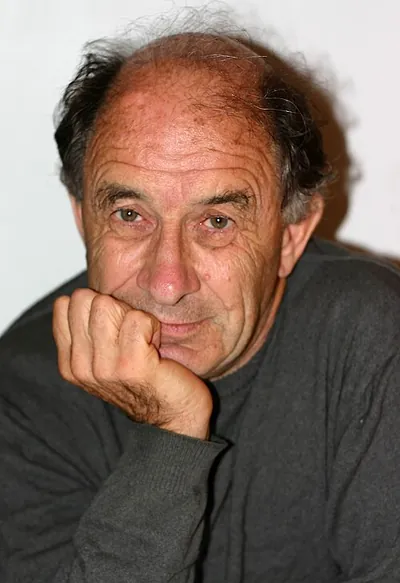 Vladimir Arnold1937–2010 · Mathematics
 Robert Aumann1930 · Mathematics
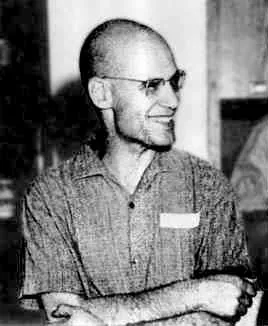 Alexander Grothendieck1928–2014 · Mathematics
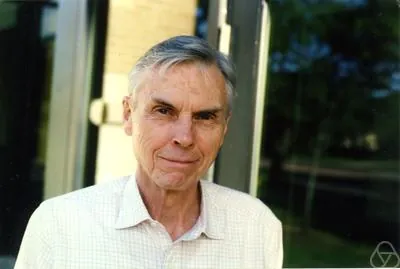 John Tate1925–2019 · Mathematics
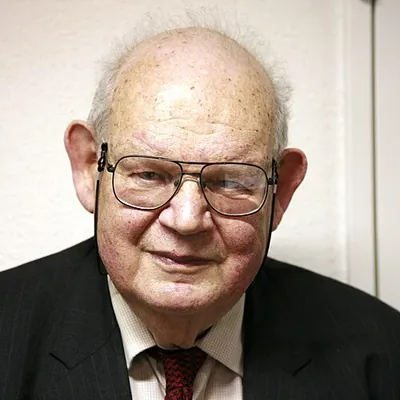 Benoit Mandelbrot1924–2010 · Mathematics
 Andrew Wiles1953 · Mathematics