Vicente Cervantes
Spanish-born physician and botanist, later naturalised Mexican, first professor of botany at the Royal Botanic Garden in Mexico City · 1758–1829
- Born
- February 17, 1758
- Died
- July 26, 1829
- Country
- Spain
- Section
- Biology
Biography
Vicente Cervantes Mendo (Ledrada, Salamanca, 1758 - Mexico City, 1829) was a Spanish physician and botanist who became a naturalised Mexican. He lived during the Enlightenment, when the Spanish Crown promoted scientific exploration of its American territories, and he matters because he founded the first botanic garden in Mexico City and taught botany in New Spain.
Raised in Zafra, he moved to Madrid to study. During his training he worked in a pharmacy at the royal court and at the Royal Botanic Garden in Madrid, where he learned to prepare plants and medicines. After qualifying in pharmacy he gained a post as pharmacist at the General Hospital of the capital.
Shortly afterwards, the Aragonese physician Martín Sessé y Lacasta began planning a scientific expedition to New Spain. Its aims were to survey the region's natural life, promote the teaching of science and bring the colony's health workers up to date. Sessé led it, and Cervantes joined as the botany expert, alongside the anatomist José Longinos Martínez, the pharmacists Jaime Senseve and Juan Diego del Castillo, and two young painters. Planned for five years (1787-1803), the project was meant to travel across the territory recording animals, plants, minerals and customs.
Not everyone welcomed the newcomers. Some local scholars distrusted the reformist ideas arriving from Spain. Among them, José Antonio Alzate rejected the plant classification devised by Carl Linnaeus, which the Spanish had already adopted. Cervantes and Alzate fought a bitter dispute that eventually gave way to a productive partnership. To spread the new ideas, Cervantes translated Lavoisier's Treatise on Chemistry, linking botany and chemistry, two fields he saw as connected.
His greatest work in Mexico was the Royal Botanic Garden in the capital, opened on 1 May 1788. There he held the botany chair, and among his students was José Mariano Mociño, who joined the expedition in 1789. Field trips sent the garden preserved specimens, drawings, engravings and minerals for study and classification. Cervantes combined teaching and research with running the pharmacy of the General Hospital of San Andrés from 1791 until 1809, when he opened his own pharmacy. He also campaigned, without success, for university courses in pharmacy, opposing the Protomedicato, the tribunal that favoured practical training for apothecaries.
After Mexican independence, many Spaniards were expelled by decree from 1827. Cervantes was exempted in recognition of his scientific services and continued living in Mexico until his death in 1829. His legacy lives on in the garden he founded, in the genus Castilla, which he named after Juan Diego del Castillo, and in the orchid Odontoglossum cervantesii, named in his honour in 1824.
Main contributions
- 1787Joins the Royal Botanical Expedition to New Spain as the botany expert, a five-year project to inventory the region's natural world.
- 1788Founds the Royal Botanic Garden in Mexico City, opened on 1 May, and runs its botany chair.
- Translates Lavoisier's Treatise on Chemistry into Spanish to spread modern chemistry among New Spain's scientists.
- Names the genus Castilla, made up of three large latex-producing trees, after Juan Diego del Castillo.
Trivia and anecdotes
An orchid bearing his name
The orchid Odontoglossum cervantesii was described in 1824 by the Mexican botanists Pablo de La Llave and Juan José Martínez de Lexarza, who dedicated it to Cervantes. Its accepted name today is Rhynchostele cervantesii.
An exception to the expulsions
When many Spaniards were expelled from Mexico in 1827, Cervantes was exempted by decree in gratitude for his scientific services.
Their contemporaries
While Vicente Cervantes was alive (1758–1829)…
Alive at the same time
Discovered or invented in those years
- 1766HydrogenThe lightest and most abundant chemical element in the universe, atomic number 1, which under normal conditions is a colourless, odourless and highly flammable gas.
- 1772NitrogenChemical element with atomic number 7, a colourless, odourless gas that makes up about 78% of Earth's air and is an essential part of proteins and nucleic acids.
- 1774OxygenA colorless, odorless gas, symbol O and atomic number 8, that forms the dioxygen in air and is essential for respiration in most living things.
- 1781UranusThe seventh planet from the Sun, an ice giant discovered by William Herschel in 1781, the first planet found with a telescope.
- 1803AtomThe basic unit of a chemical element: a nucleus of protons and usually neutrons surrounded by a cloud of electrons.
- 1821ElectricityThe set of physical phenomena linked to the presence and movement of electric charge, and one of the most versatile forms of energy in modern life.
 Edward Jenner1749–1823 · Biology
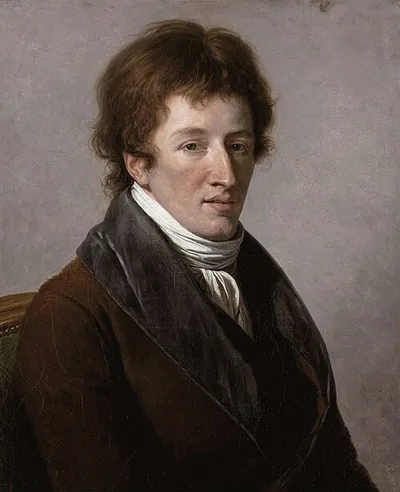 Georges Cuvier1769–1832 · Biology
 Jean-Baptiste de Lamarck1744–1829 · Biology
 Charles Darwin1809–1882 · Biology
 Carl Linnaeus1707–1778 · Biology
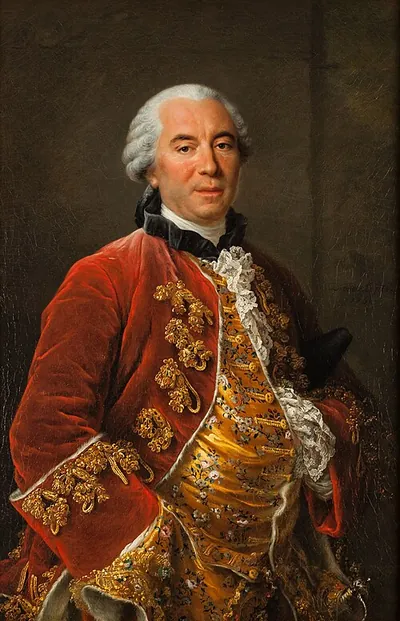 Georges-Louis Leclerc, Comte de Buffon1707–1788 · Biology