
William Fulton
American mathematician specializing in algebraic geometry and author of widely used textbooks · 1939
- Born
- August 29, 1939
- Country
- United States
- Section
- Mathematics
Biography
William Edgar Fulton is an American mathematician who specializes in algebraic geometry, a field that studies the sets of points defined by polynomial equations and the relationships between those shapes, using both geometric and algebraic tools. Born in 1939, he built his career mainly in the second half of the twentieth century and into the early decades of the twenty-first. He matters for his research, for the students he trained, and above all for the textbooks through which many mathematics students have come to know the subject.
Fulton earned his undergraduate degree at Brown University in 1961. Five years later he completed his doctorate at Princeton University. His thesis, The fundamental group of an algebraic curve, was written under the supervision of Gerard Washnitzer. The fundamental group is a tool that sorts the closed loops drawn on a surface according to whether they can be smoothly shrunk down to a single point. In his thesis, Fulton applied this idea to algebraic curves, the shapes defined by polynomial equations, and examined what the loops can reveal about the form of a curve.
From 1965 to 1970 he worked at Princeton and at Brandeis University. In 1970 he began teaching at Brown, where he stayed until 1987, when he moved to the University of Chicago. In 1998 he went on to the University of Michigan, and he retired from there in 2020. Across these three institutions he supervised the doctoral work of 24 students at Brown, Chicago and Michigan, a figure that reflects how central teaching remained to his career.
His reputation rests partly on his books. Among the most widely read are Algebraic Curves and Representation Theory, which he wrote alone or with coauthors. His book Intersection Theory earned him the Steele Prize for mathematical exposition in 1996, an award from the American Mathematical Society for clear writing about difficult ideas. Intersection theory studies how geometric figures cut across one another and how many points they share, counting carefully even when the figures touch tangentially or overlap in part. Explaining this with rigor and without losing the reader is one reason his texts have found such a broad audience.
His work also earned recognition from scientific institutions. In 1997 he became a member of the United States National Academy of Sciences, and since 1998 he has been a fellow of the American Academy of Arts and Sciences. In 2000 he was elected a foreign member of the Royal Swedish Academy of Sciences. In 2010 he received the Steele Prize again, this time for lifetime achievement, and in 2012 he became a fellow of the American Mathematical Society.
Fulton's legacy is divided between his students and his writing. His students have carried his approach to universities across the country, and his books have been among the most popular in his field, making them a route into algebraic geometry for readers who will never work in it professionally. His career shows how research and teaching can sustain each other over decades.
Main contributions
- 1969First edition of one of his reference texts, listed as an early work in the sources consulted, which marks the start of his career as a writer of mathematics books.
- Intersection Theory: a book explaining how geometric figures cross and how to count their shared points, awarded the Steele Prize in 1996.
- Representation Theory: a textbook written as author or coauthor, dealing with how symmetry groups can be described through linear transformations.
Teachers and students
Studied under:
Taught:
Trivia and anecdotes
Two Steele Prizes
Fulton received the Steele Prize twice: in 1996 for the exposition in his book Intersection Theory, and in 2010 for his lifetime achievement.
Three universities, one career
He moved among Princeton, Brown, Chicago and Michigan, and his final teaching post ended with his retirement in 2020.
Their contemporaries
While William Fulton was alive (1939–)…
Alive at the same time
Discovered or invented in those years
- 1945ComputerA programmable machine that takes in data, processes it by following stored instructions, and produces results, able to switch tasks simply by running different software.
- 1957Artificial satelliteAn artificial satellite is a human-made object placed in orbit around a celestial body, usually Earth, to collect information, relay signals, or carry out a specific task.
- 1969InternetA global network of interconnected computer networks that communicate using the TCP/IP protocol suite.
- 1971EmailA network service that lets users send and receive digital messages through addressed mailboxes, much like postal mail but electronic.
- 1973Mobile phoneA handheld wireless phone that lets people make and receive calls while moving across a cellular network area.
- 1989World Wide WebA system of linked documents and resources, connected by hyperlinks and accessed over the Internet with web browsers.
 Vladimir Arnold1937–2010 · Mathematics
 Robert Aumann1930 · Mathematics
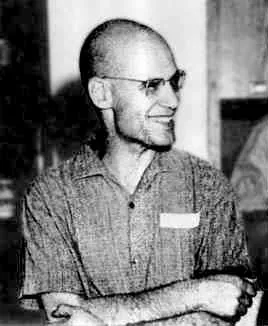 Alexander Grothendieck1928–2014 · Mathematics
 Andrew Wiles1953 · Mathematics
 John Tate1925–2019 · Mathematics
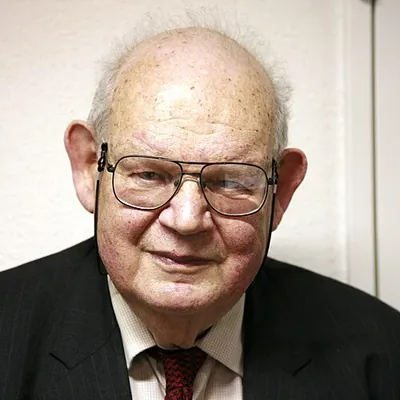 Benoit Mandelbrot1924–2010 · Mathematics
