
Yves Meyer
French mathematician, one of the pioneers of wavelet theory · 1939
- Born
- July 19, 1939
- Country
- France
- Section
- Mathematics
Biography
Yves Meyer is a French mathematician born in Paris in 1939 and one of the pioneers of wavelet theory, a set of mathematical tools that break a signal into pieces at different scales. His work, developed mainly from the 1980s onward, has found practical use in image compression, signal processing and data analysis, and it earned him the Abel Prize in 2017.
Meyer was born in Paris into a Jewish family. He grew up partly in Tunis, where he attended the Lycée Carnot and excelled in French national mathematics competitions. In 1957 he placed first in the entrance examination for the École Normale Supérieure in Paris, where he trained as a mathematician. He earned his doctorate in 1966 at the University of Strasbourg under Jean-Pierre Kahane, a specialist in harmonic analysis, the branch of mathematics that studies how functions can be built from simple waves. That field became the starting point for much of his work.
Before completing his doctorate he did his military service as a teacher at the Prytanée national militaire (1960 to 1963) and worked as a teaching assistant in Strasbourg. He then held a professorship at the Université Paris-Sud (1966 to 1980), where he developed much of his early work in number theory and harmonic analysis. The following years took him to the École Polytechnique (1980 to 1986) and the Université Paris-Dauphine, until in 1995 he joined the CNRS, France's main public research body.
The contribution for which he is best known came around 1985. Working with other researchers, Meyer looked for basic building blocks that could represent a signal or function at several scales, showing fine detail where things change abruptly and less where they change smoothly. This led to the family of wavelets that bears his name, the Meyer wavelet, one of the first to combine smoothness with good localization. The work fed into multiresolution analysis, developed with Stéphane Mallat and Ingrid Daubechies, which became a foundation for modern methods of data compression.
His research has been recognised across the mathematical community. He received the Salem Prize in 1970 and the Gauss Prize in 2010, awarded jointly by the International Mathematical Union and the German Mathematical Society. He was an invited speaker at several International Congresses of Mathematicians and has been a member of the French Academy of Sciences since 1993, as well as of American scientific academies. In 2017 he received the Abel Prize for his central role in building the mathematical theory of wavelets. In 2020 he shared the Princess of Asturias Award for Technical and Scientific Research with Emmanuel Candès, Ingrid Daubechies and Terence Tao, for their contributions to the mathematical processing of data and signals.
Meyer taught at the École Normale Supérieure de Cachan and at the Centre de Mathématiques et de leurs Applications of ENS Paris-Saclay, where he retired formally in 2008 and remains an emeritus associate professor. His legacy lies in the use of wavelets across very different fields, from image compression to electronics and medicine, and in the way he joined deep mathematical theory with practical applications.
Main contributions
- 1966Doctoral thesis at the University of Strasbourg, supervised by Jean-Pierre Kahane, in the field of harmonic analysis.
- 1970Salem Prize, an early recognition of his mathematical work.
- 1985Meyer wavelet, a basis function that decomposes signals at different scales with good smoothness and localization.
- 2010Gauss Prize, for his contributions to number theory, operator theory and harmonic analysis, and to wavelets.
- 2017Abel Prize, for his central role in developing the mathematical theory of wavelets.
- 2020Princess of Asturias Award for Technical and Scientific Research, shared with Candès, Daubechies and Tao.
Teachers and students
Studied under:
Taught:
Trivia and anecdotes
First place at the ENS
In 1957 he placed first in the entrance examination for the École Normale Supérieure in Paris.
Family link to a historian
The Mexican historian Jean Meyer is his cousin.
Their contemporaries
While Yves Meyer was alive (1939–)…
Alive at the same time
Discovered or invented in those years
- 1945ComputerA programmable machine that takes in data, processes it by following stored instructions, and produces results, able to switch tasks simply by running different software.
- 1957Artificial satelliteAn artificial satellite is a human-made object placed in orbit around a celestial body, usually Earth, to collect information, relay signals, or carry out a specific task.
- 1969InternetA global network of interconnected computer networks that communicate using the TCP/IP protocol suite.
- 1971EmailA network service that lets users send and receive digital messages through addressed mailboxes, much like postal mail but electronic.
- 1973Mobile phoneA handheld wireless phone that lets people make and receive calls while moving across a cellular network area.
- 1989World Wide WebA system of linked documents and resources, connected by hyperlinks and accessed over the Internet with web browsers.
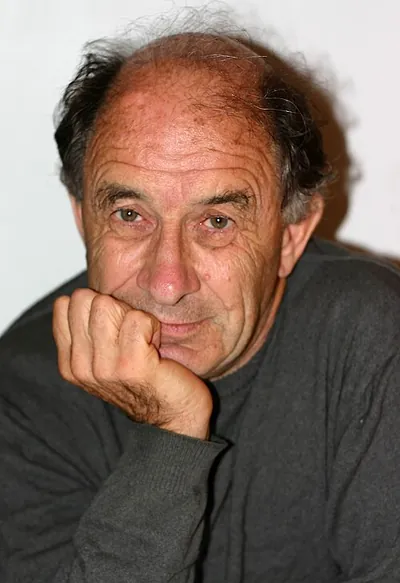 Vladimir Arnold1937–2010 · Mathematics
 Robert Aumann1930 · Mathematics
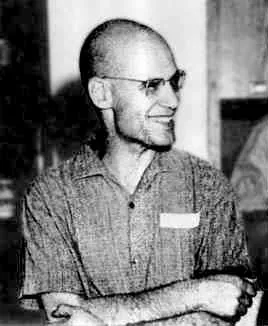 Alexander Grothendieck1928–2014 · Mathematics
 Andrew Wiles1953 · Mathematics
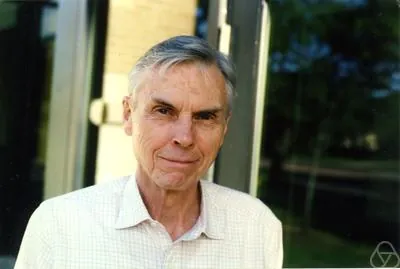 John Tate1925–2019 · Mathematics
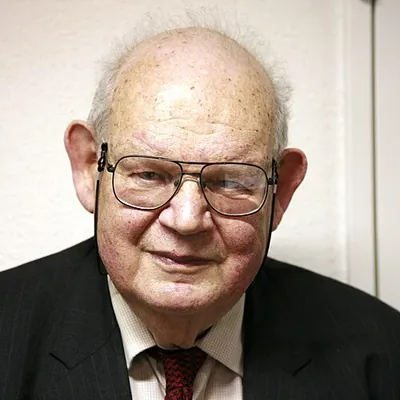 Benoit Mandelbrot1924–2010 · Mathematics
