
Animation
A technique that creates the illusion of motion by showing a sequence of images that differ only slightly from one another.
- Year
- 1888
- People involved
- Émile Reynaud
- Section
- Technology and communications
History
Animation is a technique that gives the illusion of movement to drawings, still objects or people by showing a sequence of images that change little from one to the next. It matters because it underpins cartoons, stop motion, animated GIFs and much of today's visual effects. The illusion is traditionally attributed to persistence of vision, the fact that the eye retains an image for a moment after it disappears, although the exact neurological causes are still uncertain.
Long before cinema, devices were already playing with this idea. In 1833 Joseph Plateau presented the phenakistiscope, a disc with drawings arranged in sectors and separated by slits which, when viewed in a mirror through the slits, showed the figures moving. It was followed by the zoetrope (1866), the flip book (1868) and the praxinoscope (1877). All were mechanical devices that presented images in rapid succession.
Émile Reynaud, the inventor named in the record, went a step further. Between 1892 and 1900 his Théâtre Optique projected hand-painted animations at the Musée Grévin in Paris, and it probably inspired some of the pioneers of film technology. The record places the milestone around 1888, an approximate date that should be treated with caution, since the documented public screenings begin in 1892.
When cinema took hold in the 1890s, animation took years to reach cinemas. The short The Haunted Hotel (1907), by J. Stuart Blackton, popularised object animation frame by frame and reportedly inspired Émile Cohl to make Fantasmagorie (1908), regarded as the oldest known fully hand-drawn animation on film. Ladislas Starevich worked with puppets from 1910, while Winsor McCay produced highly detailed drawings in Little Nemo (1911) and Gertie the Dinosaur (1914).
During the 1910s animation became an industry in the United States. John Randolph Bray and Earl Hurd patented the cel process, in which characters were drawn on transparent sheets laid over a fixed background, so the scenery did not have to be redrawn for every image. The method dominated the field for the rest of the century. With Steamboat Willie (1928), featuring Mickey Mouse, synchronised sound reached animation and Walt Disney's studio moved to the front, although its output is a small share of the world total.
Animation then diversified. Stop motion, using puppets, modelling clay or cut-outs, became a popular alternative to drawing. Rotoscoping, in which outlines of live footage were traced, supported many studios. In recent decades computers have gradually replaced hand drawing: software based on virtual skeletons helps generate in-between frames, and motion capture has taken over much of the role rotoscoping played. A film runs at 24 frames per second, but many images repeat, which is why animators speak of drawing on ones, twos or threes depending on how often each drawing changes.
The present impact is considerable. Animation appears in series, feature films, video games, interfaces, motion graphics and visual effects blended with live action. It is no longer only for children, and most films with digital effects owe their look to techniques that grew out of those early devices for optical illusion.
Timeline
- 1833Joseph Plateau presents the phenakistiscope, introducing the principle of stroboscopic animation.
- 1866The zoetrope appears, a drum with sequential drawings viewed through slits.
- 1892Émile Reynaud begins screening hand-painted animations in his Théâtre Optique in Paris.
- 1907J. Stuart Blackton releases The Haunted Hotel, a short that popularised stop motion.
- 1908Émile Cohl releases Fantasmagorie, regarded as the oldest known drawn animation on film.
- 1928Steamboat Willie, starring Mickey Mouse, popularises animation with synchronised sound.
- 1937Disney releases Snow White and the Seven Dwarfs, its first animated feature.
Trivia and anecdotes
A name with Latin roots
The word animation comes from the Latin animātiō, meaning bestowing of life. Its earlier English sense was liveliness, long before it meant a moving-image medium.
A method born on a film set
Go motion, a variant of stop motion, was invented by Phil Tippett for The Empire Strikes Back (1980). Gently shaking the object during each frame produces a blur similar to that of live filming.
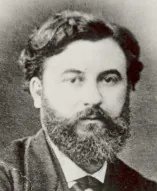 Émile Reynaud1844–1918 · Technology and communications
