Length contraction
A relativistic effect by which a moving object is measured as shorter along its direction of motion than when at rest.
- Year
- 1889
- People involved
- Hendrik Lorentz, George FitzGerald
- Section
- Physics
History
Length contraction, also called Lorentz contraction, is the apparent shortening of a body along the direction it moves, a effect that becomes noticeable only when its speed approaches that of light. Put simply, the length of an object depends on who measures it and how fast it moves relative to them. It is one of the pillars of relativity theory, although its origins were quite different from how it is understood today.
At the end of the nineteenth century, physicists assumed that light travelled through an invisible medium called the aether, and they tried to measure the Earth's motion through it. The Michelson–Morley experiment of 1887 detected no such aether wind, which was puzzling. In 1889 George Francis FitzGerald proposed that moving bodies contracted in the direction of their motion, and that this contraction explained the null result. Hendrik Antoon Lorentz arrived at a similar idea in 1892 and developed it in more detail. Both presented it as an ad hoc hypothesis, meaning a assumption introduced to solve a particular difficulty without a deeper physical basis. Lorentz imagined that the atoms of matter were physically deformed as they moved through the aether.
The picture shifted over the following years. In 1897 Joseph Larmor proposed a model in which all forces were electromagnetic, and contraction emerged naturally from it. In 1905, however, Henri Poincaré showed that electromagnetic forces alone could not keep the electron stable, so additional binding forces had to be assumed, which once again rested on a shaky footing. Poincaré also read Lorentz's local time as the time shown by clocks on a moving observer, though he still believed in a true time tied to the aether.
That same year Albert Einstein made the decisive step. In his work on special relativity he showed that contraction needed neither an aether nor special forces: it followed directly from two principles, that the speed of light is the same for all inertial observers and that the laws of nature hold equally for all of them. To measure the length of a moving object, one must note the positions of its two ends at the same instant, and what counts as the same instant depends on the observer. That is why observers in relative motion do not agree on the length. Hermann Minkowski soon gave a geometrical interpretation of these effects by introducing four-dimensional spacetime, in which contraction appears as a kind of rotation.
The basic formula divides the rest length by the Lorentz factor, which equals 1 at low speeds and grows without limit as speed nears that of light. At everyday speeds the effect is negligible: at about 13,400,000 metres per second the length is still 99.9 per cent of the rest length. The effect is symmetrical, since each observer sees the other as contracted when they move relative to each other.
Today length contraction is far from a mere theoretical curiosity. It enters the calculations of particle accelerators, where protons and electrons reach speeds very close to light, and it helps explain why unstable muons reach the Earth's surface in greater numbers than classical physics predicts. Special relativity, of which it is part, also underpins the precise timing needed by satellite navigation systems.
Timeline
- 1887The Michelson–Morley experiment fails to detect the expected aether wind.
- 1889George Francis FitzGerald proposes that moving bodies contract along their direction of motion.
- 1892Hendrik Antoon Lorentz develops the contraction hypothesis independently.
- 1905Henri Poincaré offers a dynamical explanation, and Albert Einstein derives the contraction within special relativity without needing the aether.
- 1908Hermann Minkowski presents four-dimensional spacetime, giving a geometrical interpretation of relativistic effects.
Trivia and anecdotes
A misleading photograph
In 1922 Lorentz wrongly claimed that the contraction could be photographed. Only in 1959 did James Terrell and Roger Penrose clarify that the actual visual effect is different, with objects appearing to rotate.
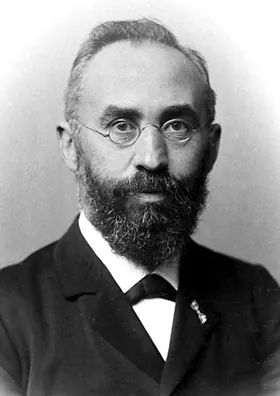 Hendrik Lorentz1853–1928 · Physics
 George FitzGerald1851–1901 · Physics