
Abraham Skorka
Argentine rabbi, writer and biophysicist, known for his dialogue with Jorge Mario Bergoglio · 1950
- Born
- July 5, 1950
- Country
- Argentina
- Section
- Physics
Biography
Abraham Skorka is an Argentine rabbi, writer and biophysicist, best known for the interfaith conversations he held for years with Jorge Mario Bergoglio, later Pope Francis. Born in Buenos Aires in 1950, he combines training in chemistry and biophysics, the study of living things using methods from physics, with teaching in the Jewish tradition and reflection on faith in the modern world.
He trained at the Seminario Rabínico Latinoamericano Marshall T. Meyer, where he was ordained as a rabbi after graduating in 1973. At the same time he studied chemistry at the University of Buenos Aires, where he qualified in 1979 and later earned a doctorate. His scientific training shows in his papers on biophysics, while his many articles on the Bible and the Talmud, the large collection of rabbinic debates, reflect his work on sacred texts.
He served as rector and professor of Jewish and rabbinic law at the seminary from 1996 to 2008 and again from 2010 to 2017. Since 2017 he has been rector emeritus. He currently works as senior researcher on Jewish studies and Jewish-Catholic relations at Georgetown University in Washington.
During the years when Bergoglio was Archbishop of Buenos Aires, the two held a series of talks on subjects including God, fundamentalism, atheism, death, the Holocaust, homosexuality and capitalism. The meetings alternated between the archbishop's residence and the Jewish community led by the rabbi. These conversations produced the book Sobre el Cielo y la Tierra, published in 2010, which was later translated into English as On Heaven and Earth.
In 2010 the Universidad Católica Argentina awarded him an honorary doctorate, an academic title given to recognize achievement. It was the first time a Catholic university in Latin America had granted this title to a rabbi. In 2017 he gave his approval to an Orthodox rabbinic statement on Christianity, which had been published two years earlier.
His legacy lies largely in the dialogue between Judaism and Christianity and in making Jewish tradition known to Spanish-speaking readers. In 2023 the University of Trnava in Slovakia awarded him an honorary doctorate in theology for his contributions to Judeo-Christian and interfaith dialogue and to tolerance.
Main contributions
- 1997Miles de años por semana: visión actual de la lectura de la Torá. A book on how the Jewish sacred text is read and studied today, following the weekly cycle of readings.
- 2000Maimonides' Laws of Giving to the Poor. A recording in which he explains the medieval philosopher's rules on charity.
- 2001Introducción al Derecho Hebreo. A collective work he co-edited, introducing the foundations of Jewish law.
- 2007Hacia un mañana sin fe? A book reflecting on the future of religious faith in contemporary society.
- 2010Sobre el cielo y la tierra. A book that grew out of his conversations with Jorge Mario Bergoglio on religious and social questions.
- 2017Approval of an Orthodox rabbinic statement on Christianity. An endorsement of a text proposing partnership between Jews and Christians.
- 2020Foreword to Jesus Wasn't Killed by the Jews. An introductory text for a work on the death of Jesus in the Jewish-Christian context.
Trivia and anecdotes
An unusual honor
In 2010 the Universidad Católica Argentina gave him an honorary doctorate, the first time a Catholic university in Latin America had given the title to a rabbi.
A translated book
The book that came from his talks with Bergoglio was translated into English as On Heaven and Earth.
A papal congratulation
When the University of Trnava awarded him an honorary doctorate in theology in 2023, Pope Francis congratulated and greeted him on the occasion.
Their contemporaries
While Abraham Skorka was alive (1950–)…
Alive at the same time
Discovered or invented in those years
- 1957Artificial satelliteAn artificial satellite is a human-made object placed in orbit around a celestial body, usually Earth, to collect information, relay signals, or carry out a specific task.
- 1969InternetA global network of interconnected computer networks that communicate using the TCP/IP protocol suite.
- 1971EmailA network service that lets users send and receive digital messages through addressed mailboxes, much like postal mail but electronic.
- 1973Mobile phoneA handheld wireless phone that lets people make and receive calls while moving across a cellular network area.
- 1989World Wide WebA system of linked documents and resources, connected by hyperlinks and accessed over the Internet with web browsers.
- 1990Web browserA program that lets people access the web by fetching a page's files from a server and displaying them on screen as an interactive page.
 Stephen Hawking1942–2018 · Physics
 Donna Strickland1959 · Physics
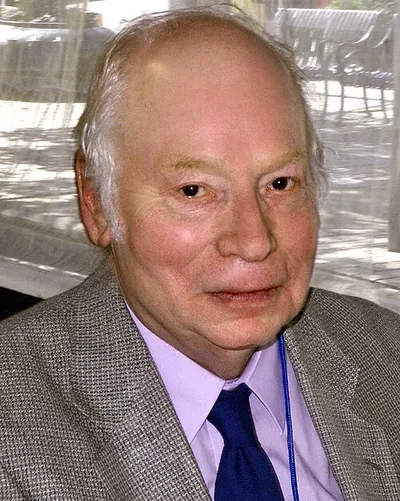 Steven Weinberg1933–2021 · Physics
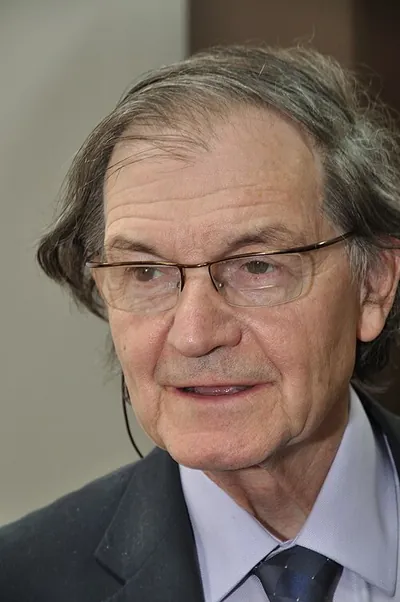 Roger Penrose1931 · Physics
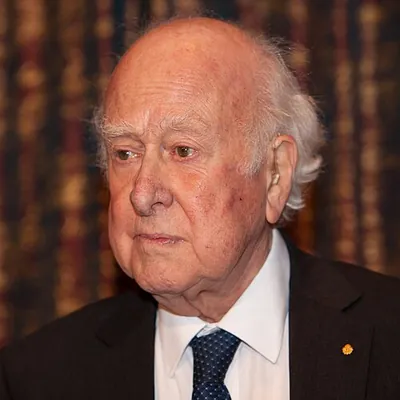 Peter Higgs1929–2024 · Physics
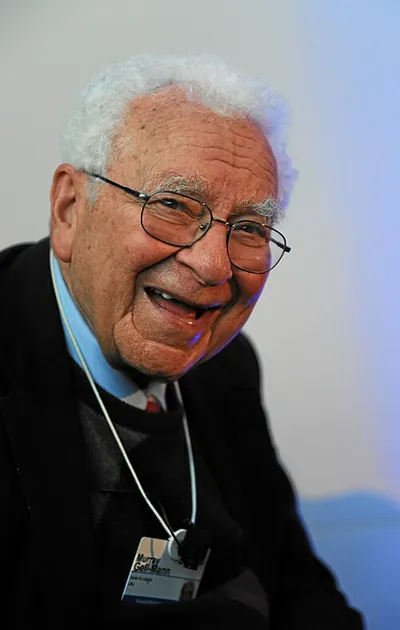 Murray Gell-Mann1929–2019 · Physics
