
Alec Jeffreys
British geneticist who developed genetic fingerprinting and DNA profiling · 1950
- Born
- January 9, 1950
- Country
- United Kingdom
- Section
- Biology
Biography
Sir Alec John Jeffreys is a British geneticist born in Oxford in 1950. He is known for developing genetic fingerprinting and DNA profiling, techniques now used by police and courts around the world to identify people. His work, carried out as molecular biology was expanding rapidly, changed forensic science and the way disputes over parentage and immigration are resolved.
Jeffreys grew up in a middle-class family. He spent his first six years in Oxford, and in 1956 the family moved to Luton, in Bedfordshire. He credits his curiosity and his inventive streak to his father and his paternal grandfather, who both held a number of patents. As a boy he was an enthusiastic experimenter. At eight his father gave him a chemistry set, which he expanded over the following years with extra chemicals, including a small bottle of sulphuric acid. He liked making small explosions, until a splash of that acid burned his chin and left a lasting scar. Soon afterwards he received a brass microscope of Victorian design, which he used to look at biological specimens. At about twelve he assembled a small dissecting kit, with a scalpel made from a flattened pin, and used it on bumblebees. His parents grew worried when he moved on to larger animals. The best-known story from this period concerns a dead cat he found on the road while delivering newspapers. By his own account he carried it home in his bag and began dissecting it on the dining room table before Sunday lunch, and the smell spread through the whole house. He attended Luton Grammar School and then Luton Sixth Form College. In his youth he went through several youth subcultures, from mods with their scooters to rockers with their motorbikes, a phase he recalls with some humour. In 1968 he entered Merton College, Oxford, and in 1971 he graduated in biochemistry with first-class honours.
His doctorate examined the mitochondria of cultured mammalian cells, the structures inside cells that produce energy. He then worked as a researcher at the University of Amsterdam, studying mammalian genes. In 1977 he moved to the University of Leicester, where he would carry out his best-known work. DNA is the hereditary material that carries the genetic instructions of an organism, and most of its sequence is identical from one person to another. Jeffreys was looking for regions where the order of the genetic letters varied between individuals.
The key finding came on 10 September 1984. While examining X-ray films from an experiment using samples from several members of a technician's family, he noticed similarities and differences in the patterns that he had not expected. Within about half an hour he grasped the implications: these variations could identify a person uniquely, much like a fingerprint. That was the birth of genetic fingerprinting. A year later, he and his team developed DNA profiling, which is based on short repeated segments of the human genome called minisatellites. It was more sensitive and reproducible, and easier to store in computer databases. For a time, by his account, his laboratory was the only one in the world doing this kind of testing, until the techniques were commercialised in 1987, and the lab was flooded with enquiries from around the globe.
The first use came in 1985, in a disputed immigration case: DNA tests were needed to confirm that a British boy of Ghanaian family origin was related to his relatives, and they did. The case that brought the technique most attention in criminal investigation was that of Colin Pitchfork, identified as the rapist and murderer of two teenage girls, Lynda Mann and Dawn Ashworth, in Narborough, Leicestershire, in 1983 and 1986. Pitchfork was convicted on the basis of semen samples taken from the two girls. British authorities consider that this evidence prevented an innocent man, Richard Buckland, who had been the main suspect, from being convicted. Another famous case was that of the Nazi doctor Josef Mengele, who died in 1979. In 1992, German prosecutors confirmed his identity by comparing DNA from a femur of his exhumed skeleton with DNA from his mother and son, much as in a paternity test. Later, Jeffreys used short tandem repeats, known as microsatellites, which became the standard in forensic genetics.
His work was closely shared with colleagues, although the technique spread mostly through laboratories in other countries. The development of the polymerase chain reaction, a method for copying DNA fragments in large numbers, expanded what forensic analysis could do. Jeffreys has also argued that access by the British government to the national DNA database should be controlled by an independent third party, and he has proposed a different kind of database. In his personal life, he married Sue Miles on 28 August 1971, whom he had met at a youth club in Luton. They have two daughters, born in 1979 and 1983.
His recognition came early and widely. He was elected a Fellow of the Royal Society in 1986 and appointed a Royal Society Research Professor in 1991. In 1994 Queen Elizabeth II knighted him for services to genetics and to science and technology. He has also received the Albert Einstein World Award of Science, and shared the Albert Lasker Award for Clinical Medical Research with Edwin Southern in 2005, and the Copley Medal in 2014. His legacy is twofold: a tool that has helped solve crimes and establish family ties with a reliability once unimaginable, and a foundation for the modern genetic analysis used to identify people.
Main contributions
- 1984Genetic fingerprinting: a method that compares DNA variations to identify a person uniquely.
- 1985DNA profiling: a technique based on minisatellites, more sensitive and easier to store in databases.
- 1986Identification of Colin Pitchfork using semen samples, which cleared Richard Buckland.
- 1990Use of microsatellites, or short tandem repeats, which became the forensic standard.
Trivia and anecdotes
The cat in the bag
By his own account, as a teenager he brought home a dead cat he found on the road and dissected it on the dining table, filling the house with a strong smell.
From acid to scar
An accidental splash of sulphuric acid from his chemistry set left a permanent scar on his chin.
Their contemporaries
While Alec Jeffreys was alive (1950–)…
Alive at the same time
Discovered or invented in those years
- 1957Artificial satelliteAn artificial satellite is a human-made object placed in orbit around a celestial body, usually Earth, to collect information, relay signals, or carry out a specific task.
- 1969InternetA global network of interconnected computer networks that communicate using the TCP/IP protocol suite.
- 1971EmailA network service that lets users send and receive digital messages through addressed mailboxes, much like postal mail but electronic.
- 1973Mobile phoneA handheld wireless phone that lets people make and receive calls while moving across a cellular network area.
- 1989World Wide WebA system of linked documents and resources, connected by hyperlinks and accessed over the Internet with web browsers.
- 1990Web browserA program that lets people access the web by fetching a page's files from a server and displaying them on screen as an interactive page.
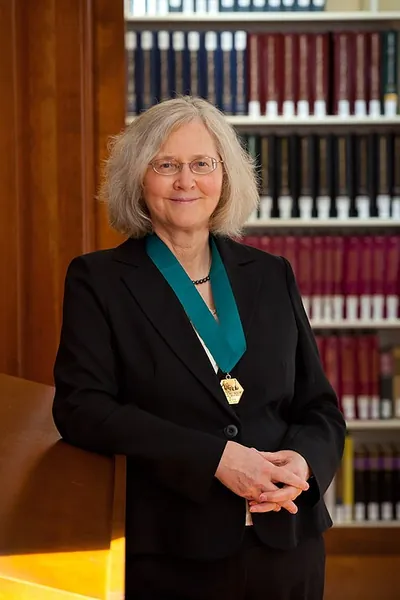 Elizabeth Blackburn1948 · Biology
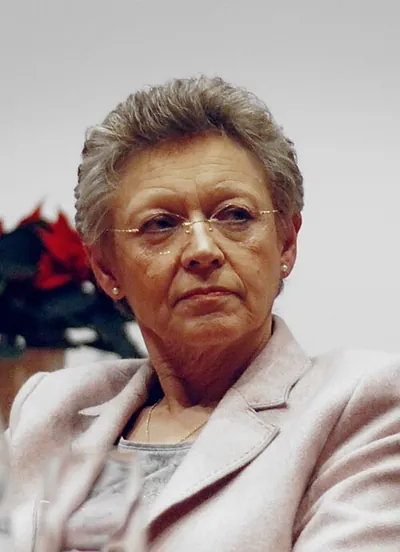 Françoise Barré-Sinoussi1947 · Biology
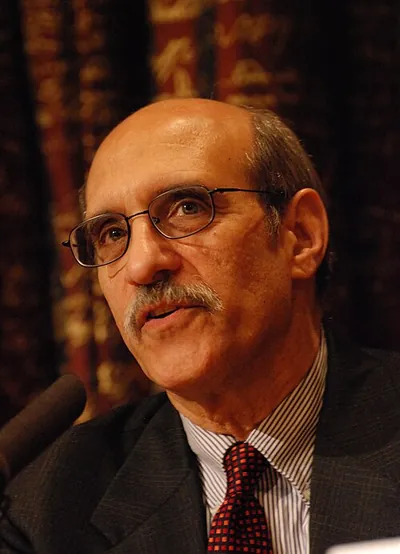 Martin Chalfie1947 · Biology
 Yoshinori Ohsumi1945 · Biology
 Svante Pääbo1955 · Biology
 Kary Mullis1944–2019 · Biology
