
Alexander Braun
German botanist, a leading figure in 19th-century plant morphology · 1805–1877
- Born
- May 10, 1805
- Died
- March 29, 1877
- Country
- Kingdom of Bavaria
- Section
- Biology
Biography
Alexander Karl Heinrich Braun (Regensburg, 1805 - 1877) was one of the most influential German botanists of the nineteenth century. He worked at a time when biology was becoming an established science of living things, and his importance lies in studying the form of plants and asking what makes a plant a single individual.
He was born in Regensburg, in Bavaria, where his father worked as a tax inspector in the postal service. The family moved to Freiburg im Breisgau, where Braun was schooled before entering the University of Heidelberg to study medicine. There his teachers included Gottlieb Wilhelm Bischoff, Johann Heinrich Dierbach and Franz Joseph Schelver, and he studied alongside Louis Agassiz, Carl Schimper and George Engelmann. Agassiz later married one of Braun's sisters, and Schimper was briefly engaged to another. He finished his training in Paris and Munich.
In 1833 he began teaching botany at the Karlsruhe Polytechnic School, where he stayed until 1846. He then became a professor at Freiburg, at Giessen from 1850 and at the University of Berlin from 1851, where he remained until 1877 and also ran the botanical garden. In 1852 he was elected a foreign member of the Royal Swedish Academy of Sciences. Together with Gottlob Ludwig Rabenhorst and Ernst Stizenberger he edited a series of dried specimens of characeae, a group of freshwater algae, pressed and labelled for study.
His best-known work concerns plant morphology, the study of the shape and arrangement of a plant's parts. In the 1830s he examined how the scales of a pine cone are arranged and found they follow a spiral pattern that can be described with numbers. This line of research, called phyllotaxis, led to the Schimper-Braun theory, developed with Schimper. He also contributed to cell theory, the idea that living things are built from cells.
His most original reflection concerned the individuality of plants. He compared the life cycle of a plant with the life of its species and distinguished between the "morphological individual", the visible form of an organism, and the "physiological individual", the set of functions that keeps it alive. This distinction shaped the thinking of Ernst Haeckel. Braun accepted evolution but criticised Darwinism and supported vitalism, a widely held nineteenth-century view that a regulating force within living matter maintains its functions.
His legacy lives on in plant morphology and in his students, among them August Wilhelm Eichler. In 1877, the year of his death, Wilhelm Philippe Schimper and Philipp Bruch named the genus Braunia after him, and an ornamental fern, Polystichum braunii, also bears his name.
Main contributions
- 1831Study of how the scales of pine cones are arranged, the starting point for spiral phyllotaxis.
- 1851A book on renewal in nature and plant development, setting out his ideas on individuality in plants.
- 1853An essay on the plant individual in relation to the species, developing the distinction between morphological and physiological individuals.
- 1857A study of parthenogenesis in plants, the development of an embryo without fertilisation.
- 1865A contribution to knowledge of the genus Selaginella, a group of vascular plants related to ferns.
- 1872An essay on the importance of development in natural history, arguing that organisms should be studied through their growth.
Teachers and students
Taught:
Trivia and anecdotes
A fern bearing his name
An ornamental fern known as Braun's holly fern (Polystichum braunii) keeps his name.
A genus named for him
In 1877, the year he died, Schimper and Bruch named the genus Braunia in his honour.
Family ties with Agassiz
His sister Cecilie married Louis Agassiz, whom he had studied alongside at Heidelberg.
Their contemporaries
While Alexander Braun was alive (1805–1877)…
Alive at the same time
Discovered or invented in those years
- 1839PhotographyA technique for creating lasting images by recording light, either on a light-sensitive material or with an electronic sensor.
- 1846NeptuneThe eighth and most distant planet of the Solar System, an ice giant found through mathematical prediction before any direct sighting.
- 1859EvolutionThe process by which the heritable traits of living populations change over generations, explaining the diversity of life from common ancestors.
- 1869Periodic tableAn arrangement of the chemical elements into rows (periods) and columns (groups), ordered by atomic number, that reveals recurring chemical behaviour and lets scientists predict properties.
- 1869Deoxyribonucleic acidA double-stranded molecule that carries the genetic instructions of nearly all living things and many viruses.
- 1876TelephoneA device that carries the human voice over distance by turning sound into electrical signals and back into sound at the other end of the line.
 Charles Darwin1809–1882 · Biology
 Theodor Schwann1810–1882 · Biology
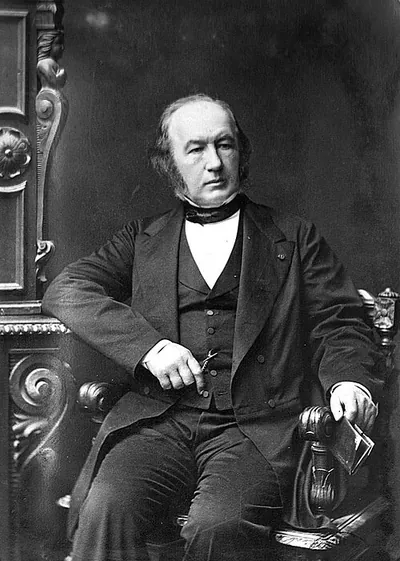 Claude Bernard1813–1878 · Biology
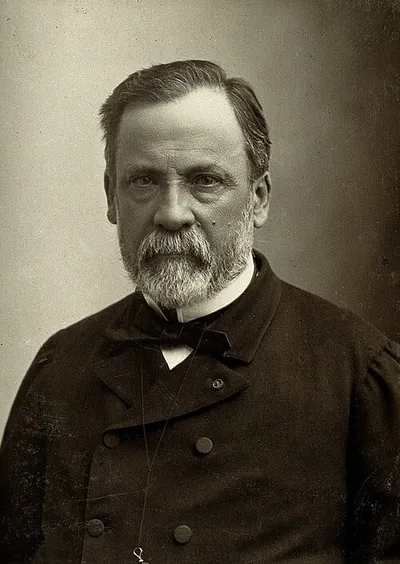 Louis Pasteur1822–1895 · Biology
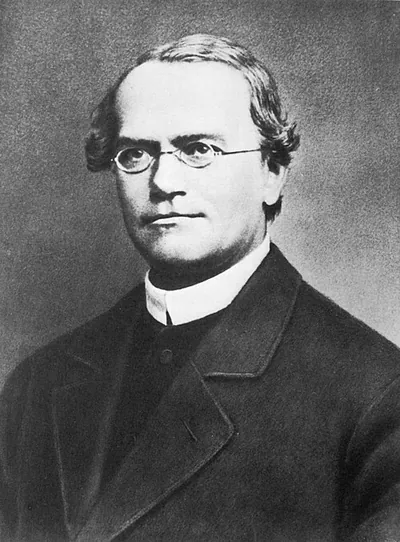 Gregor Mendel1822–1884 · Biology
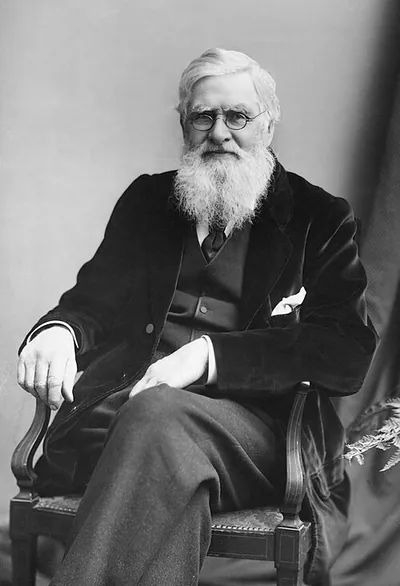 Alfred Russel Wallace1823–1913 · Biology
