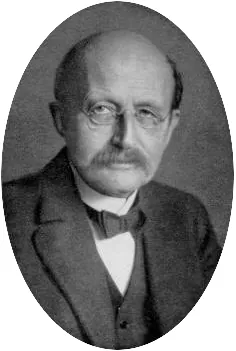
Max Planck
German physicist, founder of quantum theory and 1918 Nobel laureate in Physics · 1858–1947
- Born
- April 23, 1858
- Died
- October 4, 1947
- Country
- German Reich
- Section
- Physics
- Awards
- Nobel Prize in Physics
Extended biography
Family, childhood and early studies
Max Karl Ernst Ludwig Planck was born on 23 April 1858 in Kiel, in northern Germany. He came from a family with a long academic tradition. His paternal great-grandfather and grandfather were theology professors at the University of Göttingen, and his father, Johann Julius Wilhelm Planck, taught law at Kiel and later at Munich. One of his uncles was also a jurist. He was the child of his father's second marriage, to Emma Patzig, and he had several siblings, including two half-siblings from his father's first marriage.
His earliest memories include the arrival of Prussian and Austrian troops in Kiel during the Second Schleswig War of 1864. Around 1867 the family moved to Munich, where Planck entered the Maximiliansgymnasium. He showed early talent in mathematics and came under the guidance of a mathematics teacher, Hermann Müller, who taught him astronomy, mechanics and mathematics. It is said that Müller first introduced him to the law of conservation of energy, which was his first serious contact with physics.
Music was equally important to him. He played the piano, organ and cello, sang, and composed songs and pieces. He is reported to have had absolute pitch, the ability to name a note without comparing it to another. He finished school at seventeen and had to choose between music, classical philosophy and the sciences. He chose science.
In 1874 he enrolled at the University of Munich. There he asked his physics professor, Philipp von Jolly, for advice. Jolly discouraged him from theoretical physics, believing the field was nearly complete and that few important problems remained. Planck replied that he was not interested in discovering new worlds but in understanding the foundations of what was already known. Under Jolly's supervision he carried out the only experiments of his career, on the diffusion of hydrogen through heated platinum, before turning towards theory.
Berlin, thermodynamics and entropy
In 1877 and 1878 he spent a year in Berlin, where he attended lectures by Hermann von Helmholtz and Gustav Kirchhoff, two highly respected German physicists. Planck was harsh in his judgement of their teaching. He said Helmholtz often made mistakes in his calculations and bored his listeners, and described Kirchhoff's carefully prepared lectures as dry and monotonous. Even so, he became a close friend of Helmholtz, who supported his career. During that stay he studied the works of Rudolf Clausius on his own, admired their clarity, and chose thermodynamics as his field.
Thermodynamics, then also called the mechanical theory of heat, had grown out of the effort to understand and improve steam engines. Its first law states that energy is conserved: it can change form but cannot be created or destroyed. The second law, which Clausius formulated in 1850, says that heat flows spontaneously from a warmer body to a colder one but not the reverse. To express this mathematically, Clausius introduced entropy, a quantity that measures the energy in a process that can no longer be turned into useful work.
Planck defended his doctoral thesis on the second law in Munich in 1879, at the age of twenty-one. In it he organised and corrected Clausius's formulations and extended the principle to all natural processes, not only reversible ones. In 1880 he presented his habilitation thesis, which qualified him to teach at the university. In these years he worked largely alone on entropy and reached, by his own route, several results that Josiah Willard Gibbs had obtained in the United States. Planck did not know Gibbs's work, which was hardly circulating in Europe.
In 1885 he was appointed associate professor at Kiel. He then studied solutions and the electrical conductivity of dissolved substances, and gave a thermodynamic basis to ideas about electrolytes, substances that split into charged particles when dissolved. In 1889 he succeeded Kirchhoff at the University of Berlin, and in 1892 he became a full professor there. He stayed until his retirement in 1926. His students remembered him as a precise teacher who spoke without notes and rarely made mistakes, though also as somewhat distant.
Black-body radiation and the birth of the quantum
In 1894 Planck turned to a problem Kirchhoff had posed in 1859: how the radiation emitted by a perfect absorber, known as a black body, depends on the frequency of the light and on temperature. A black body can be pictured as a closed cavity with a small hole, whose outgoing radiation reflects the radiation inside. Experiments showed clearly how energy was distributed across frequencies, but the available theories could not reproduce the measurements.
Two formulas competed. Wien's law described high frequencies well but failed at low ones. The Rayleigh-Jeans law, based on classical physics and the idea that energy is shared equally among all modes of vibration, worked at low frequencies but predicted that high frequencies, such as ultraviolet light, should carry unlimited energy, a result known as the ultraviolet catastrophe. This problem is often presented as Planck's main motivation, although he did not start from it in that way.
In 1899 Planck proposed a first solution based on arguments about the entropy of an idealised oscillator, but experiments did not confirm it. He then sought a formula that matched the measurements across the whole spectrum. In October 1900 he presented it to the German Physical Society and published it in 1901. To justify it he had to make an assumption that he himself regarded as desperate: that radiation energy is not emitted continuously but in indivisible packets, which he called quanta. The energy of each quantum is proportional to the frequency of the radiation, through the relation E = hf, where f is the frequency and h is a new constant, now called Planck's constant, whose value is about 6.626 × 10^-34 joule-seconds.
At first Planck regarded quantisation as a mathematical device rather than a real property of nature. Later it became clear that it was something far deeper. It is now recognised as the origin of quantum physics, although he spent years trying in vain to fit the constant into classical physics. The constant also let him define a set of natural units, such as the Planck length and the Planck mass, based on fundamental constants. His radiation law has been confirmed many times, yet the idea that energy comes in portions was accepted only slowly.
Einstein, relativity and the Nobel Prize
In 1905 Albert Einstein published several papers that transformed physics, including those that led to the special theory of relativity. Planck was one of the few physicists who immediately recognised their importance, and thanks largely to his support the theory was soon accepted in Germany. Planck also helped develop it, for example by recasting it in terms of classical action, a quantity from mechanics.
His relationship with Einstein was more complicated over light. In 1905 Einstein proposed that light consists of energy packets, later called photons, in order to explain the photoelectric effect, the way light knocks electrons out of a metal. The effect had been found by Heinrich Hertz and studied further by Philipp Lenard. Planck initially rejected this hypothesis, since he was unwilling to abandon James Clerk Maxwell's electromagnetic theory, which had been so successful. He even said that accepting it would set the theory of light back not by decades but by centuries.
In 1910 Einstein pointed to another phenomenon classical physics could not explain: the unusual behaviour of specific heat, the amount of heat needed to raise a body's temperature, at low temperatures. In 1911 Planck and Walther Nernst organised the first Solvay Conference in Brussels, a meeting of physicists intended to clarify the contradictions of the period. There Einstein convinced Planck of the soundness of his ideas, and a lasting friendship developed between them. Planck, then dean of the university, helped bring Einstein to Berlin as a professor in 1914. The two men are said to have often played music together.
In 1918 Planck received the Nobel Prize in Physics, citing his services to the advancement of physics through his discovery of energy quanta. He received the prize in 1919. Planck welcomed relativity with enthusiasm, but he kept reservations about the probabilistic interpretation of quantum mechanics that developed in the 1920s, even while acknowledging that it was an effective tool.
The First World War and public life
At the start of the First World War Planck shared the nationalist enthusiasm of the time. In a statement he wrote of the unification of all parties and the exaltation of what is good and noble, while acknowledging that much of the war was horrible. He signed the so-called Manifesto of the Ninety-Three, a polemical piece of war propaganda that is now seen as controversial. Einstein, by contrast, held a strictly pacifist position that brought him serious difficulties. Later, in 1915, Planck partly revised his stance after several meetings with the Dutch physicist Hendrik Lorentz, and in 1916 he signed a declaration against German annexationism.
In these years Planck was an authority in German physics. He held posts at the Prussian Academy of Sciences, at the University of Berlin, and at the German Physical Society, which he had helped create in 1898 by merging several local societies. He led the latter from 1905 to 1909. In 1920 he founded, together with Fritz Haber, the Notgemeinschaft der Deutschen Wissenschaft, an organisation to fund research in a impoverished Germany. His politics were conservative: he opposed universal suffrage and valued the stability of the existing order. He also refused to comment on matters outside science, and he argued for basic research over immediate practical goals.
He defended colleagues when he thought it necessary. In 1895 he supported the academic Léo Arons, who belonged to an opposition party, against the advice of the minister responsible for religion and education. He also promoted women's access to higher education, including that of Lise Meitner, who was his student. Planck was respectful of authority but did not hesitate to hold to his convictions when he believed science was at stake. This balance between tradition and openness shaped much of his institutional career.
Nazi rule, family losses and the destruction of his home
When Adolf Hitler came to power in 1933, Planck was seventy-four and presided over the Kaiser Wilhelm Society, a major scientific body with considerable financial resources. He believed he could moderate the regime from within and that the crisis would pass, so he chose discretion. When Einstein announced in March 1933, while visiting the United States, that he would not return to Germany, Planck disagreed in private, fearing the decision would harm Jewish scientists who were still in the country. He encouraged many colleagues to stay.
In May 1933 Planck met Hitler to ask him not to expel Jewish scientists, arguing that forced emigration would damage German science. According to the usual account, the reply was that the regime had nothing against Jews, only against communists, which left no room for negotiation. In the early years Planck won some partial successes: he prevented the appointment of Johannes Stark, a physicist hostile to theoretical physics, as director of an important institute, and he protected some Jewish members of the society. Otto Hahn asked him to gather professors for a public protest, but Planck judged that such a protest would achieve nothing.
Pressure grew steadily. In 1936 his term as president of the Kaiser Wilhelm Society ended, and the government asked him not to seek another. Stark and others attacked Planck, Sommerfeld and Heisenberg for teaching Einstein's theories. At the end of 1938 the Prussian Academy was brought under Nazi control, and Planck protested by resigning as its president. He continued to give talks on subjects such as the relationship between science and religion, but his remarks were often deliberately ambiguous, praising relativity without naming its author.
The family tragedies were severe. In 1916 his eldest son, Karl, was killed at Verdun. His twin daughters, Grete and Emma, died in 1917 and 1919, Grete after giving birth. In 1944 his son Erwin was arrested in connection with the plot of 20 July against Hitler. He was sentenced to death by the People's Court and executed on 23 January 1945 at Plötzensee prison in Berlin. In February 1944 an air raid had destroyed the family villa in Grunewald, with its library and manuscripts. Planck later wrote that his son's death had taken away much of his will to live.
Faith, worldview and private life
Planck married Marie Merck in 1887. She was the daughter of a Munich banker and the sister of one of his fellow students. They had four children, all of whom died before their father. After Marie's death in 1909 he married again, in 1911, Marga von Hösslin, a niece of his first wife, and they had a son, Hermann. The family lived in Berlin, in a villa in Grunewald, where Planck often hosted scientists such as Einstein, Otto Hahn and Lise Meitner. Music remained central to his life, and evening gatherings at his house included performances by himself and his friends.
Planck was a member of the Lutheran Evangelical Church and was a man of faith throughout his life. He regarded the search for the laws of nature as a task with almost religious meaning, because it assumed an orderly rational world independent of human beings. In his essay Science and Faith of 1930 he wrote that devotion to science rests on a faith in a rational order of the world, and he described faith as a sign at the entrance to the temple of science. He held that science and religion do not contradict each other, since both point towards a foundation that reason does not fully reach. His 1937 lecture Religion and Natural Science follows the same line.
The historian John L. Heilbron described Planck's views of God as deistic, meaning centred on an ordering principle of the universe rather than a personal God. This is a scholarly judgement of his thought, not a label Planck adopted for himself. According to the same historian, late in life Planck said that although he had always been deeply religious, he did not believe in a personal God, let alone the God of the Christians. This statement should be read with caution, since it comes from second-hand reports.
In philosophy, Planck began with positions close to the positivism of Ernst Mach, which holds that only what can be measured should be accepted. His discovery of the quantum of action led him to adopt scientific realism, the view that physics describes a reality that exists independently of whoever observes it. This position caused a public dispute with Mach in 1908, and later led him to criticise the probabilistic interpretation championed by Niels Bohr.
Final years and legacy
After the war Planck took part in rebuilding German science. The Kaiser Wilhelm Society was succeeded by the Max Planck Society, which took its present name in 1948 and today includes 83 institutes covering a wide range of disciplines. Planck helped to sustain this effort and argued that basic research deserved its own place, independent of the immediate needs of industry or the state.
After the war the family moved to Göttingen, where relatives lived, and there Planck died on 4 October 1947. He is buried in the municipal cemetery of that city. His life passed through two world wars, the Weimar Republic and the Nazi regime, and his biography reflects the dilemmas of many scientists of his time: loyalty to their country, faith in reason, and the difficulty of opposing a power that threatened their own colleagues.
His scientific legacy is very large. The idea that energy is emitted and absorbed in quanta gave rise to quantum mechanics, which was developed with the contributions of Einstein, Bohr, Heisenberg and others. It is the basis for understanding atoms, electrons and light today, and it made possible technologies such as lasers, semiconductors and nuclear energy. His work on entropy and thermodynamics also mattered for physical chemistry.
His reputation has been honoured in many ways. The Max Planck Medal, the highest award of the German Physical Society for theoretical physics, was created in 1929. An asteroid, 1069 Planckia, was named after him in 1938, and a lunar crater bears his name since 1970. In 2009 the European Space Agency launched the Planck satellite to study the cosmic microwave background. His likeness appears on coins, stamps and commemorative plaques in Berlin. His own remark about scientific change is often quoted: new scientific truths do not triumph by convincing their opponents, but because the opponents eventually die and a new generation grows up familiar with them. The saying is frequently cited, though there are counter-examples that qualify it.
Quotes
“I regard consciousness as fundamental. I regard matter as derivative from consciousness. We cannot get behind consciousness. Everything that we talk about, everything that we regard as existing, postulates consciousness.”
“Science cannot solve the ultimate mystery of nature. And that is because, in the last analysis, we ourselves are part of nature and therefore part of the mystery that we are trying to solve.”
“It is not the possession of truth, but the success which attends the seeking after it, that enriches the seeker and brings happiness to him.”
“As a man who has devoted his whole life to the most clear headed science, to the study of matter, I can tell you as a result of my research about atoms this much: There is no matter as such. All matter originates and exists only by virtue of a force which brings the particle of an atom to vibration and holds this most minute solar system of the atom together. We must assume behind this force the existence of a conscious and intelligent mind. This mind is the matrix of all matter”
Main contributions
- 1879Doctoral thesis on the second law of thermodynamics, in which he clarified Clausius's ideas on entropy and extended them to all natural processes.
- 1898Promotion of the merger of local German physical societies into the German Physical Society.
- 1900Law of black-body radiation, describing the radiation a heated body emits at each frequency and avoiding the ultraviolet catastrophe.
- 1900Hypothesis of energy quanta and the Planck constant, which relates the energy of a quantum to its frequency.
- 1911Organisation, with Walther Nernst, of the first Solvay Conference in Brussels, which debated the contradictions in physics of the time.
- 1918Nobel Prize in Physics for the discovery of energy quanta, presented in 1919.
Teachers and students
Studied under:
Taught:
Trivia and anecdotes
Discouraged from theory
According to an anecdote recorded in several biographies, his teacher Philipp von Jolly advised him against theoretical physics, believing the field was nearly complete.
A talented musician
Planck played the piano, organ and cello and had absolute pitch. He often played music with Einstein at home.
An idea he resisted
Planck first regarded quanta as a formal device and resisted their full implications for years. He described his own move as an act of despair.
Related discoveries and inventions
- 1901Planck constantA fundamental physical constant, very small in value, that links the energy of a photon to the frequency of its wave and sets the scale at which nature behaves in discrete steps.
Their contemporaries
While Max Planck was alive (1858–1947)…
Alive at the same time
Discovered or invented in those years
- 1859EvolutionThe process by which the heritable traits of living populations change over generations, explaining the diversity of life from common ancestors.
- 1869Periodic tableAn arrangement of the chemical elements into rows (periods) and columns (groups), ordered by atomic number, that reveals recurring chemical behaviour and lets scientists predict properties.
- 1876TelephoneA device that carries the human voice over distance by turning sound into electrical signals and back into sound at the other end of the line.
- 1884CarA road vehicle with four wheels and its own engine, mainly built to carry people.
- 1925TelevisionA system that sends moving pictures and sound over distance and shows them on a receiver, the television set.
- 1945ComputerA programmable machine that takes in data, processes it by following stored instructions, and produces results, able to switch tasks simply by running different software.
 Pierre Curie1859–1906 · Physics
 Joseph John Thomson1856–1940 · Physics
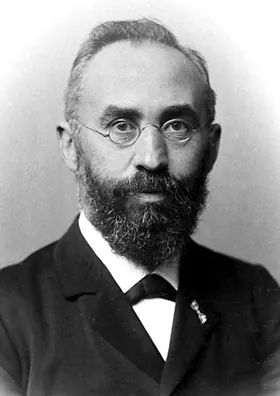 Hendrik Lorentz1853–1928 · Physics
 Heike Kamerlingh Onnes1853–1926 · Physics
 Antoine Henri Becquerel1852–1908 · Physics
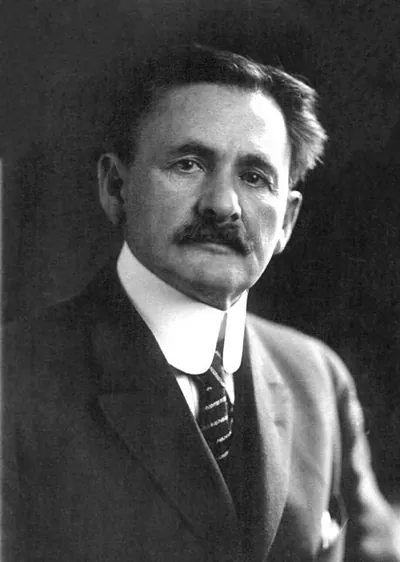 Albert Abraham Michelson1852–1931 · Physics
