Arthur Samuel
American computer scientist, pioneer of computer games and artificial intelligence · 1901–1990
- Born
- December 5, 1901
- Died
- July 29, 1990
- Country
- United States
- Section
- Computing
Biography
Arthur Lee Samuel (Emporia, Kansas, 1901 – Stanford, California, 1990) was an American computer scientist who became one of the pioneers of computer games and artificial intelligence. He coined the term machine learning in 1959, and his checkers program was among the first to improve through its own play, making him an early reference point for the idea that a machine can learn.
Samuel was born on 5 December 1901 in Emporia, Kansas. He worked at a university in his hometown to pay for his studies and graduated from the College of Emporia in 1923. He later earned a master's degree in electrical engineering from MIT in 1926 and spent two years teaching there as an instructor. His training was that of an electrical engineer rather than a programmer, and that background shaped how he approached problems.
In 1928 he joined Bell Laboratories, where he worked mainly on vacuum tubes, the electronic components that came before transistors. During the Second World War he helped improve radar and developed a gas-discharge transmit-receive switch, known as the TR tube, which let a single antenna both send and receive signals. After the war he became a professor of electrical engineering at the University of Illinois at Urbana–Champaign, where he launched the ILLIAC project, though he left before its first computer was finished.
In 1949 he moved to IBM in Poughkeepsie, New York, where he did the work he is best known for. He is credited with one of the first software hash tables, a method for finding stored data quickly, and he helped early research into using transistors in computers. His major achievement was a checkers program for the IBM 701, the company's first commercial computer. The demonstration was so striking that IBM's share price is said to have risen fifteen points overnight, though that figure comes from popular accounts and should be treated with caution.
The checkers program relied on a search tree, a scheme that examines the positions reachable from the current one. Because memory was very scarce, Samuel used a shortcut now called alpha-beta pruning, which discards branches that cannot improve the result. Rather than playing each game to its end, the program scored each board with a function estimating each side's chances, weighing factors such as the number of pieces, the number of kings and how close men were to being crowned. It chose moves using minimax reasoning, picking the move that maximised that score while assuming the opponent did the same from their side. Samuel also built ways for the program to improve. In what he called rote learning, it stored every position it had seen together with its value, which saved recalculation and effectively let it search deeper. Later he adjusted the scoring function using games played by professionals and had the program play thousands of games against itself. The result was a respectable amateur level, and he kept refining the program into the mid-1970s, by which point it could challenge a strong amateur.
In 1966 Samuel retired from IBM and became a professor at Stanford University, where he spent the rest of his life. There he worked with Donald Knuth on the TeX typesetting system, used for scientific documents, and wrote part of its documentation. He kept writing software even after his 88th birthday. He received the IEEE Computer Society's Computer Pioneer Award in 1987 and was named a founding fellow of the Association for the Advancement of Artificial Intelligence in 1990. He died on 29 July 1990 in Stanford, of complications from Parkinson's disease.
His legacy rests on a conviction he held from the 1950s: that teaching a computer to play games is a good testing ground for tactics that apply to general problems. His checkers program anticipated many techniques still used in artificial intelligence, and his name is linked with the origins of machine learning as a field of study.
Main contributions
- 1928Joined Bell Laboratories, working mainly on vacuum tubes and electronic hardware.
- 1945TR tube, a gas-discharge switch that lets one antenna both transmit and receive, developed around the Second World War.
- 1949Early work on machine learning and non-numerical programming at IBM.
- 1952Checkers program able to learn from its own games, one of the first self-learning programs.
- 1953Computing bit by bit, a popular explanation of computing written in plain language.
- 1959Coined the term machine learning and presented his checkers program for the IBM 701.
- 1983First Grade TeX, a beginner's manual for the TeX typesetting system.
Trivia and anecdotes
IBM's share price
The checkers demonstration is said to have pushed IBM's shares up fifteen points overnight, a figure that comes from press accounts.
Working into old age
He kept writing software after turning 88, a remarkable level of dedication.
Related discoveries and inventions
- 1958Alpha–beta pruningA search technique that reduces the number of game positions a program must evaluate when choosing a move, without changing the decision that the Minimax algorithm would make.
Their contemporaries
While Arthur Samuel was alive (1901–1990)…
Alive at the same time
Discovered or invented in those years
- 1903AirplaneA fixed-wing aircraft, heavier than air, powered by engines or rockets, that stays aloft because its wings generate lift.
- 1925TelevisionA system that sends moving pictures and sound over distance and shows them on a receiver, the television set.
- 1925Quantum mechanicsPhysical theory describing how matter and light behave at atomic and subatomic scales, where energy is exchanged in minimal packets and results are expressed as probabilities.
- 1931Big BangA cosmological model describing how the universe expanded from an early state of extreme density and temperature, about 13.8 billion years ago.
- 1945ComputerA programmable machine that takes in data, processes it by following stored instructions, and produces results, able to switch tasks simply by running different software.
- 1969InternetA global network of interconnected computer networks that communicate using the TCP/IP protocol suite.
 Howard H. Aiken1900–1973 · Computing
 John von Neumann1903–1957 · Computing
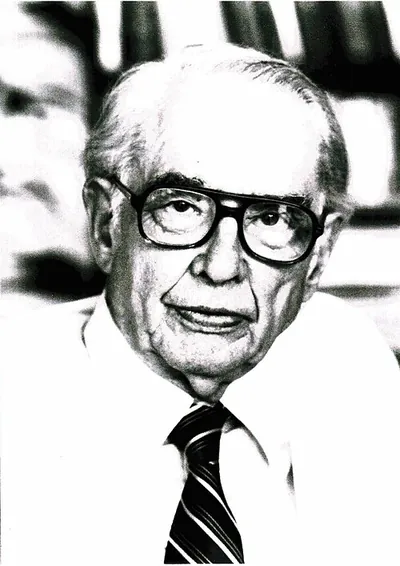 John Vincent Atanasoff1903–1995 · Computing
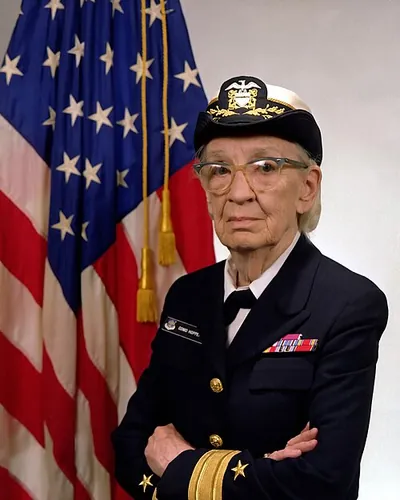 Grace Hopper1906–1992 · Computing
 Norbert Wiener1894–1964 · Computing
 Konrad Zuse1910–1995 · Computing