
Atle Selberg
Norwegian mathematician known for analytic number theory and the theory of automorphic forms · 1917–2007
- Born
- June 14, 1917
- Died
- August 6, 2007
- Country
- Norway, United States
- Section
- Mathematics
- Awards
- Fields Medal
Biography
Atle Selberg (born in Langesund, 14 June 1917; died in Princeton, 6 August 2007) was a Norwegian mathematician whose work reshaped analytic number theory, the branch that studies whole numbers and primes using tools from calculus and complex analysis. He also transformed the theory of automorphic forms, highly symmetric functions that play a central role in modern number theory, by linking them to spectral theory, the study of the characteristic values of mathematical operators. He received the Fields Medal in 1950, the highest honour in mathematics, and the Wolf Prize in 1986. His career matters because he showed that deep results could be reached by elementary methods and because he joined areas that had seemed far apart.
Selberg came from a family of mathematicians. His father, Ole Michael Ludvigsen Selberg, was a mathematician, and his mother, Anna Kristina Selberg, was a teacher. Two of his three brothers, Sigmund and Henrik, also became mathematicians, while Arne became a professor of engineering. While still at school, he was deeply influenced by the work of the Indian mathematician Srinivasa Ramanujan. Inspired by Ramanujan's ideas, Selberg found an exact analytic formula for the partition function, which counts the ways a whole number can be written as a sum of smaller whole numbers. That result, however, was first published by Hans Rademacher, so the priority of publication does not belong to Selberg.
He studied at the University of Oslo and completed his doctorate in 1943. During the Second World War, the German occupation of Norway left him working largely in isolation from the international community. He took part in the resistance against the invasion and was imprisoned several times. Even so, he pursued the Riemann zeta function, a complex-valued function whose zeros are tied to the distribution of primes. After the war his results became known, including a proof that a positive proportion of those zeros lie on the critical line where the real part equals one half, the line Riemann had conjectured for all of them.
After the war he turned to sieve theory, a method for selecting numbers with certain properties, a topic that had been largely neglected. In 1947 he introduced the Selberg sieve, a technique especially suited to producing auxiliary upper bounds, which contributed to Chen's theorem and other important results. In 1948 he submitted two papers to the Annals of Mathematics proving, by elementary means, the theorems on primes in arithmetic progressions and on the density of primes. This challenged the common belief that such results required the advanced machinery of complex analysis. His starting point was an asymptotic formula involving sums of logarithms of primes, which he had worked out by March 1948. By July of that year, he and Paul Erdős had each produced elementary proofs of the prime number theorem. The circumstances of those proofs and disagreements over publication led to a bitter dispute over who had got there first. For his fundamental work of the 1940s he received the Fields Medal in 1950.
In 1947 C. L. Siegel invited him to the Institute for Advanced Study in Princeton. He moved to the United States and briefly served as an associate professor at Syracuse University. He returned to the institute in 1949 and remained there until his death. During the 1950s he introduced spectral theory into number theory, culminating in the Selberg trace formula, his most famous and influential result. In its simplest form it links the lengths of closed geodesics, the shortest closed paths on a curved surface, to the eigenvalues of the Laplacian operator, a relation analogous to the one between primes and the zeros of the zeta function. He worked almost always alone; his only coauthor was Sarvadaman Chowla.
In his personal life, he married Hedvig Liebermann in 1947, and they had two children, Ingrid and Lars. She died in 1995. In 2003 he married Betty Frances Compton. He received many honours, including the Gunnerus Medal and membership of academies in Norway, Denmark and the United States, and in 2002 he was awarded an honorary Abel Prize in the year the prize was founded. He died at home in Princeton of heart failure. His legacy lives on in sieve theory, the trace formula and the use of spectral methods in number theory, areas that remain very active.
Main contributions
- 1943Doctorate from the University of Oslo, the foundation of his later work in number theory.
- 1947The Selberg sieve, a technique for bounding sets of numbers with given properties from above.
- 1948An elementary proof of the prime number theorem, reached at about the same time as Erdős.
- 1950Fields Medal, for his results of the 1940s.
- 1950The Selberg trace formula, linking closed geodesics and eigenvalues of the Laplacian.
- 1986Wolf Prize in Mathematics.
- 2002Honorary Abel Prize, awarded in the founding year of the prize.
Teachers and students
Trivia and anecdotes
Ramanujan and the partition function
Admiration for Ramanujan led Selberg to a formula for the partition function, but Hans Rademacher published it first.
A family of mathematicians
His father and two of his brothers were also mathematicians, which makes the family an unusual case.
Their contemporaries
While Atle Selberg was alive (1917–2007)…
Alive at the same time
Discovered or invented in those years
- 1925TelevisionA system that sends moving pictures and sound over distance and shows them on a receiver, the television set.
- 1925Quantum mechanicsPhysical theory describing how matter and light behave at atomic and subatomic scales, where energy is exchanged in minimal packets and results are expressed as probabilities.
- 1931Big BangA cosmological model describing how the universe expanded from an early state of extreme density and temperature, about 13.8 billion years ago.
- 1945ComputerA programmable machine that takes in data, processes it by following stored instructions, and produces results, able to switch tasks simply by running different software.
- 1969InternetA global network of interconnected computer networks that communicate using the TCP/IP protocol suite.
- 1989World Wide WebA system of linked documents and resources, connected by hyperlinks and accessed over the Internet with web browsers.
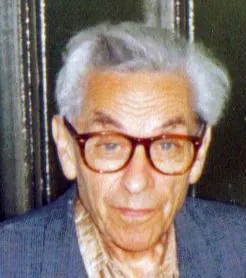 Paul Erdős1913–1996 · Mathematics
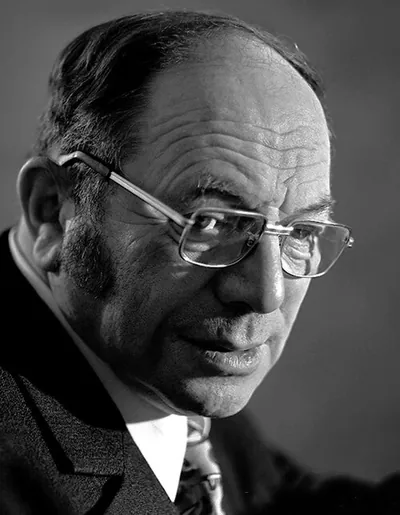 Leonid Kantorovich1912–1986 · Mathematics
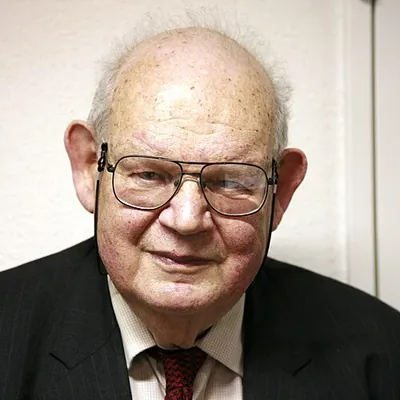 Benoit Mandelbrot1924–2010 · Mathematics
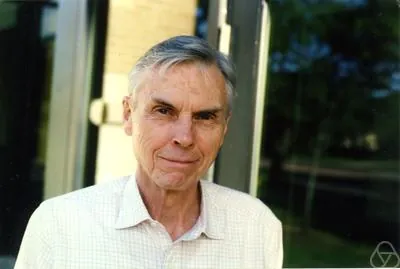 John Tate1925–2019 · Mathematics
 Stanisław Ulam1909–1984 · Mathematics
 Alexander Grothendieck1928–2014 · Mathematics
