Bruno de Finetti
Italian mathematician, statistician and actuary, advocate of subjective probability · 1906–1985
- Born
- June 13, 1906
- Died
- July 20, 1985
- Country
- Italy, Kingdom of Italy
- Section
- Mathematics
Biography
Bruno de Finetti (Innsbruck, 1906 - Rome, 1985) was an Italian probabilist, statistician and actuary, best known for his operational and subjective view of probability, which he set out in full in 1937. His work treated probability not as an objective property of things but as the degree of confidence a reasonable person assigns to an event. That idea remains a reference point in Bayesian statistics and decision theory.
He was born in Innsbruck, then part of Austria-Hungary, and studied mathematics at the Politecnico di Milano. He graduated in 1927 with a thesis supervised by Giulio Vivanti. After that he worked as an actuary and statistician at the National Institute of Statistics in Rome and, from 1931, for the Trieste insurance company Assicurazioni Generali, a job that let him combine research with practical finance. In 1936 he won a competition for a chair in financial mathematics and statistics, but he was not appointed because a fascist law barred unmarried candidates from such posts; he only became a full professor at the University of Trieste in 1950. Earlier he had taught mathematical analysis in Padua and, in 1939, won a chair in financial mathematics at Trieste.
He published at a remarkable pace. The statistician Dennis Lindley counted seventeen papers from 1930 alone, and this output earned him a good name among probability specialists, though for years he was better known in Italy and Europe than in the English-speaking world. His core ideas took shape in the 1920s, independently of Frank P. Ramsey, who reached similar conclusions. In the preface to his Theory of Probability he also acknowledged debts to Harold Jeffreys, I. J. Good and B. O. Koopman.
The heart of his theory is a thought experiment about betting. Imagine setting the price of a contract that pays one euro if there was life on Mars a billion years ago and nothing if there was not, knowing the answer will be revealed tomorrow. An opponent may buy the contract from you at your price, or force you to buy it from them at that same price. You set the odds, but the opponent chooses the side. To avoid a sure loss, your prices must obey the rules of probability. By considering bets on several events, de Finetti showed that additivity follows: the chance that one of two mutually exclusive events happens is the sum of their chances. Prices that cannot be exploited this way are called coherent.
Another lasting contribution is de Finetti's theorem on exchangeability, which describes sequences of random variables whose joint probability does not change when their order is shuffled. He was not the first to study the idea, but he made it far more visible, and his 1937 article remains its best-known treatment. In 1929 he also introduced infinitely divisible probability distributions, which describe quantities that can be seen as sums of infinitely many small contributions, and the de Finetti diagrams, a graphical way of showing genotype frequencies in population genetics.
His political views changed over time. As a young man he followed fascism, then moved towards Christian socialism and later joined the Radical Party. He became widely known in the Anglo-American statistical world only in the 1950s, when L. J. Savage, who had reached subjectivism independently, brought him into that debate. The 1974 English translation of his book helped revive interest in predictive inference and exchangeability.
De Finetti died in Rome in 1985. His legacy is twofold. His coherent, subjective account of probability remains central to debates about Bayesian statistics. His ideas have also reached unexpected fields: in the 21st century, quantum versions of his representation theorem have proved useful in quantum information, for example in quantum key distribution and the detection of entanglement. The European Association for Decision Making awards the annual de Finetti Prize in his honour, and the Department of Mathematics, Statistics and Economics at the University of Trieste also bears his name.
Main contributions
- 1927Mathematics graduation thesis at the Politecnico di Milano, supervised by Giulio Vivanti.
- 1929Infinitely divisible probability distributions: distributions that can be described as sums of infinitely many small contributions.
- 1929De Finetti diagrams: a graphical representation of genotype frequencies.
- 1937Operational subjective conception of probability, set out in La prévision: ses lois logiques, ses sources subjectives.
- 1937De Finetti's theorem on the exchangeability of sequences of random variables.
Teachers and students
Trivia and anecdotes
A law that blocked his chair
In 1936 he won a competition for a chair, but a fascist law excluding unmarried candidates prevented his appointment until 1950.
An experiment about Mars
To explain his ideas, he proposed an imaginary bet on whether there was life on Mars a billion years ago.
Their contemporaries
While Bruno de Finetti was alive (1906–1985)…
Alive at the same time
Discovered or invented in those years
- 1916Black holeA region of space where gravity is so strong that nothing, not even light, can escape once it crosses a certain boundary.
- 1925TelevisionA system that sends moving pictures and sound over distance and shows them on a receiver, the television set.
- 1925Quantum mechanicsPhysical theory describing how matter and light behave at atomic and subatomic scales, where energy is exchanged in minimal packets and results are expressed as probabilities.
- 1931Big BangA cosmological model describing how the universe expanded from an early state of extreme density and temperature, about 13.8 billion years ago.
- 1945ComputerA programmable machine that takes in data, processes it by following stored instructions, and produces results, able to switch tasks simply by running different software.
- 1969InternetA global network of interconnected computer networks that communicate using the TCP/IP protocol suite.
 Andrey Kolmogorov1903–1987 · Mathematics
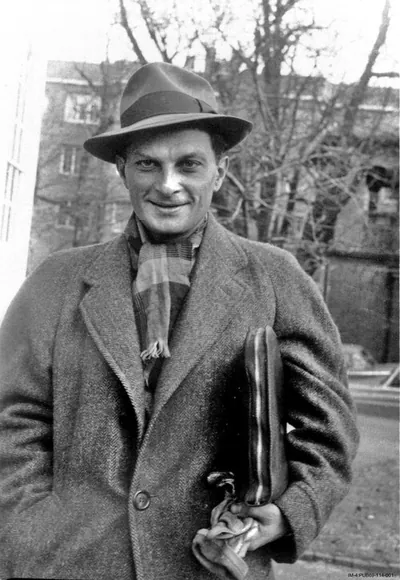 Stanisław Ulam1909–1984 · Mathematics
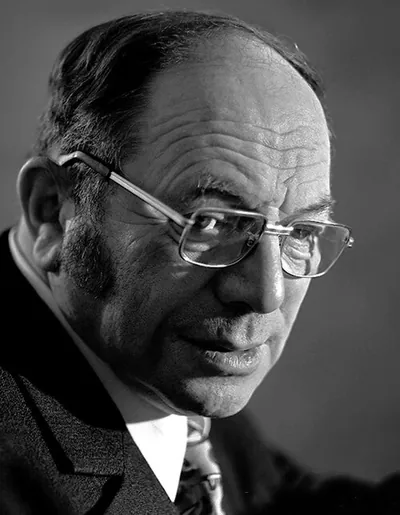 Leonid Kantorovich1912–1986 · Mathematics
 Paul Erdős1913–1996 · Mathematics
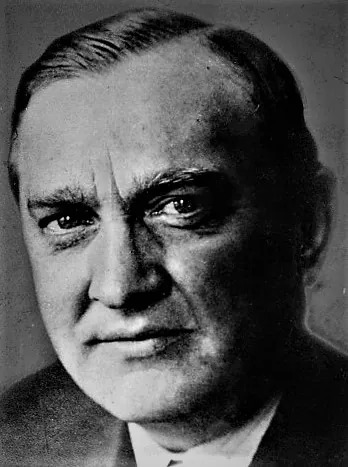 Stefan Banach1892–1945 · Mathematics
 Ronald Fisher1890–1962 · Mathematics