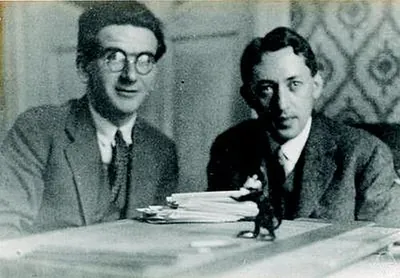
Charles Loewner
Czech-American mathematician known for work on geometric function theory and continuous groups · 1893–1968
- Born
- May 29, 1893
- Died
- January 8, 1968
- Country
- United States
- Section
- Mathematics
Biography
Charles Loewner (Karel Löwner in Czech and Karl Löwner in German) was a mathematician born in Bohemia who worked in Europe and, after emigrating, in the United States. His work falls in the first half of the twentieth century and is notable for contributions to the theory of geometric functions, matrix theory and the geometry of surfaces. It matters chiefly because the tools he devised remained decisive for decades, to the point of playing a part in the final solution of a classic problem.
He was born on 29 May 1893 in Lány, about 30 kilometres from Prague, into a Jewish family. His father, Sigmund Löwner, kept a store. He studied at the University of Prague, where he earned his doctorate in 1917 under the supervision of Georg Pick, a mathematician working on analysis and function theory who shaped his early interests.
His research concentrated on analytic functions, those that can be written as well-behaved power series. One of his best-known results is the proof of the third-coefficient case of the Bieberbach conjecture, a statement made in 1916 about the coefficients of univalent functions, meaning functions that never take the same value twice within a region. To do this he introduced a technique that describes how a region evolves through a differential equation, now called the Loewner differential equation. The method had far-reaching effects in geometric function theory, and Louis de Branges used it in 1985 for the final proof of the conjecture.
In linear algebra he studied the matrices now bearing his name. A matrix is a grid of numbers representing transformations; here it is built from a function and a set of points, and its properties reveal whether the function is monotone in a precise mathematical sense. In his foundational 1934 paper he showed that a condition on these matrices is equivalent to a monotonicity property of the function, and that if it holds for every order, the function must be analytic with a specific extension to the upper half of the complex plane. Around the same time, in 1949, he proved an inequality for the two-dimensional torus, bounding the shortest non-contractible closed loop relative to the surface's area, with equality reached only by the flat equilateral torus.
His teaching career was equally significant. He taught mathematics at the University of Berlin and the University of Prague before emigrating to the United States. In a 1939 letter of recommendation written from Istanbul, Richard von Mises said that Loewner had been, among all the Berlin mathematics instructors, the one who influenced students most, encouraging them toward independent research. In the United States he taught at the universities of Louisville, Brown and Syracuse, and finally at Stanford. His students included Lipman Bers, Roger Horn, Adriano Garsia and P. M. Pu.
Late in his career he turned to the theory of continuous groups, groups of transformations depending on parameters that vary smoothly. In 1955 he gave a course on the subject at Berkeley, and his lectures circulated as duplicated notes. He planned a detailed book based on them, but the project was still in its early stages when he died. Harley Flanders and Murray H. Protter revised and corrected the notes, which appeared in 1971 as Theory of Continuous Groups and were reissued in 2008.
Loewner died on 8 January 1968. His legacy lives on chiefly in the equation bearing his name, which remains a standard tool in geometric function theory, and in his work on matrices and monotonicity, which links algebra with analysis.
Main contributions
- 1917Doctorate from the University of Prague, supervised by Georg Pick.
- 1934Foundational paper on Loewner matrices, linking a matrix condition to the monotonicity of a function.
- 1949Torus inequality: an optimal bound between the shortest non-contractible loop on the two-dimensional torus and its area, with equality only for the flat equilateral torus.
- 1950Work on classes of functions defined by difference or differential inequalities.
- 1971Theory of Continuous Groups, a book based on his lecture notes, published posthumously after revision by Flanders and Protter.
Teachers and students
Studied under:
Taught:
Trivia and anecdotes
A letter of recommendation
In 1939 Richard von Mises wrote from Istanbul a letter praising Loewner's influence on his students in Berlin.
A posthumous book
His 1955 course notes on continuous groups did not become a book during his lifetime; they appeared years later after two other mathematicians revised them.
Their contemporaries
While Charles Loewner was alive (1893–1968)…
Alive at the same time
Discovered or invented in those years
- 1897ElectronA negatively charged subatomic particle found in every atom, and key to electricity and chemical bonding.
- 1903AirplaneA fixed-wing aircraft, heavier than air, powered by engines or rockets, that stays aloft because its wings generate lift.
- 1925TelevisionA system that sends moving pictures and sound over distance and shows them on a receiver, the television set.
- 1925Quantum mechanicsPhysical theory describing how matter and light behave at atomic and subatomic scales, where energy is exchanged in minimal packets and results are expressed as probabilities.
- 1931Big BangA cosmological model describing how the universe expanded from an early state of extreme density and temperature, about 13.8 billion years ago.
- 1945ComputerA programmable machine that takes in data, processes it by following stored instructions, and produces results, able to switch tasks simply by running different software.
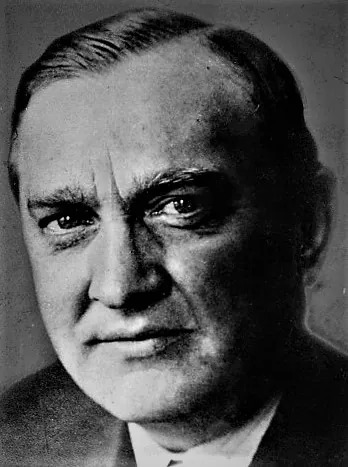 Stefan Banach1892–1945 · Mathematics
 Ronald Fisher1890–1962 · Mathematics
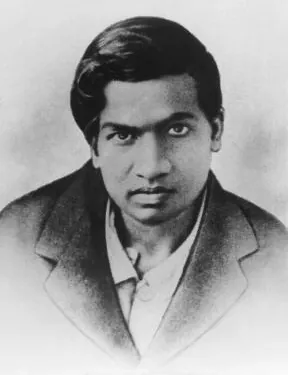 Srinivasa Ramanujan1887–1920 · Mathematics
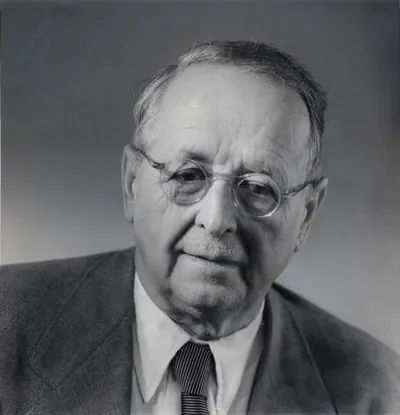 Hermann Weyl1885–1955 · Mathematics
 Andrey Kolmogorov1903–1987 · Mathematics
 Emmy Noether1882–1935 · Mathematics
