
Craig Venter
American biologist and businessman, pioneer of human genome sequencing and synthetic biology · 1946–2026
- Born
- October 14, 1946
- Died
- April 29, 2026
- Country
- United States
- Section
- Biology
Biography
John Craig Venter (Salt Lake City, 1946 – San Diego, 2026) was an American biologist and businessman who played a central role in sequencing the human genome and in the birth of synthetic biology. His name is tied to the race, both public and private, to read the genetic code of people, and to the creation of a bacterial cell controlled by a genome built in a laboratory. His career, moving between academia, business and controversy, helped change how genomic research was done from the late twentieth century onward.
Venter was born in Salt Lake City but grew up in Millbrae, California. As a young man he paid little attention to school; he would rather spend his time on the water, sailing and surfing, and his grades were poor. Years later, in his autobiography A Life Decoded, he linked some of that behaviour to possible attention deficit hyperactivity disorder, and he later found genetic variants linked to that condition in his own DNA. His father died suddenly of cardiac arrest at 59, and Venter often said that this loss left him permanently aware of his own mortality.
In 1967 he enlisted in the United States Navy to avoid being drafted into the Vietnam War, which he opposed. He trained as a medic and spent a year in the intensive-care ward of a field hospital in Da Nang. The strain of those months, during the intensity of the Tet Offensive, led him to attempt suicide by swimming out to sea; he changed his mind and swam back to shore. Treating thousands of wounded soldiers left him determined to study medicine.
He started college in 1969 at the College of San Mateo, a community college in California, and later transferred to the University of California, San Diego, where he worked with the biochemist Nathan O. Kaplan. He earned a bachelor's degree in biochemistry in 1972 and a doctorate in physiology and pharmacology in 1975. After teaching at the State University of New York at Buffalo, he joined the National Institutes of Health (NIH), the main biomedical research agency in the United States, in 1984.
At the NIH he learned to work with messenger RNA, the molecule that carries a gene's instructions to the machinery that builds proteins. Using automated sequencing he produced short DNA fragments copied from these messengers, which he called expressed sequence tags, or ESTs. They allowed researchers to find active genes in the human brain quickly. The NIH technology transfer office decided to patent these sequences, but when Venter described the strategy to a congressional hearing a fierce controversy broke out. The NIH eventually backed away and abandoned the patent applications after public pressure. Venter nonetheless became closely associated with that dispute.
His preferred approach, known as shotgun sequencing, broke a genome into random fragments, read them all and used computers to rebuild the order. The Human Genome Project, which advanced by cloning ordered pieces, judged that this method would not be accurate enough for a genome as complex as ours, and that it would be harder and more expensive. Convinced it was the faster route, Venter sought private money and in 1998 founded Celera Genomics, a company that intended to sell subscriptions to its genomic data. Its presence pushed the public consortium to speed up and redouble its efforts to finish the sequence.
In 2000 Celera and the public project jointly announced the mapping of the human genome, with President Bill Clinton and Prime Minister Tony Blair present, and they shared recognition. In February 2001 both sets of results were published, the consortium's in Nature and Celera's in Science. Some questioned whether shotgun sequencing was as accurate as the method the public project used, but the technique was eventually widely accepted. According to his biography, Venter was fired by Celera in early 2002 after a clash with its main investor, who wanted to turn the company into a pharmaceutical business, something Venter did not want. Earlier, in 1992, he had founded The Institute for Genomic Research (TIGR), and in 1995 his team became the first to sequence the complete genome of a free-living organism, the bacterium Haemophilus influenzae.
Between 2003 and 2006 he led the Global Ocean Sampling Expedition, which sailed around the world on his yacht Sorcerer II collecting marine microbes and sequencing their DNA. The aim was to uncover a vast number of new genes and to understand ocean biodiversity better. In 2006 he founded the J. Craig Venter Institute, a nonprofit devoted to synthetic biology that eventually employed more than two hundred people.
In 2005 he co-founded Synthetic Genomics, a firm that aimed to modify microorganisms to produce biofuels. In 2009 it reached a collaboration with ExxonMobil worth 600 million dollars to develop next-generation fuels from algae.
His best-known synthetic biology work came in 2010, when his team built the complete genome of the bacterium Mycoplasma mycoides from chemical building blocks and transplanted it into a cell of another species, Mycoplasma capricolum. The recipient cell took on the traits of the artificial genome and became a new species. Some scientists praised the achievement but disputed the phrase artificial life, since the cell that held the DNA was entirely natural. The genome carried watermarks, including text and the names of contributing scientists, identifying it as synthetic. In 2016 he presented Syn 3.0, a free-living organism with the fewest genes of any, 473 in total.
Venter also pioneered the sequencing of his own genome, published in 2007. From 2014 he led Human Longevity, Inc., a company that hoped to extend healthy life through diagnostics based on genomic data. He stepped down as its chief executive in 2018, while remaining active at the J. Craig Venter Institute. He died in San Diego on April 29, 2026, aged 79, after complications from treatment for a recently diagnosed cancer.
His legacy is twofold. Shotgun sequencing became a routine tool that cut the time and cost of reading DNA. His synthetic biology work opened a field in which organisms are now designed to carry out specific tasks. His methods and controversies remain a subject of debate among scientists and the public.
Main contributions
- 1986Expressed sequence tags (ESTs): short DNA fragments that help locate active genes in the human brain.
- 1995Complete sequence of the bacterium Haemophilus influenzae, the first full genome of a free-living organism.
- 1999Human genome sequencing by the shotgun method: reading DNA fragments at random and rebuilding the order by computer, developed at Celera Genomics.
- 2007Publication of the sequence of his own genome, one of the first of an individual person.
- 2010Synthetic genome of Mycoplasma mycoides transplanted into another cell, which took on its traits.
- 2016Syn 3.0, a free-living organism with the smallest known genome, 473 genes.
Trivia and anecdotes
A genome with watermarks
The synthetic cell of 2010 carried watermarks in its DNA, including a text code and the names of contributing scientists, to identify it as human-made.
His own DNA
It has been suggested that one of the five anonymous donors for Celera's genome may have been Venter himself, though this remains unconfirmed.
Their contemporaries
While Craig Venter was alive (1946–2026)…
Alive at the same time
Discovered or invented in those years
- 1947TransistorA semiconductor component that amplifies or switches electrical current between two terminals, depending on a signal applied to a third.
- 1957Artificial satelliteAn artificial satellite is a human-made object placed in orbit around a celestial body, usually Earth, to collect information, relay signals, or carry out a specific task.
- 1969InternetA global network of interconnected computer networks that communicate using the TCP/IP protocol suite.
- 1971EmailA network service that lets users send and receive digital messages through addressed mailboxes, much like postal mail but electronic.
- 1973Mobile phoneA handheld wireless phone that lets people make and receive calls while moving across a cellular network area.
- 1989World Wide WebA system of linked documents and resources, connected by hyperlinks and accessed over the Internet with web browsers.
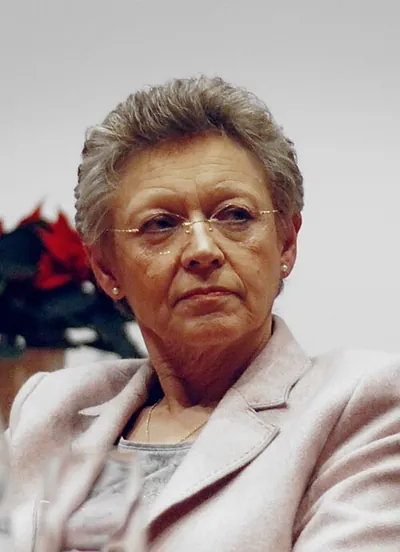 Françoise Barré-Sinoussi1947 · Biology
 Yoshinori Ohsumi1945 · Biology
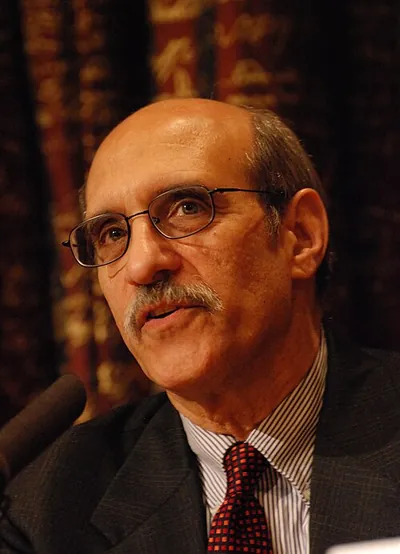 Martin Chalfie1947 · Biology
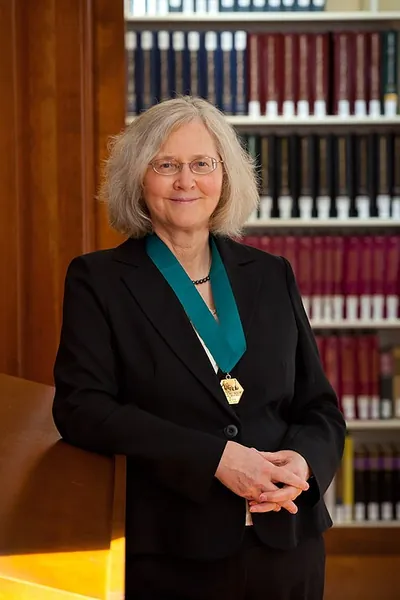 Elizabeth Blackburn1948 · Biology
 Kary Mullis1944–2019 · Biology
 Christiane Nüsslein-Volhard1942 · Biology
