
Eberhard Hopf
Austrian-born American mathematician, one of the founders of ergodic theory and a pioneer of bifurcation theory · 1902–1983
- Born
- April 17, 1902
- Died
- July 24, 1983
- Country
- United States, Austria, Germany
- Section
- Mathematics
Biography
Eberhard Hopf (1902-1983) was a mathematician born in Austria who worked mainly in Germany and later in the United States, where he became a citizen. He is regarded as one of the founders of ergodic theory, which studies the long-term behaviour of systems that change over time, and as a pioneer of bifurcation theory, which examines how the behaviour of a system can suddenly shift as a condition is varied. He worked in an era when mathematics was becoming an essential tool for physics and mechanics, and his work matters because it linked these fields to rigorous methods that are still in use.
He was born in Salzburg, then part of the Austro-Hungarian Empire, in April 1902. His training took place in Germany. He earned his doctorate in mathematics in 1926 and, in 1929, his habilitation in mathematical astronomy at the University of Berlin, a qualification the German academic system required before a scholar could teach at university. His interest in astronomy and the motion of bodies drew him to problems in which a system evolves over time, a field that would later be central to his research.
In 1930 he won a Rockefeller Foundation fellowship to study classical mechanics with Birkhoff at Harvard University, although he was first assigned to the university observatory. In America he turned to topology and ergodic theory, and he published the so-called Wiener-Hopf equations together with Norbert Wiener of MIT. On Wiener's recommendation, he became an assistant professor in the MIT mathematics department in 1931, staying until 1936. It was there that he developed much of his work on ergodic theory. Colleagues noted his ability to make difficult subjects understandable, even to people outside the specialty.
In 1936 he returned to Germany with his wife Ilse, by then under Nazi rule, to take up a professorship at the University of Leipzig. There he carried out mathematical research connected with physics, including problems related to quantum mechanics, the theory that describes the behaviour of very small particles. A landmark of this period was the book Ergodentheorie (1937), only 81 pages long, in which he summarised ergodic theory with precision and elegance.
During the war, in 1942, he was recruited to work at the German Aeronautical Institute. In 1944 he was appointed professor at the University of Munich, a post he held until 1947. That year he went back to the United States, where he presented the definitive solution to the Hurewicz problem. In 1949 he became an American citizen and joined Indiana University as a professor, teaching there until his retirement in 1972. His career, divided between two countries and shaped by the war, did not stop his scientific output.
His most cited result is the Hopf maximum principle, published in 1927, which became one of the most important techniques for studying elliptic partial differential equations. In 1971 he was named Gibbs Lecturer by the American Mathematical Society, and in 1981 he received the Leroy P. Steele Prize from the same society for seminal contributions to research. He died in Bloomington, Indiana, in 1983, at the age of 81. His legacy combines far-reaching technical results with a clear way of presenting mathematics.
Main contributions
- 1927Hopf maximum principle: a key tool for studying solutions of elliptic partial differential equations.
- 1937Ergodentheorie: an 81-page book that clearly summarises ergodic theory.
- 1947Definitive solution to the Hurewicz problem, presented after his return to the United States.
- Wiener-Hopf equations: work done with Norbert Wiener during Hopf's stay in the United States.
- Bifurcation theory: the study of sudden changes in a system's behaviour as a condition varies.
Teachers and students
Studied under:
Taught:
Trivia and anecdotes
A book of just 81 pages
His Ergodentheorie, published in 1937, runs to only 81 pages, yet it condenses one of the most important branches of his field.
Born in Salzburg, trained in Germany
Although he was born in Salzburg, his scientific career was split between Germany and the United States, two countries he moved between in turbulent times.
An unexpected start at Harvard
His Rockefeller fellowship was meant for studying classical mechanics with Birkhoff, but on arrival he was assigned to the university's astronomical observatory.
Their contemporaries
While Eberhard Hopf was alive (1902–1983)…
Alive at the same time
Discovered or invented in those years
- 1903AirplaneA fixed-wing aircraft, heavier than air, powered by engines or rockets, that stays aloft because its wings generate lift.
- 1925TelevisionA system that sends moving pictures and sound over distance and shows them on a receiver, the television set.
- 1925Quantum mechanicsPhysical theory describing how matter and light behave at atomic and subatomic scales, where energy is exchanged in minimal packets and results are expressed as probabilities.
- 1931Big BangA cosmological model describing how the universe expanded from an early state of extreme density and temperature, about 13.8 billion years ago.
- 1945ComputerA programmable machine that takes in data, processes it by following stored instructions, and produces results, able to switch tasks simply by running different software.
- 1969InternetA global network of interconnected computer networks that communicate using the TCP/IP protocol suite.
 Andrey Kolmogorov1903–1987 · Mathematics
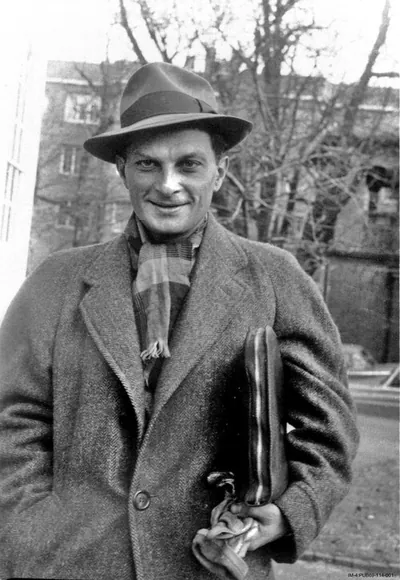 Stanisław Ulam1909–1984 · Mathematics
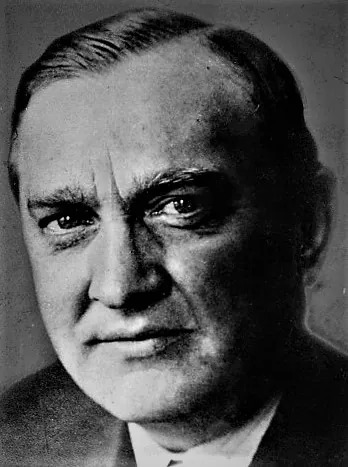 Stefan Banach1892–1945 · Mathematics
 Leonid Kantorovich1912–1986 · Mathematics
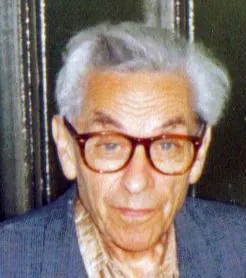 Paul Erdős1913–1996 · Mathematics
 Ronald Fisher1890–1962 · Mathematics
