
Edith M. Flanigen
American chemist known for zeolites and molecular sieves · 1929–2026
- Born
- January 28, 1929
- Died
- January 6, 2026
- Country
- United States
- Section
- Chemistry
Biography
Edith Marie Flanigen (Buffalo, New York, 1929 – Buffalo, 2026) was an American chemist whose work on zeolites and molecular sieves changed the way petroleum is refined. She is also remembered for her role in creating synthetic emeralds. Most of her career unfolded at Union Carbide, a chemical company that, in the second half of the twentieth century, was searching for ever more precise materials for industry. Her work remains a reference point in industrial catalysis.
She was born on January 28, 1929, in Buffalo. She and her two sisters, Joan and Jane, first became interested in chemistry through their high school teacher, Sister Mary. All three went on to study at D'Youville College, where Dorothea Fitzgerald taught the chemistry courses, and Flanigen graduated at the top of her class. She and Joan then took master's degrees at Syracuse University, where in 1952 she completed a degree in inorganic physical chemistry. In 2008 the university gave her an honorary doctorate.
In 1952 she joined Union Carbide, where her first task was identifying, purifying and extracting silicone polymers, large molecules built from chains of silicon and oxygen. In 1956 she moved to the group studying molecular sieves. In 1973 she became the first woman at the company to be named corporate research fellow, and in 1986 she was promoted to senior corporate research fellow. In 1988 she moved to UOP, a joint venture between Union Carbide and Allied Signal, and in 1991 she became a UOP Fellow. She retired in 1994, though she kept working as a consultant for UOP at least until 2004. Over her 42 years associated with Union Carbide she invented more than 200 synthetic substances, co-authored over 36 publications and earned at least 109 patents.
Molecular sieves are crystalline solids with pores of molecular size, which act as filters able to separate very complex mixtures. Flanigen is best known as the inventor of zeolite Y, also called faujasite, a sieve used to refine petroleum. Crude oil is split into fractions, such as gasoline, and a catalyst is a substance that speeds up chemical reactions without being used up. Zeolite Y increases the amount of gasoline that can be obtained from petroleum, which makes refining safer and more productive.
Beyond her molecular sieves, she also co-invented a synthetic emerald that Union Carbide produced and sold for many years. These stones were mainly used in masers, the forerunners of lasers, and for a time in jewelry, as part of a line marketed as the «Quintessa Collection».
She was the first woman to receive the Perkin Medal, in 1992, and in 2004 she was inducted into the National Inventors Hall of Fame in the United States. In 2014 the Collaborative Research Centre at Humboldt University of Berlin created an annual award in her name for a female scientist early in her career; the first recipient was Natacha Krins, of the University of Paris. That same year, President Barack Obama presented her with the National Medal of Technology and Innovation. She died in Buffalo on January 6, 2026, at the age of 96. Her legacy lies in the materials that still help refine petroleum, and in the example she set for women in industrial chemistry.
Main contributions
- 1952Work on silicone polymers: her first task at Union Carbide was identifying, purifying and extracting these silicon-based molecules.
- 1956Molecular sieves: crystalline solids with molecular-sized pores that filter and separate complex mixtures, a field she worked in from 1956.
- Zeolite Y (faujasite): a molecular sieve that increases the amount of gasoline obtained from petroleum during refining.
- Synthetic emerald: an artificial stone she co-invented, produced and sold by Union Carbide for many years.
Trivia and anecdotes
Emeralds for masers
Union Carbide's synthetic emeralds were used mainly in masers, the forerunners of lasers, and for a time also in jewelry.
Three chemist sisters
She and her sisters Joan and Jane were drawn to chemistry through the same high school teacher, and all three studied it at D'Youville College.
Their contemporaries
While Edith M. Flanigen was alive (1929–2026)…
Alive at the same time
Discovered or invented in those years
- 1931Big BangA cosmological model describing how the universe expanded from an early state of extreme density and temperature, about 13.8 billion years ago.
- 1932NeutronA subatomic particle with no net electric charge, found in the nucleus of almost every atom alongside protons.
- 1945ComputerA programmable machine that takes in data, processes it by following stored instructions, and produces results, able to switch tasks simply by running different software.
- 1969InternetA global network of interconnected computer networks that communicate using the TCP/IP protocol suite.
- 1973Mobile phoneA handheld wireless phone that lets people make and receive calls while moving across a cellular network area.
- 1989World Wide WebA system of linked documents and resources, connected by hyperlinks and accessed over the Internet with web browsers.
 Paul Lauterbur1929–2007 · Chemistry
 Elias James Corey1928 · Chemistry
 Manfred Eigen1927–2019 · Chemistry
 John Pople1925–2004 · Chemistry
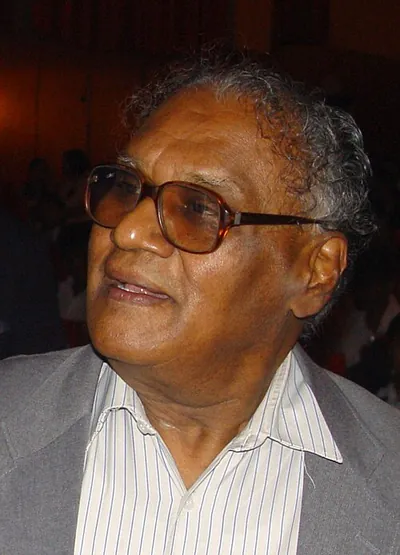 Chintamani Nagesa Ramachandra Rao1934 · Chemistry
 Alan J. Heeger1936 · Chemistry
