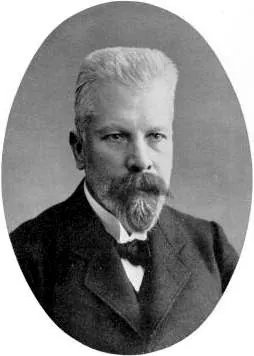
Eduard Buchner
German chemist, 1907 Nobel Prize in Chemistry for showing that fermentation can occur without living yeast cells · 1860–1917
- Born
- May 20, 1860
- Died
- August 13, 1917
- Country
- German Empire
- Section
- Chemistry
- Awards
- Nobel Prize in Chemistry
Biography
Eduard Buchner was a German chemist (Munich, 1860 - 1917) who won the 1907 Nobel Prize in Chemistry for showing that alcoholic fermentation can take place without living yeast cells. Working at the turn of the twentieth century, he helped turn the processes of living things into a subject that could be studied with chemical methods, and his work is one of the roots of modern biochemistry.
Buchner was born in Munich on 20 May 1860. His father, Ernst Buchner, was a physician and lecturer in forensic medicine at the city's university, and his mother was Friderike Martin. When his father died in 1872, Eduard was only twelve, and his education passed to his older brother Hans, who later became a respected bacteriologist. In 1884 Eduard began studying chemistry under Adolf von Baeyer and botany under Carl Nägeli at the Botanical Institute in Munich. After a spell working with Otto Fischer in Erlangen, he earned his doctorate from the University of Munich in 1888.
His first relevant publication, in 1885, dealt with how oxygen affects fermentation, a theme that stayed with him. Fermentation is the process by which a microorganism turns sugar into alcohol and carbon dioxide, the same reaction that makes bread rise and beer fizz. For much of the nineteenth century it was believed that this could only happen inside living cells. That belief belonged to vitalism, the idea that the processes of life depend on a special force that cannot be reproduced in a laboratory. Buchner set out to test whether living cells were really needed.
In 1893 he set up a small laboratory of his own devoted to fermentation and began teaching in this field. That same year he carried out his first experiments with yeast cells, but since he was not confident that this line of work would pay off, he set it aside for about three years. Around then he also took charge of the analytical section of the laboratory at the University of Kiel, where he was made a professor in 1895. A year later he was called to Tübingen as an extraordinary professor, working in the chemistry laboratory of Hans von Pechmann, a chemist who had also come from Munich and who later became known for discovering polyethylene. With more resources and with his brother still close by at the Institute of Hygiene in Munich, Buchner returned to yeast. In 1898 he took up the chair of general chemistry at the Agricultural University in Berlin, and in 1909 and 1911 he moved on to Breslau and Würzburg.
The key text was published in the journal Berichte der Deutschen Chemischen Gesellschaft under the title Über alkoholische Gärung ohne Hefezellen, roughly «On alcoholic fermentation without yeast cells». The method looked deceptively simple. Buchner mixed dried yeast with quartz sand and diatomaceous earth, ground it in a mortar until the cells broke open, and moistened the paste. He then pressed it, collecting a liquid he called «press juice». When he added glucose, fructose or maltose to this liquid, it gave off carbon dioxide for days. Under the microscope it contained no living cells. The conclusion was that fermentation was carried out by substances inside yeast, enzymes, which are proteins that speed up chemical reactions, rather than by the living cell as such. At first Buchner suggested that yeast cells released these proteins into their surroundings, a guess that was later corrected once it became clear that fermentation happens inside the cells.
The discovery also brought a priority dispute. Maria Manasseina claimed to have observed fermentation in free cells a generation earlier. Buchner and his colleague Rapp judged that she was convinced of an enzyme of fermentation but that her experimental evidence was not persuasive. The question of who came first remained open, though the value of Buchner's method was widely recognised. In 1903 he published, together with Martin Hahn and his brother Hans, the book Die Zymasegärung, which set out his results in more detail.
He married Lotte Stahl in 1900. When the First World War broke out he volunteered for the Imperial German Army and rose to the rank of major, commanding a munitions transport unit first on the Western Front and then on the Eastern Front. He returned to the University of Würzburg in March 1916 and volunteered again in April 1917. There are two accounts of his last months. One says he was wounded on 3 August 1917 and taken to Munich, where he died nine days later. The other says that he was hit by a shell fragment in Focșani, Romania, on 11 August and died two days later in a field hospital. Either way he died in August 1917, at the age of 57.
Buchner's legacy is twofold. His cell-free experiment showed that reactions of living systems could be studied outside the organism, which helped open the way to enzymology and biochemistry. It also weakened the vitalist view in the field of fermentation. A popular story adds a twist: the Büchner flask and the Büchner funnel found in many laboratories are often said to be named after him, but they actually honour the industrial chemist Ernst Büchner, who is unrelated to Eduard, although the mistaken belief persists.
Main contributions
- 1885His first significant paper, on how oxygen influences fermentation, written while he was working under his brother's guidance.
- 1893First experiments with yeast cells, which he set aside for about three years because he was not confident in the line of work.
- 1903The book Die Zymasegärung, written with Martin Hahn and his brother Hans, which sets out his findings on fermentation in more detail.
- 1907Nobel Prize in Chemistry for discovering fermentation without living cells, which showed that fermentation depends on enzymes.
- The paper Über alkoholische Gärung ohne Hefezellen, describing alcoholic fermentation produced by a yeast extract free of living cells.
Teachers and students
Trivia and anecdotes
The press juice
Buchner called the liquid he squeezed out of crushed yeast «press juice». With it he showed that sugar could ferment without any living cells present.
A flask with the wrong namesake
The Büchner flask and funnel are often credited to Eduard Buchner, but they are named after the industrial chemist Ernst Büchner, who was not directly related to him.
Their contemporaries
While Eduard Buchner was alive (1860–1917)…
Alive at the same time
Discovered or invented in those years
- 1869Periodic tableAn arrangement of the chemical elements into rows (periods) and columns (groups), ordered by atomic number, that reveals recurring chemical behaviour and lets scientists predict properties.
- 1869Deoxyribonucleic acidA double-stranded molecule that carries the genetic instructions of nearly all living things and many viruses.
- 1876TelephoneA device that carries the human voice over distance by turning sound into electrical signals and back into sound at the other end of the line.
- 1884CarA road vehicle with four wheels and its own engine, mainly built to carry people.
- 1897ElectronA negatively charged subatomic particle found in every atom, and key to electricity and chemical bonding.
- 1903AirplaneA fixed-wing aircraft, heavier than air, powered by engines or rockets, that stays aloft because its wings generate lift.
 Svante August Arrhenius1859–1927 · Chemistry
 Walther Hermann Nernst1864–1941 · Chemistry
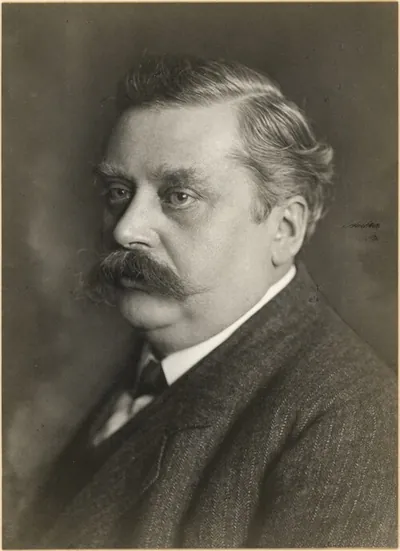 Alfred Werner1866–1919 · Chemistry
 Marie Curie1867–1934 · Chemistry
 Wilhelm Ostwald1853–1932 · Chemistry
 Emil Fischer1852–1919 · Chemistry
