
Einar Hille
American mathematician of Swedish origin, specialist in mathematical analysis and differential equations · 1894–1980
- Born
- June 28, 1894
- Died
- February 12, 1980
- Country
- United States
- Section
- Mathematics
Biography
Carl Einar Hille (born in New York in 1894, died in the United States in 1980) was a mathematician of Swedish parentage who built his career in the United States. He worked on the boundary between classical analysis and functional analysis, the branch that studies spaces of functions and the operators acting on them, and several results in that field carry his name. His books and teaching helped shape modern mathematics in his adopted country and trained a generation of researchers.
Hille was born in New York City in 1894 to Swedish parents who never married. His father, Carl August Heuman, was a civil engineer, but the boy was raised solely by his mother, Edla Eckman, who took the surname Hille. When Einar was two, mother and son moved back to Stockholm, and he spent the next twenty-four years in Sweden before returning to the United States at twenty-six.
He entered Stockholm University in 1911, earned his first mathematics degree in 1913, and a degree equivalent to a master's the following year. In 1918 he received his doctorate with a thesis called Some Problems Concerning Spherical Harmonics, a study of functions defined on the surface of a sphere, which are useful for describing phenomena spread over a sphere. A year later he won the Mittag-Leffler Prize, a notable distinction in Nordic mathematics, and was granted the right to teach at Stockholm University.
His teaching career took him to Harvard, Princeton, Stanford and the University of Chicago. In 1933 he became an endowed professor of mathematics at Yale's Graduate School, a post he held until retiring in 1962. His main research covered integral equations, differential equations, special functions, Dirichlet series and Fourier series. Over time he turned increasingly to functional analysis. His best-known result is the Hille-Yosida theorem, which gives conditions under which an evolution problem described by certain operators has a solution; he developed it together with the Japanese mathematician Kōsaku Yosida. With Ralph Phillips he wrote Functional Analysis and Semi-Groups, a standard reference on semigroups of operators.
Hille belonged to the London Mathematical Society and the Circolo Matematico di Palermo. He served as president of the American Mathematical Society in 1947–48 and gave the society's Colloquium lectures in 1944. He received many honours, including election to the United States National Academy of Sciences in 1953, membership in the Royal Swedish Academy of Sciences, and Sweden's Order of the Polar Star.
In 1937 he married Kirsti Ore, sister of the Norwegian mathematician Øystein Ore. They had two sons, Harald and Bertil Hille.
Hille's legacy lives on mainly through his books, valued for their rigour and clarity, and through the theorem that bears his name alongside Yosida's. His work helped establish functional analysis as a central tool of twentieth-century mathematics.
Main contributions
- 1918Doctoral thesis on spherical harmonics, functions describing phenomena spread over a sphere.
- 1919Mittag-Leffler Prize, a Nordic mathematics distinction that opened the way to teaching in Stockholm.
- 1948Functional Analysis and Semi-Groups, written with Ralph Phillips, a reference work on semigroups of operators.
- 1959Analytic Function Theory, a two-volume work on the theory of analytic functions.
- Hille-Yosida theorem, giving conditions for the existence of solutions to evolution problems driven by operators.
Teachers and students
Studied under:
Taught:
Trivia and anecdotes
A maternal surname
His mother took the surname Hille, which he kept for life, although his biological father was someone else.
A marriage into a family of mathematicians
His wife Kirsti was the sister of the Norwegian mathematician Øystein Ore.
Their contemporaries
While Einar Hille was alive (1894–1980)…
Alive at the same time
Discovered or invented in those years
- 1903AirplaneA fixed-wing aircraft, heavier than air, powered by engines or rockets, that stays aloft because its wings generate lift.
- 1925TelevisionA system that sends moving pictures and sound over distance and shows them on a receiver, the television set.
- 1925Quantum mechanicsPhysical theory describing how matter and light behave at atomic and subatomic scales, where energy is exchanged in minimal packets and results are expressed as probabilities.
- 1931Big BangA cosmological model describing how the universe expanded from an early state of extreme density and temperature, about 13.8 billion years ago.
- 1945ComputerA programmable machine that takes in data, processes it by following stored instructions, and produces results, able to switch tasks simply by running different software.
- 1969InternetA global network of interconnected computer networks that communicate using the TCP/IP protocol suite.
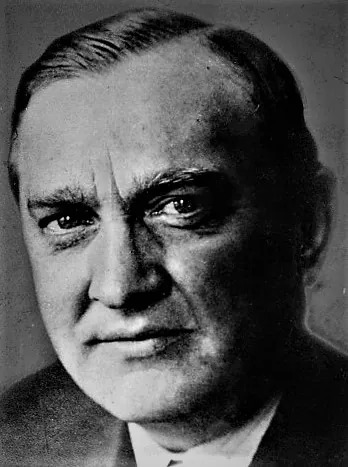 Stefan Banach1892–1945 · Mathematics
 Ronald Fisher1890–1962 · Mathematics
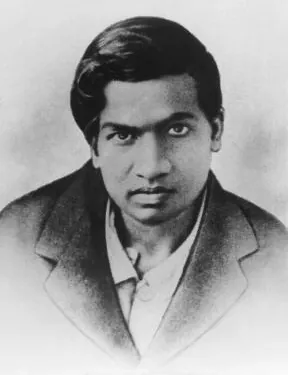 Srinivasa Ramanujan1887–1920 · Mathematics
 Andrey Kolmogorov1903–1987 · Mathematics
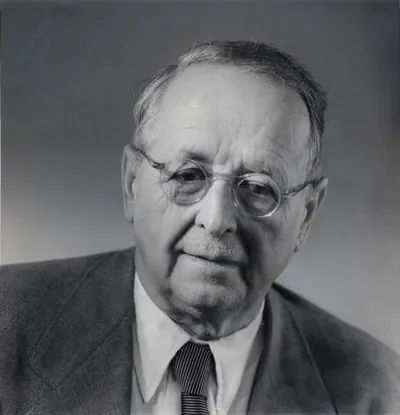 Hermann Weyl1885–1955 · Mathematics
 Emmy Noether1882–1935 · Mathematics
