
Fazlur Khan
Bangladeshi-American structural engineer and architect who developed the tube systems behind modern skyscrapers · 1929–1982
- Born
- April 3, 1929
- Died
- March 27, 1982
- Country
- United States, Pakistan, Bangladesh
- Section
- Engineering and construction
Biography
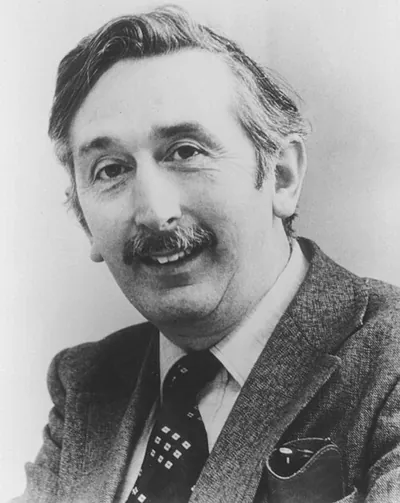
Fazlur Rahman Khan (Dhaka, 1929 - Jeddah, Saudi Arabia, 1982) was a Bangladeshi-American structural engineer and architect who changed the way skyscrapers were built in the second half of the twentieth century. Working in Chicago, he devised structural systems that allowed very tall buildings to be raised with less material. He is often regarded as the father of tubular designs for high-rise buildings.
He was born on 3 April 1929 in Dhaka, then part of the Bengal Presidency, into a Bengali Muslim family of some standing. His father, Khan Bahadur Abdur Rahman Khan, taught mathematics at a high school and wrote textbooks. He later became Director of Public Instruction in Bengal and, after retiring, the first principal of Jagannath College. Khan attended Armanitola Government High School in Dhaka. His hometown had no buildings taller than three storeys, and he did not see a skyscraper in person until he was 21.
He studied civil engineering at Shibpur, in what is now India, and later earned his degree at Ahsanullah Engineering College, today the Bangladesh University of Engineering and Technology. A Fulbright scholarship and a government grant took him to the United States in 1952, where he enrolled at the University of Illinois at Urbana-Champaign. In about three years he earned two master's degrees, one in structural engineering and one in theoretical and applied mechanics, and then a doctorate with a thesis on prestressed concrete beams. Prestressed concrete is concrete that is compressed in advance so it can better bear the loads placed on it later.
After his doctorate he worked in Chicago for the architectural firm Skidmore, Owings & Merrill (SOM). He then returned to Pakistan and joined the Karachi Development Authority, but in 1960 he went back to SOM. He became a partner in 1966 and spent the rest of his career working alongside the architect Bruce Graham. His goal was to find ways of using building materials more efficiently, an approach that had rarely been pursued so systematically before.
His starting point was a simple observation. For a long time, skyscrapers had been built around a rigid steel frame of beams and columns, and this was taken for granted as the only sensible method. Khan showed that other systems could work. His central idea was to treat the entire outer perimeter of a building as a thin-walled tube. Closely spaced, interconnected exterior columns then resist sideways forces together, such as wind and earthquake loads, which grow with height and eventually dominate the design of a tall building.
The first application was the DeWitt-Chestnut apartment building in Chicago, now known as Plaza on DeWitt, designed by Bruce Graham and completed in 1963. Built of concrete, it followed the framed tube principle, and it laid the groundwork for later structures, including ones used in the World Trade Center. Next came the John Hancock Center, built between 1965 and 1969, where Khan first used X-shaped bracing on the building's exterior. This bracing carries the load into the outer columns, which means fewer interior columns are needed and the floors are more open. According to the figures cited for the building, it used about 145 kilograms of steel per square metre, compared with about 206 for the Empire State Building and 275 for One Chase Manhattan Plaza.
Another variant was the bundled tube, made of several tubes joined together. It was used for the Willis Tower, formerly the Sears Tower, in Chicago, which was completed in 1973 and held the title of world's tallest building until 1998. Khan argued that this approach freed architects from boxy towers, since the tube units could take many shapes. At One Shell Plaza in Houston he first applied the tube-in-tube system, in which an inner core of shear walls and the outer perimeter work together. He also devised the outrigger and belt truss system, which links the outer tube to the central core at one or more levels, as in the First Wisconsin Center in Milwaukee.
He did not work alone. With Bruce Graham, he persuaded SOM to buy a mainframe computer, a risky investment at the time. Khan then programmed it to carry out structural calculations and later to produce architectural drawings. He was also responsible for most of SOM's projects in the Middle East. The most notable is the pilgrim terminal at King Abdulaziz International Airport in Jeddah, completed in 1981, with tent-like fabric roofs that fold away when not in use. The project won the Aga Khan Award for Architecture. He also designed the Hubert H. Humphrey Metrodome in Minneapolis and the United States Air Force Academy in Colorado Springs.
In his private life, Khan enjoyed singing the poetic songs of Rabindranath Tagore in Bengali. He was married to Liselotte, an Austrian-born wife, and they had a daughter in 1960. He became a United States citizen in 1967. He believed that engineers needed a wider view of life and should not become lost in their own technology, since life also includes art, music and, above all, people.
When the Bangladesh Liberation War broke out in 1971, he became deeply involved in shaping public opinion and raising emergency funds for the Bengali people. To do this he set up the Bangladesh Emergency Welfare Appeal in Chicago. He died of a heart attack on 27 March 1982 while travelling in Jeddah, at the age of 52, still a general partner at SOM. His body was flown back to the United States and buried in Graceland Cemetery in Chicago.
His legacy is wide. Most buildings of more than 40 storeys built since the 1960s use a tube design derived from his principles, and his influence can be seen in towers such as the Petronas Towers and the Burj Khalifa. His ideas about soft storeys that absorb the shocks of strong earthquakes were a forerunner of modern seismic isolation systems. He received many awards, the US National Academy of Engineering elected him in 1973, and in 2017 Google marked what would have been his 88th birthday with a Doodle.
Main contributions
- 1963DeWitt-Chestnut building, Chicago: first application of the framed tube, with closely spaced exterior columns resisting sideways forces.
- 1965Brunswick Building, Chicago: first use of the shear wall frame interaction system, a concrete core combined with an outer frame.
- 1969John Hancock Center, Chicago: exterior X-bracing that carries loads into the outer columns and cuts the steel needed per square metre.
- 1971One Shell Plaza, Houston: first use of the tube-in-tube system, in which an inner core and the outer perimeter work together.
- 1973Willis Tower, Chicago: application of the bundled tube, several tubes joined together, allowing more varied shapes.
- 1973First Wisconsin Center, Milwaukee: outrigger and belt truss system linking the outer tube to the central core.
- 1981Pilgrim terminal at the Jeddah airport: tent-like fabric roofs that fold away when not in use.
Trivia and anecdotes
Inspiration from bamboo
His tube concept is said to have been inspired by the bamboo growing around Dhaka, whose hollow stalk seemed a durable solution.
A risky computer
Persuading his partners to buy a mainframe computer was a gamble at a time when such technology was only just being adopted.
Nicknames
He has been called the Einstein of structural engineering, a nickname reflecting the respect he earned among colleagues.
Their contemporaries
While Fazlur Khan was alive (1929–1982)…
Alive at the same time
Discovered or invented in those years
- 1931Big BangA cosmological model describing how the universe expanded from an early state of extreme density and temperature, about 13.8 billion years ago.
- 1932NeutronA subatomic particle with no net electric charge, found in the nucleus of almost every atom alongside protons.
- 1945ComputerA programmable machine that takes in data, processes it by following stored instructions, and produces results, able to switch tasks simply by running different software.
- 1969InternetA global network of interconnected computer networks that communicate using the TCP/IP protocol suite.
- 1971EmailA network service that lets users send and receive digital messages through addressed mailboxes, much like postal mail but electronic.
- 1973Mobile phoneA handheld wireless phone that lets people make and receive calls while moving across a cellular network area.
 Rudolf E. Kálmán1930–2016 · Engineering and construction
 Godfrey Hounsfield1919–2004 · Engineering and construction
 Borys Paton1918–2020 · Engineering and construction
 Félix Candela1910–1997 · Engineering and construction
