
Françoise Combes
French astrophysicist specialising in galaxy formation and evolution and in dark matter · 1952
- Born
- August 12, 1952
- Country
- France
- Section
- Astronomy and space
Biography
Françoise Combes is a French astrophysicist who has spent her career studying how galaxies form, grow and change. Born in Montpellier in 1952, she is one of the leading figures in European astronomy of recent decades, and her work helps explain the large-scale structure of the universe.
After two years of preparatory classes in Montpellier, she entered the École normale supérieure for young women near Paris, where she earned an advanced studies diploma in physics. Her first research was theoretical: she prepared a doctoral thesis on models of symmetric universes made of matter and antimatter. In 1975 she passed the agrégation in physical sciences, a competitive national examination that qualifies teachers for university posts in France.
She then turned to astronomy and earned a state doctorate in astrophysics with a thesis on the dynamics and structure of galaxies, that is, on how stars and gas move inside them. Between 1989 and 2014 she worked as an astronomer at the Paris Observatory while serving on the councils of several institutions and scientific programmes.
Her method combines observations made in different wavelengths of light, from radio to visible, with numerical simulations, computer programs that reproduce how a system of stars and gas evolves over billions of years. Through this approach she has studied spiral arms, central bars and collisions between galaxies, as well as molecular gas, the raw material from which new stars form, both in nearby galaxies such as Andromeda and in very distant systems.
Dark matter is another central theme. It is an invisible component that emits no light but whose gravity shows in the motion of galaxies. Combes examines the models that try to explain it and alternatives such as modified gravity. Together with Daniel Pfenniger, she proposed that a large share of the still unidentified ordinary matter could take the form of cold molecular gas.
She is a professor at the Collège de France, where she has held the chair of Galaxies and cosmology since 2014, and has been a member of the French Academy of Sciences since 2004. In 2021 she received the L'Oréal-UNESCO International Prize for Women in Science. She became president of the French Academy of Sciences in 2025. Her legacy lies in showing that galaxies are best understood when observations and calculations are combined, and in training many generations of researchers.
Main contributions
- Thesis on models of symmetric universes of matter and antimatter, a theoretical physics line with which her career began.
- Studies of galaxy dynamics and structure, with particular attention to spiral arms and central bars.
- Research on molecular gas, the raw material of star formation in nearby and distant galaxies.
- With Daniel Pfenniger, a proposal that part of the unidentified matter could be cold molecular gas.
Teachers and students
Taught:
Trivia and anecdotes
A high school named after her
In 2017, the City of Success school in Montpellier was renamed the Françoise Combes high school.
Women on the Eiffel Tower
As president of the French Academy of Sciences, she sat on the commission that proposed adding the names of 72 women in science to the 72 men already engraved on the Eiffel Tower.
Their contemporaries
While Françoise Combes was alive (1952–)…
Alive at the same time
Discovered or invented in those years
- 1957Artificial satelliteAn artificial satellite is a human-made object placed in orbit around a celestial body, usually Earth, to collect information, relay signals, or carry out a specific task.
- 1969InternetA global network of interconnected computer networks that communicate using the TCP/IP protocol suite.
- 1971EmailA network service that lets users send and receive digital messages through addressed mailboxes, much like postal mail but electronic.
- 1973Mobile phoneA handheld wireless phone that lets people make and receive calls while moving across a cellular network area.
- 1989World Wide WebA system of linked documents and resources, connected by hyperlinks and accessed over the Internet with web browsers.
- 1990Web browserA program that lets people access the web by fetching a page's files from a server and displaying them on screen as an interactive page.
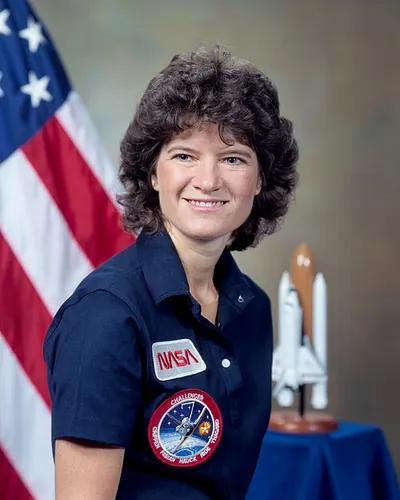 Sally Ride1951–2012 · Astronomy and space
 Russell A. Hulse1950 · Astronomy and space
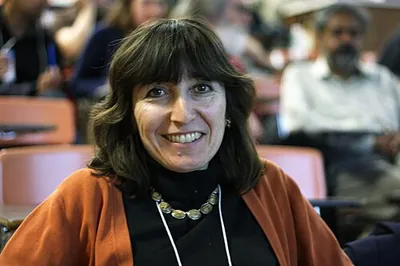 Wendy Freedman1957 · Astronomy and space
 Saul Perlmutter1959 · Astronomy and space
 Michel Mayor1942 · Astronomy and space
 Joseph Hooton Taylor1941 · Astronomy and space
