
Georg Forster
German naturalist, ethnologist and travel writer who took part in James Cook's second voyage and was a figure in the Mainz Republic · 1754–1794
- Born
- November 27, 1754
- Died
- January 10, 1794
- Country
- Poland, Lithuania, France
- Section
- Biology
Biography
Johann Georg Adam Forster, known as Georg Forster, was a German naturalist, ethnologist, travel writer, journalist and revolutionary who lived from 1754 to 1794. He lived through the late Enlightenment and the turbulent years of the French Revolution, and his importance lies largely in his role as one of the first writers to produce travel accounts with a serious scientific basis, and as one of the founders of comparative ethnology.
He was born in Nassenhuben, near Danzig, into a Protestant family. He was the eldest son of Johann Reinhold Forster, a Lutheran pastor and scholar of philosophy and natural history, who first learned botany from the books of Linnaeus and then taught his son. In 1765, when Georg was ten, he joined his father on a mission commissioned by the Russian government to inspect German colonies along the Volga. On the journey, which reached the Kalmyk steppe, Georg collected hundreds of plant specimens and learned to speak Russian well. After a period in St Petersburg and a sea crossing, the family reached London in 1766. At the age of thirteen he published his first book there, an English translation of Lomonosov's history of Russia, which earned him respect among British scholars.
In 1772 the British Admiralty asked his father to join Captain James Cook on his second voyage around the world. Johann Reinhold secured a place for the seventeen-year-old Georg as a draughtsman. They sailed from Plymouth aboard HMS Resolution on 13 July 1772 and returned on 30 July 1775. The ship crossed the South Atlantic, the Indian Ocean and Antarctic waters, visited the islands of Polynesia, and pushed further south than anyone had before. The voyage did not find the vast southern continent many people then believed in, but it showed that no large habitable land existed in the southern hemisphere. On board, Georg worked under his father, drawing animals and plants, but his real interests soon turned to geography and comparative ethnology. He learned Polynesian languages quickly and studied the islanders with a sympathy and fewer prejudices than many contemporary travellers. He moved away from the romantic image of the noble savage that Bougainville had popularised, while avoiding idealisation as well. Relations with Cook were strained, partly because of Johann Reinhold's difficult temperament and partly because Cook allowed little time for scientific observation.
Disputes continued after their return, because the Admiralty gave the official account to Cook, leaving the Forsters without the commission or payment. In 1777 Georg chose to publish an independent account, A Voyage Round the World, which appeared six weeks before the official version. The book was an immediate success, and his German translation, published between 1778 and 1780, brought him fame. Christoph Martin Wieland praised it as the most remarkable book of its age. His prose was precise yet readable, combining reliable information with philosophical reflections and close attention to the customs, religions and social organisation of the peoples he met. The book influenced Alexander von Humboldt and remains an important source on the societies of the South Pacific before large-scale European influence. That same year he was elected to the Royal Society at only twenty-two, and academies from Berlin to Madrid also admitted him, although these honours brought no income.
To earn a living he returned to Germany and taught natural history at the Collegium Carolinum in Kassel. There he joined several Masonic lodges and met Therese Heyne, who later became a writer under the name Therese Huber. They married in 1785 and had children, but the marriage was not a happy one. During these years he corresponded with Lichtenberg, Herder, Wieland and Goethe, and helped bring the anatomist Sömmerring into the Collegium. In 1786, while teaching in Vilnius, he argued with Kant about human races, defending Sömmerring's physiological conclusions against Kant's more abstract approach. He also studied Indology and became one of the first German scholars in that field. His plan to lead a Russian expedition to India, backed by Catherine the Great, never came to fruition. In 1788 he became head librarian at the University of Mainz.
When the French took Mainz in 1792, Forster played a prominent role in the Mainz Republic, the first republican state in Germany. In 1793 he went to Paris as a delegate of the new republic, but while he was there Prussian and Austrian forces retook the city and he was declared an outlaw. Unable to return to Germany and cut off from his family and friends, he died in Paris in early 1794, before reaching forty. His legacy lives on in scientifically grounded travel writing and in his recognition as a precursor of comparative ethnology.
Main contributions
- 1766English translation of Lomonosov's history of Russia, published when he was thirteen.
- 1772Participation as a draughtsman in James Cook's second voyage, which showed that no large habitable continent lay in the south.
- 1777A Voyage Round the World: his account of the Cook voyage, scientifically grounded and highly influential in travel writing.
- 1791German translation of William Bligh's account of his voyage in the South Seas, published between 1791 and 1793.
Trivia and anecdotes
A sign of his independence
Forster refused to have his writing corrected as if it were a schoolboy's exercise, which helped cost him the official account.
An early publication
His book on the voyage appeared six weeks before Cook's official version.
Their contemporaries
While Georg Forster was alive (1754–1794)…
Alive at the same time
Discovered or invented in those years
- 1766HydrogenThe lightest and most abundant chemical element in the universe, atomic number 1, which under normal conditions is a colourless, odourless and highly flammable gas.
- 1772NitrogenChemical element with atomic number 7, a colourless, odourless gas that makes up about 78% of Earth's air and is an essential part of proteins and nucleic acids.
- 1774OxygenA colorless, odorless gas, symbol O and atomic number 8, that forms the dioxygen in air and is essential for respiration in most living things.
- 1781UranusThe seventh planet from the Sun, an ice giant discovered by William Herschel in 1781, the first planet found with a telescope.
- 1789UraniumA radioactive metal with atomic number 92, used as fuel in nuclear power plants and in nuclear weapons, and in various military and civilian applications.
- 1789CarbonA chemical element with symbol C and atomic number 6, the basis of organic chemistry and a component of all known life, found in materials as different as diamond and pencil lead.
 Edward Jenner1749–1823 · Biology
 Jean-Baptiste de Lamarck1744–1829 · Biology
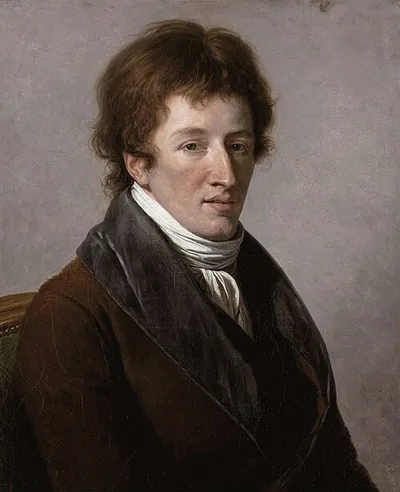 Georges Cuvier1769–1832 · Biology
 Carl Linnaeus1707–1778 · Biology
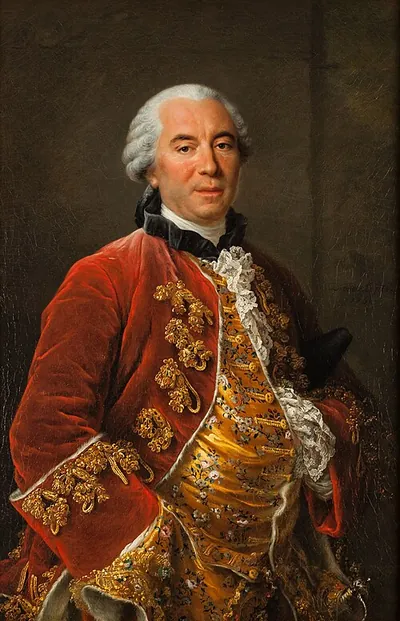 Georges-Louis Leclerc, Comte de Buffon1707–1788 · Biology
 Charles Darwin1809–1882 · Biology
