
George Robert Gray
English zoologist who headed the ornithology section of the British Museum for forty-one years · 1808–1872
- Born
- July 8, 1808
- Died
- May 6, 1872
- Country
- United Kingdom of Great Britain and Ireland
- Section
- Biology
Biography
George Robert Gray (8 July 1808 – 6 May 1872) was an English zoologist and author who spent forty-one years as head of the ornithology section of the British Museum, the institution now known as the Natural History Museum in London. He worked in the era of the great nineteenth-century natural history collections, when naming, describing and arranging thousands of species into families and genera was central to the science. His lasting importance lies chiefly in his systematic catalogues of birds, which researchers still consult.
Gray was born in Little Chelsea, London, on 8 July 1808, into a family of naturalists. His father, Samuel Frederick Gray, was a botanist and pharmacologist, and his elder brother, John Edward Gray, also became a prominent zoologist. He was educated at Merchant Taylor's School, a long-established London school. From an early age he moved in the world of scientific collections, an environment that shaped his whole career.
In 1831 he joined the British Museum as an assistant keeper in the zoology department. His first assignments involved cataloguing insects, which led to his 1833 work on the insects of Australia. He also contributed the entomology section to an English edition of The Animal Kingdom by the French naturalist Georges Cuvier, an ambitious attempt to arrange all living things by their shared features.
His early fame rested on phasmids, or stick insects, a group that mimics twigs and leaves. According to his biography, three publications on these insects between 1833 and 1843 more than doubled the number of named phasmid species, and three species were later named after him. He then turned to Lepidoptera, the group of butterflies and moths. In 1846 he described new species, mostly from Nepal, and in 1852 he published a catalogue of the swallowtail butterflies in the museum's collection.
His major achievement was Genera of Birds (1844–1849), illustrated by David William Mitchell and Joseph Wolf. The work set out the bird genera, describing the defining traits and habits of each and listing the species assigned to them, and it included some 46,000 references. His classification of birds also appeared in the Handlist of the Genera and Species of Birds, published between 1869 and 1872, a reference that guided ornithologists for decades.
In 1860 he described a warbler, Locustella fasciolata, now known in English as Gray's grasshopper warbler. The specimen had been collected in the Moluccas by Alfred Russel Wallace, who co-proposed the theory of evolution by natural selection, and the bird came to carry Gray's name. In 1833 he was also one of the founders of what became the Royal Entomological Society of London, and he was elected a Fellow of the Royal Society.
Gray died in London on 6 May 1872, aged 63. His legacy is twofold. He brought order to the bird collection of the British Museum at a time when classifying species was the foundation of biology, and he left a long list of scientific names and species that still carry his mark. His work remains a useful guide to how birds were organised in the nineteenth century.
Main contributions
- 1833Entomology of Australia: the first series of monographs on the continent's insects, including his study of phasmids.
- 1844Genera of Birds: a survey of bird genera with their traits, habits and species, including some 46,000 references.
- 1846Descriptions of new lepidopterans, mostly from Nepal, meaning butterflies and moths previously unknown to science.
- 1852Catalogue of the swallowtail butterflies in the British Museum, the first part of a series on Lepidoptera.
- 1860Description of the warbler Locustella fasciolata, which bears his name in English.
- 1869Handlist of the Genera and Species of Birds: a reference list of bird genera and species, published up to 1872.
Trivia and anecdotes
A warbler named after him
The bird Locustella fasciolata is known in English as Gray's grasshopper warbler. The type specimen was collected in the Moluccas by Alfred Russel Wallace.
A family of naturalists
His elder brother John Edward Gray was also a zoologist, and his father was a botanist and pharmacologist, making the family a small dynasty of naturalists.
Their contemporaries
While George Robert Gray was alive (1808–1872)…
Alive at the same time
Discovered or invented in those years
- 1821ElectricityThe set of physical phenomena linked to the presence and movement of electric charge, and one of the most versatile forms of energy in modern life.
- 1839PhotographyA technique for creating lasting images by recording light, either on a light-sensitive material or with an electronic sensor.
- 1846NeptuneThe eighth and most distant planet of the Solar System, an ice giant found through mathematical prediction before any direct sighting.
- 1859EvolutionThe process by which the heritable traits of living populations change over generations, explaining the diversity of life from common ancestors.
- 1869Periodic tableAn arrangement of the chemical elements into rows (periods) and columns (groups), ordered by atomic number, that reveals recurring chemical behaviour and lets scientists predict properties.
- 1869Deoxyribonucleic acidA double-stranded molecule that carries the genetic instructions of nearly all living things and many viruses.
 Charles Darwin1809–1882 · Biology
 Theodor Schwann1810–1882 · Biology
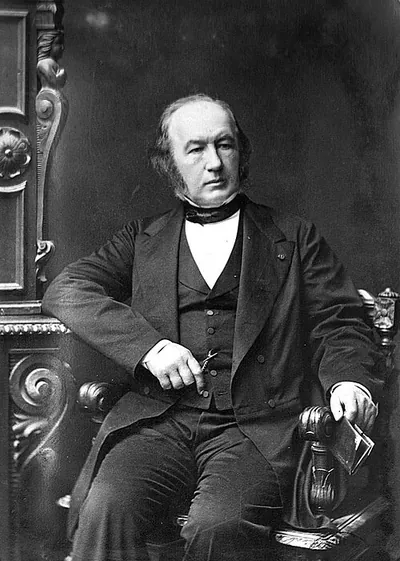 Claude Bernard1813–1878 · Biology
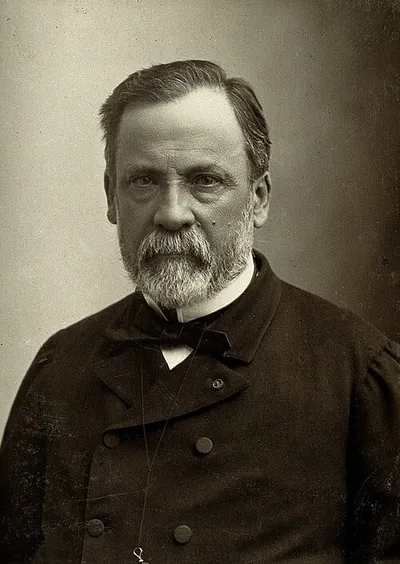 Louis Pasteur1822–1895 · Biology
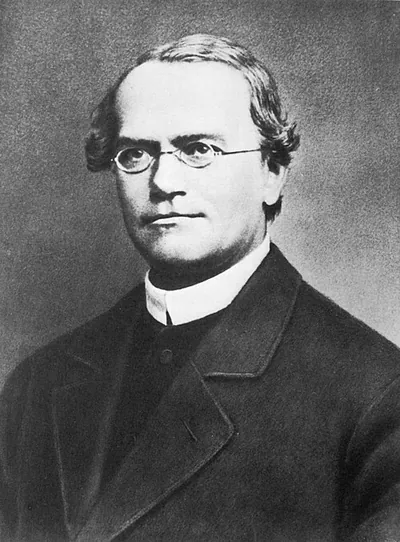 Gregor Mendel1822–1884 · Biology
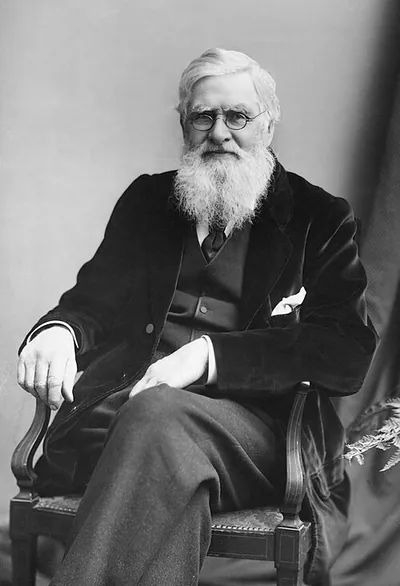 Alfred Russel Wallace1823–1913 · Biology
