
George Szekeres
Hungarian-Australian mathematician, co-author with Paul Erdős of the Happy Ending problem · 1911–2005
- Born
- May 29, 1911
- Died
- August 28, 2005
- Country
- Hungary, Australia
- Section
- Mathematics
Biography
George Szekeres (Budapest, 29 May 1911 – Norwood, Adelaide, 28 August 2005) was a Hungarian-Australian mathematician best known for his work in combinatorics and graph theory. He lived through the upheavals of twentieth-century Europe, including war, persecution and exile, and continued to research long after retiring. His name is attached to a famous geometry result and to several concepts that still carry it.
Born Szekeres György in Budapest, he studied at the Royal Joseph University, later the Technical University of Budapest, and graduated in chemical engineering in 1933. He had taken only one university course in mathematics, in calculus, yet numbers and problems filled much of his social life. In 1933 he often met other students, frequently by the statue of the Anonymous in City Park, to discuss mathematics. At one of these gatherings Esther Klein posed a question: given five points in the plane, no three on a line, must four of them form a convex quadrilateral, a four-sided shape with no inward dents? After the group had puzzled over it for a while, Esther explained her proof. Szekeres and Paul Erdős wrote a 1935 paper generalising the result, which is now seen as one of the founding works of combinatorial geometry, the study of how finite sets of points and shapes are arranged. Erdős nicknamed the original puzzle the "Happy Ending" problem, since it led to the marriage of Szekeres and Klein in 1937.
For six years he worked in Budapest as an analytical chemist, determining the composition of substances. As Jews, the family had to flee Nazi persecution, and Szekeres found work as a leather chemist in Shanghai. They lived there through the Second World War, the Japanese occupation and the early years of the Communist revolution. In 1948 he accepted a lectureship at the University of Adelaide, and the family moved there that June. Esther also taught at the university. In 1964 they moved to Sydney, where Szekeres became professor of mathematics at the University of New South Wales and remained until retiring in 1976 as emeritus professor. He kept publishing afterwards. In 1978 he and Erdős wrote on number-theoretic problems about binomial coefficients. His 1985 paper on labelled trees, graphs without cycles, studied their diameter, the longest path between two of their vertices, and found the expected value of that diameter for a random labelled tree. The same year he explored computer methods with a study of a two-dimensional simultaneous approximation constant.
He collaborated widely with figures such as Erdős, Pál Turán, Béla Bollobás, Ronald Graham, Alf van der Poorten, Miklós Laczkovich and John Coates. Several concepts bear his name, including the Szekeres snark, the Kruskal–Szekeres coordinates, the Szekeres–Wilf number and the Erdős–Szekeres theorem. He was a founding member of the Australian Mathematical Society in August 1956 and its president from 1972 to 1974. He also set problems for secondary school olympiads run by his university and for a yearly undergraduate competition.
Outside mathematics he loved art and music, chamber music above all, and was an accomplished violinist and violist. He played in the North Sydney Symphony Orchestra and the Ku-ring-gai Philharmonic Orchestra, serving as founding treasurer of the latter until 2000. He enjoyed long walks, even in his eighties. After returning to Adelaide in 2004, he and Esther died within an hour of each other on 28 August 2005. His legacy lives on in graph theory and combinatorics, and in a geometry result that began with a conversation among students.
Main contributions
- 1935Paper with Paul Erdős generalising the five-point convex quadrilateral problem, a foundation of combinatorial geometry.
- 1968Thomas Ranken Lyle Medal of the Australian Academy of Science, awarded for his contributions to mathematics.
- 1978Joint paper with Erdős on number-theoretic problems concerning binomial coefficients.
- 1985Study of labelled trees by diameter, giving the expected diameter of a random labelled tree.
- 2001Australian Centenary Medal for services to Australian society and science in pure mathematics.
- 2002Member of the Order of Australia for services to mathematics and education.
Teachers and students
Taught:
Trivia and anecdotes
A happy ending
Erdős called the five-point problem the "Happy Ending" problem because its solution led to the marriage of Szekeres and Esther Klein.
A house with a history
The family bought their house in Turramurra cheaply, since it had belonged to a man who died in suspicious circumstances in the Bogle–Chandler case.
Their contemporaries
While George Szekeres was alive (1911–2005)…
Alive at the same time
Discovered or invented in those years
- 1916Black holeA region of space where gravity is so strong that nothing, not even light, can escape once it crosses a certain boundary.
- 1925TelevisionA system that sends moving pictures and sound over distance and shows them on a receiver, the television set.
- 1925Quantum mechanicsPhysical theory describing how matter and light behave at atomic and subatomic scales, where energy is exchanged in minimal packets and results are expressed as probabilities.
- 1931Big BangA cosmological model describing how the universe expanded from an early state of extreme density and temperature, about 13.8 billion years ago.
- 1945ComputerA programmable machine that takes in data, processes it by following stored instructions, and produces results, able to switch tasks simply by running different software.
- 1969InternetA global network of interconnected computer networks that communicate using the TCP/IP protocol suite.
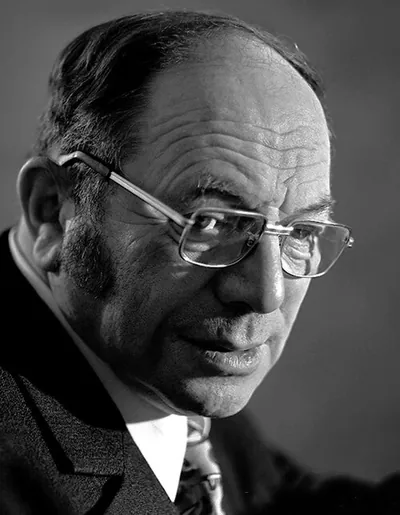 Leonid Kantorovich1912–1986 · Mathematics
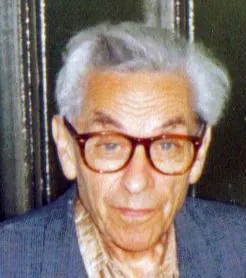 Paul Erdős1913–1996 · Mathematics
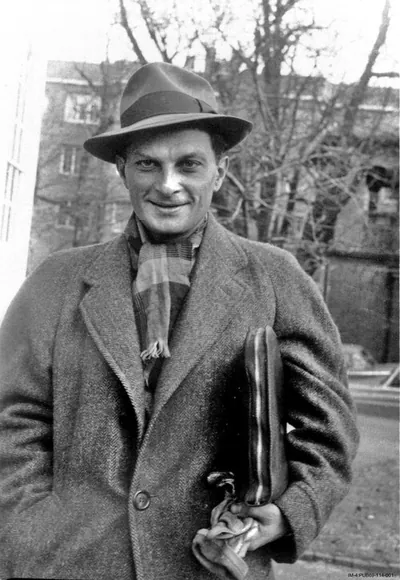 Stanisław Ulam1909–1984 · Mathematics
 Andrey Kolmogorov1903–1987 · Mathematics
 Benoit Mandelbrot1924–2010 · Mathematics
 John Tate1925–2019 · Mathematics
