Harry Nyquist
Swedish-American physicist and electronic engineer, pioneer of communication theory and feedback control · 1889–1976
- Born
- February 7, 1889
- Died
- April 4, 1976
- Country
- United States, Sweden
- Section
- Technology and communications
Biography
Harry Nyquist (1889-1976) was a Swedish-American physicist and engineer whose work at AT&T and later at Bell Telephone Laboratories laid the mathematical groundwork for measuring how much information a wire can carry. He lived through the first half of the twentieth century, when telegraphs, telephones and radio were spreading across the world and engineers needed to understand the limits of their lines. His name remains attached to ideas that shape modern electronics, from the sampling rate used to digitise sound to the test that tells whether an amplifier with feedback will break into oscillation.
Nyquist was born in 1889 in Värmland, a forested region in western Sweden, and emigrated to the United States in 1907. He entered the University of North Dakota in 1912, where he met John Bertrand Johnson, a friendship that would later turn into a working partnership. He received bachelor's and master's degrees in electrical engineering in 1914 and 1915, and then a PhD in physics from Yale University in 1917. While studying at Southern Minnesota Normal College he met Antonia Wachlin, whom he later married; the couple had four children.
After his doctorate, Nyquist joined AT&T in 1917, working in its transmission research group on telegraph, picture and voice transmission. In 1934 he moved to Bell Telephone Laboratories, where his work widened from transmission engineering to complete communication systems, and he later became Assistant Director of Systems Studies. During his years in the Bell System he received 138 patents and published twelve technical papers. He formally retired in 1954 but for several years afterwards continued as a part-time consultant on communications problems for Bell and federal agencies.
His research began with a practical headache. Telegraph traffic was growing, and the company needed to send more messages down the same lines. Speeding up signals, however, made each pulse smear into neighbouring time slots, while sharp pulses took up such a wide band of frequencies that they disturbed other circuits. In his 1924 paper “Certain Factors Affecting Telegraph Speed”, Nyquist showed that the number of independently distinguishable pulses a band-limited channel could carry was proportional to its bandwidth multiplied by the transmission time. He also found that rectangular pulses were generally not the most efficient shape, and that reshaping pulses before sending them allowed faster signalling with less interference. He compared binary codes with codes using several levels, noting that the information conveyed grew logarithmically with the number of possible signal values, although noise limited how many levels could be told apart reliably.
In 1928 he published “Certain Topics in Telegraph Transmission Theory”, in which he established that an ideal channel of bandwidth B could carry at most 2B independent signal elements per second. Pulses did not have to stay separate or keep their original shape. They could overlap, as long as the contributions of neighbouring pulses were zero at the moments each signal was sampled. This idea became the basis of the Nyquist criterion for intersymbol interference. In 1948 Claude Shannon cited these papers as foundations of information theory, and the sampling theorem now called Nyquist-Shannon comes from the same line of thought, although credit for it is shared between the two men.
His work on thermal noise grew out of a conversation. In 1928 Johnson measured random voltage fluctuations in resistors and found that they rose with temperature and resistance. Johnson later recalled that Nyquist developed the formula explaining the effect within “a month or so” after their discussions, and Nyquist's theoretical account appeared in the same journal issue, immediately after Johnson's paper. Using the thermodynamics of a transmission line, Nyquist related the noise to absolute temperature, resistance and bandwidth. The effect, known as Johnson-Nyquist noise, sets a floor of unavoidable background noise for amplifiers, receivers and measuring instruments. It is not a flaw that better components can remove.
Feedback was a second front. Long-distance telephony relied on chains of vacuum-tube repeater amplifiers, and the small distortions of each one accumulated along the route. In 1927 Harold Stephen Black conceived the negative-feedback amplifier. Accepting a lower gain brought a much larger reduction in distortion, and the amplifier became less sensitive to changes in temperature or voltage. The drawback was that at some frequencies the returning signal could reinforce the input instead of opposing it, and the amplifier would oscillate. In his 1932 paper “Regeneration Theory”, Nyquist drew the gain and phase around the feedback loop as a curve on the complex plane, and showed that the shape of this curve reveals whether the closed system will be stable. Black used the analysis in his 1934 work. A common summary of their collaboration is that Black supplied the amplifier principle and Nyquist supplied a general test for applying it safely. Today the criterion appears in almost every control engineering textbook.
Nyquist also worked on picture transmission. Herbert E. Ives led AT&T's early telephotography work, demonstrated publicly in 1924, and Nyquist helped develop the company's first facsimile machine, which was announced that same year. Pictures tolerated line faults much less well than speech. A change in line loss that was barely audible as a change in volume could appear in a photograph as bands of wrong shading. In 1930 Nyquist and S. Brand described how to measure group delay, which they called envelope delay. In 1940 he and K. W. Pfleger compared picture transmission with one and with two sidebands, concluding that the single-sideband system preserved finer detail within the same overall bandwidth.
In a 1923 patent application he compared a standard reference frequency with the output of a motor-driven generator. The phase difference between the two produced a control current that adjusted the generator's speed. The arrangement contained the basic elements of what is now called a phase-locked loop, although histories of the technique usually begin with Henri de Bellescize's 1932 paper. Nyquist returned to the same problem in 1931, with a patent application for synchronising radio transmitters.
His contributions were recognised with several honours: the IRE Medal of Honor in 1960 for his work on thermal noise, data transmission and negative feedback; the Stuart Ballantine Medal of the Franklin Institute, awarded the same year; the National Academy of Engineering Founders Award in 1969; and the Rufus Oldenburger Medal in 1975, shared with Hendrik Wade Bode. Colleagues remembered him as someone who encouraged others to think. In The Idea Factory, Jon Gertner reports that Bell's patent lawyers noticed that many of the laboratory's most productive inventors regularly ate lunch with Nyquist. In Sweden his contribution to telecommunications has been highlighted alongside that of the inventor Lars Magnus Ericsson. Today his name is attached to the Nyquist rate, the Nyquist frequency, the Nyquist stability criterion and the Nyquist ISI criterion.
Main contributions
- 1923Patent application for a system that compares a reference frequency with that of a generator and corrects its speed through phase control, a forerunner of the phase-locked loop.
- 1924Study of telegraph speed: showed that the number of pulses that can be sent depends on bandwidth and time, and that shaping the pulses improves transmission.
- 1924Development, with Herbert E. Ives, of AT&T's first facsimile machine for sending pictures over telephone lines.
- 1928Theory of telegraph transmission: a channel of bandwidth B can carry up to 2B independent signal elements per second, the basis of the Nyquist criterion for intersymbol interference.
- 1928Theoretical explanation of thermal noise in resistors, known as Johnson-Nyquist noise, relating the noise to temperature, resistance and bandwidth.
- 1932Paper “Regeneration Theory”, with a graphical method for checking whether a feedback amplifier will be stable: the Nyquist stability criterion.
- 1940Comparison with K. W. Pfleger of picture transmission with one and two sidebands, finding finer detail with single sideband.
Teachers and students
Trivia and anecdotes
A formula in a month
Johnson later recalled that Nyquist worked out the explanation of thermal noise within what Johnson called “a month or so” of their discussions.
A magnet for ideas
In The Idea Factory, Jon Gertner reports that Bell's patent lawyers noticed many of the laboratory's most productive inventors regularly ate with Nyquist.
A forgotten genius in Sweden
His contribution to telecommunications has been highlighted in Sweden, and he was the subject of a Sveriges Radio programme titled “Ett bortglömt geni”.
Their contemporaries
While Harry Nyquist was alive (1889–1976)…
Alive at the same time
Discovered or invented in those years
- 1903AirplaneA fixed-wing aircraft, heavier than air, powered by engines or rockets, that stays aloft because its wings generate lift.
- 1925TelevisionA system that sends moving pictures and sound over distance and shows them on a receiver, the television set.
- 1925Quantum mechanicsPhysical theory describing how matter and light behave at atomic and subatomic scales, where energy is exchanged in minimal packets and results are expressed as probabilities.
- 1931Big BangA cosmological model describing how the universe expanded from an early state of extreme density and temperature, about 13.8 billion years ago.
- 1945ComputerA programmable machine that takes in data, processes it by following stored instructions, and produces results, able to switch tasks simply by running different software.
- 1969InternetA global network of interconnected computer networks that communicate using the TCP/IP protocol suite.
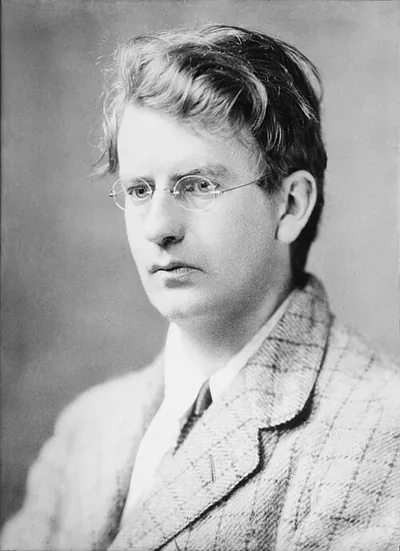 John Logie Baird1888–1946 · Technology and communications
 Edwin Howard Armstrong1890–1954 · Technology and communications
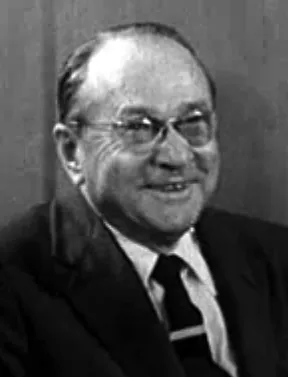 Vladimir K. Zworykin1888–1982 · Technology and communications
 Vannevar Bush1890–1974 · Technology and communications
 Kenjirō Takayanagi1899–1990 · Technology and communications
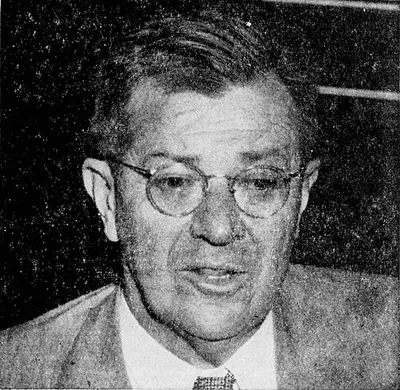 Frederick Terman1900–1982 · Technology and communications