
Heinrich Schwabe
German naturalist, botanist and astronomer, discoverer of the sunspot cycle · 1789–1875
- Born
- October 25, 1789
- Died
- April 11, 1875
- Country
- Duchy of Anhalt
- Section
- Astronomy and space
Biography
Samuel Heinrich Schwabe (Dessau, 1789 – Dessau, 1875) was a German naturalist whose search for an imagined planet near the Sun led him to notice that the number of sunspots rises and falls in a regular pattern. That observation remains one of the foundations of the study of solar activity, and it places him among the most important astronomical observers of the nineteenth century.
He was born in Dessau, in the duchy of Anhalt, into a family linked to medicine and pharmacy. His father was physician to the duke, and his maternal grandfather, the apothecary Johann Häseler, ran the Mohrenapotheke in the town. In 1806, following the family's wishes, Schwabe left formal schooling to train as an apothecary in that pharmacy. After about three years he enrolled at the University of Berlin, where he studied pharmacy under the chemists Martin Heinrich Klaproth and Sigismund Friedrich Hermbstädt, and where he also developed an interest in astronomy and botany. He had to stop his studies when his grandfather fell ill.
After Häseler died in 1812, Schwabe took over the family business, which prospered. He spent his free time on science, but only after selling the pharmacy did he devote himself to research full time. His first telescope came from a lottery in 1825, and he began observing sunspots at the end of October that year. In 1826 he acquired a better instrument, a Fraunhofer refractor of about 4.8 inches, the same one Wilhelm Lohrmann had used to map the Moon. From 1829 onward, science was his full occupation.
His original goal was not the Sun but Vulcan, a hypothetical planet thought to orbit inside Mercury. Such a body would be very hard to see close to the Sun, so he reasoned that it might be caught crossing the solar disc, which explains his daily watch. For 17 years, from 1826 to 1843, he scanned the Sun on every clear day, logging its spots and looking for the planet among them. He never found it, but he saw that the number of spots changed in a regular way. In 1843 he published a short paper, "Solar Observations during 1843", proposing a cycle of about ten years between maxima. It drew little notice at first, but Rudolf Wolf, then director of the Bern observatory, was convinced and began systematic sunspot observations himself. In 1851 Alexander von Humboldt cited Schwabe's observations in the third volume of his Kosmos, which helped spread them.
The periodicity of sunspots is now well established. The real cycle averages close to eleven years, so Schwabe was right about the phenomenon though slightly off on the figure. His notes and some 8,486 drawings have since been digitized and analysed, and they help fill gaps in the record Wolf kept from 1848. Schwabe also recorded Jupiter's Great Red Spot in 1831, although those notes were not noticed or published until 1899.
He was also an active naturalist. He helped found a natural history society in Dessau, served as its president, and donated many mineral specimens to its collections. In 1838 and 1839 he published his botanical work Flora Anhaltina in two volumes, describing nearly 2,000 plant species. In 1857 he received the Gold Medal of the Royal Astronomical Society, presented by Richard Carrington in Dessau. That honour led him to bequeath his notes to the society, which elected him a member in 1868. He died in Dessau in 1875. He is remembered by the lunar crater Schwabe and the botanical genus Schwabea, and above all by the solar cycle that still carries his mark.
Main contributions
- 1831Observations of Jupiter's Great Red Spot, published only in 1899.
- 1838Flora Anhaltina: a botanical work in two volumes describing nearly 2,000 plant species.
- 1843Discovery of the sunspot cycle: the number of spots varies with a period of about ten years, now put at roughly eleven.
- 1843"Solar Observations during 1843": the paper in which he first set out the regularity of the spots.
Trivia and anecdotes
Vulcan, a planet that did not exist
Schwabe watched the Sun hoping to find a planet that never appeared; the sunspot discovery was a by-product of that search.
A lottery telescope
His first telescope came as a prize in a lottery in 1825.
Related discoveries and inventions
- 1843Solar cycleAn roughly 11-year cycle in which the Sun's magnetic activity, measured mainly by the number of sunspots, rises to a maximum and falls to a minimum.
Their contemporaries
While Heinrich Schwabe was alive (1789–1875)…
Alive at the same time
Discovered or invented in those years
- 1803AtomThe basic unit of a chemical element: a nucleus of protons and usually neutrons surrounded by a cloud of electrons.
- 1839PhotographyA technique for creating lasting images by recording light, either on a light-sensitive material or with an electronic sensor.
- 1846NeptuneThe eighth and most distant planet of the Solar System, an ice giant found through mathematical prediction before any direct sighting.
- 1859EvolutionThe process by which the heritable traits of living populations change over generations, explaining the diversity of life from common ancestors.
- 1869Periodic tableAn arrangement of the chemical elements into rows (periods) and columns (groups), ordered by atomic number, that reveals recurring chemical behaviour and lets scientists predict properties.
- 1869Deoxyribonucleic acidA double-stranded molecule that carries the genetic instructions of nearly all living things and many viruses.
 John Frederick William Herschel1792–1871 · Astronomy and space
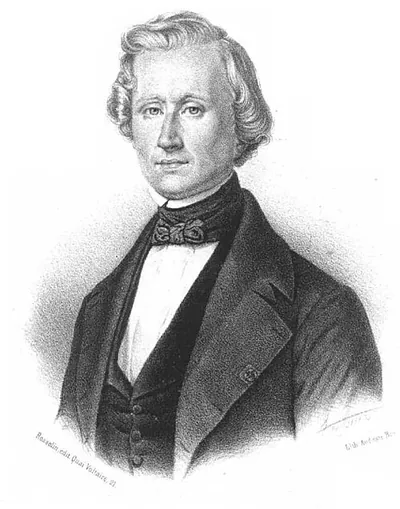 Urbain Le Verrier1811–1877 · Astronomy and space
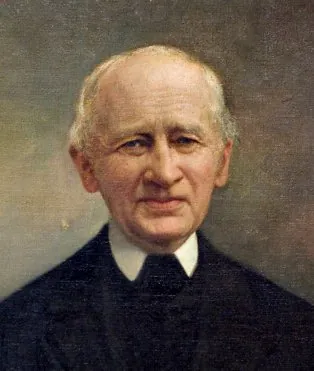 Johann Gottfried Galle1812–1910 · Astronomy and space
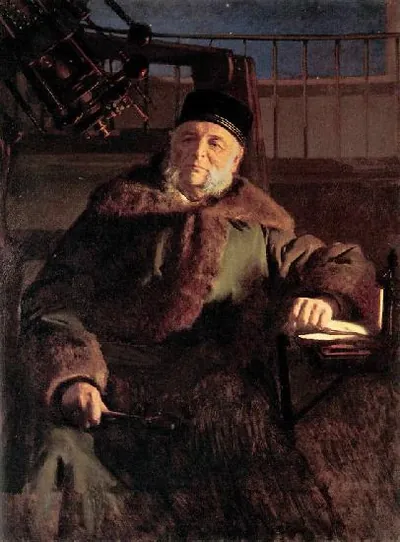 Otto Wilhelm von Struve1819–1905 · Astronomy and space
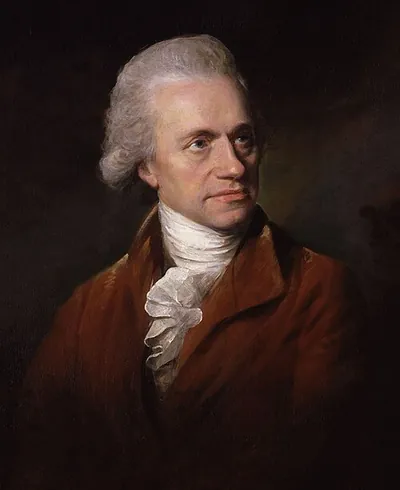 William Herschel1738–1822 · Astronomy and space
 Annie Jump Cannon1863–1941 · Astronomy and space
