
Heinz Hopf
German mathematician who pioneered topology and geometry · 1894–1971
- Born
- November 19, 1894
- Died
- June 3, 1971
- Country
- Switzerland, Germany
- Section
- Mathematics
Biography
Heinz Hopf (born in Gräbschen, now part of Wrocław, 1894; died in Zürich, 1971) was a German mathematician whose work spanned topology and geometry. He worked in the first decades of the twentieth century, when mathematics was becoming increasingly abstract, and his results helped shape modern topology, the branch that studies the properties of shapes that survive stretching and bending without tearing. His lasting importance lies in linking these global properties to curvature and to vector fields.
Hopf grew up in a family of mixed religious background: his father, born Jewish, converted to Protestantism a year after Heinz was born, and his mother came from a Protestant family. He studied in Breslau, where his mathematical talent was evident early on. In 1913 he entered the university there, attending lectures by Ernst Steinitz, Adolf Kneser, Max Dehn, Erhard Schmidt and Rudolf Sturm. When the First World War began in 1914 he enlisted eagerly; he was wounded twice and was awarded the Iron Cross, first class, in 1918.
After the war he continued his studies in Heidelberg and Berlin, where he worked under Ludwig Bieberbach and earned his doctorate in 1925. His dissertation explored connections between the topology and the metric structure of manifolds, that is, surfaces and higher-dimensional spaces. In it he proved that every simply connected, complete three-dimensional Riemannian space of constant curvature is isometric to Euclidean, spherical or hyperbolic space, meaning it can be matched to one of these with distances preserved. He also studied the indices of zeros of vector fields, a measure of how arrows describing a field wind around a point, and linked their sum to curvature. Shortly afterwards he gave a new proof that this sum depends only on the global shape of the manifold and equals its Euler characteristic, a number describing its topological form. The result is now known as the Poincaré–Hopf theorem.
He spent a year after his doctorate in Göttingen, one of Europe's most active mathematical centres, where Hilbert, Courant, Runge and Noether were working. There he met Pavel Alexandrov, beginning a friendship and collaboration that lasted a lifetime. He returned to Berlin in 1926, and in 1927–1928 a Rockefeller fellowship took him to Princeton alongside Alexandrov. There he met Solomon Lefschetz, Oswald Veblen and J. W. Alexander. During this stay he discovered the Hopf invariant, a quantity that classifies certain maps between spheres of different dimensions, and proved that the Hopf fibration, a way of filling the three-dimensional sphere with linked circles, has invariant 1.
Back in Berlin he began with Alexandrov a book on topology planned in three volumes; only the first was finished, published in 1935. He turned down a Princeton post in 1929, and in 1931 he took over the chair vacated by Hermann Weyl at ETH Zürich. The Nazi regime upended his life: in 1938 he was forced to apply for Swiss citizenship after his property was seized, since his father's conversion had not convinced German authorities that he was 'Aryan'. He visited the United States in 1946–1947 and 1955–1956, and led the International Mathematical Union from 1955 to 1958. In October 1928 he had married Anja von Mickwitz.
Hopf received honorary doctorates from several European and American universities, became a corresponding member of the Heidelberg Academy of Sciences, and lectured at the International Congresses of Mathematicians in Zürich (1932) and Cambridge, Massachusetts (1950). His legacy endures in the theorem and invariant that bear his name, and in the Heinz Hopf Prize that ETH Zürich awards in his memory for outstanding work in pure mathematics.
Main contributions
- 1925Poincaré–Hopf theorem: the sum of the indices of a vector field's zeros on a manifold equals its Euler characteristic.
- 1925Classification of simply connected three-dimensional Riemannian manifolds of constant curvature, the subject of his doctoral thesis.
- 1928Hopf invariant, a quantity that distinguishes maps from the three-dimensional sphere to the two-dimensional sphere.
- 1928Hopf fibration, with invariant 1, a way of decomposing the three-dimensional sphere into linked circles.
- 1935First volume of a topology book written with Pavel Alexandrov, the only one of the planned three to be published.
Teachers and students
Studied under:
Taught:
Trivia and anecdotes
Swiss citizenship
The confiscation of his property by the Nazi regime forced him to seek Swiss citizenship, even though his father had converted to Protestantism.
An inherited chair
In Zürich he took the post that Hermann Weyl had left, a mathematician of great prestige.
Their contemporaries
While Heinz Hopf was alive (1894–1971)…
Alive at the same time
Discovered or invented in those years
- 1903AirplaneA fixed-wing aircraft, heavier than air, powered by engines or rockets, that stays aloft because its wings generate lift.
- 1925TelevisionA system that sends moving pictures and sound over distance and shows them on a receiver, the television set.
- 1925Quantum mechanicsPhysical theory describing how matter and light behave at atomic and subatomic scales, where energy is exchanged in minimal packets and results are expressed as probabilities.
- 1931Big BangA cosmological model describing how the universe expanded from an early state of extreme density and temperature, about 13.8 billion years ago.
- 1945ComputerA programmable machine that takes in data, processes it by following stored instructions, and produces results, able to switch tasks simply by running different software.
- 1969InternetA global network of interconnected computer networks that communicate using the TCP/IP protocol suite.
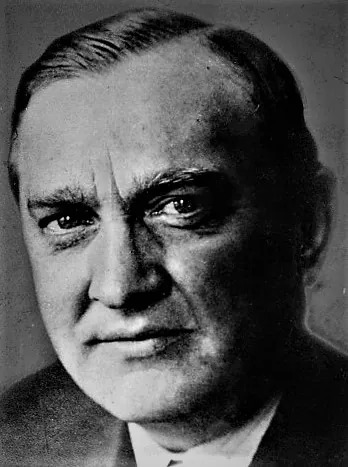 Stefan Banach1892–1945 · Mathematics
 Ronald Fisher1890–1962 · Mathematics
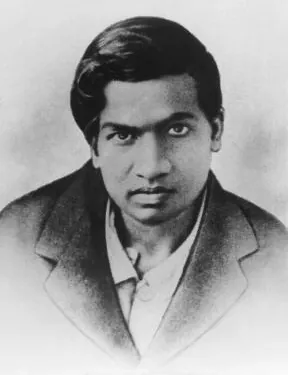 Srinivasa Ramanujan1887–1920 · Mathematics
 Andrey Kolmogorov1903–1987 · Mathematics
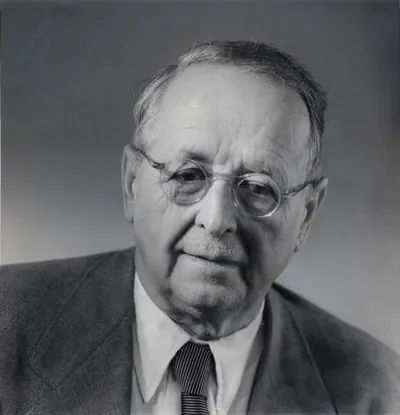 Hermann Weyl1885–1955 · Mathematics
 Emmy Noether1882–1935 · Mathematics
