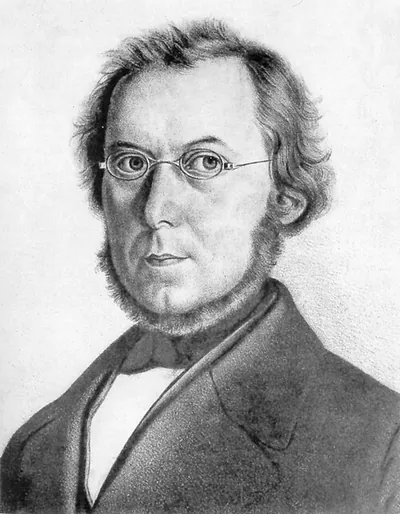
Hugo von Mohl
German botanist who helped found cell theory and coined the term 'protoplasm' · 1805–1872
- Born
- April 8, 1805
- Died
- April 1, 1872
- Country
- Kingdom of Württemberg
- Section
- Biology
Biography
Hugo von Mohl (Stuttgart, 1805 - Tübingen, 1872) was one of the most influential botanists of nineteenth-century Germany. Trained as a physician, he spent most of his life studying how plants are organised on the inside. His name is linked to cell theory and, above all, to the word 'protoplasm', which he proposed for the living substance inside the cell.
He came from a family of senior officials in the kingdom of Württemberg. His father, Benjamin Ferdinand von Mohl, was a state politician, and on both his mother's and father's side his relatives had held high posts in the administration. While still at secondary school, Hugo spent his free time on botany and mineralogy. In 1823 he entered the University of Tübingen, where he graduated with distinction in medicine.
He then moved to Munich, where he mixed with a distinguished circle of botanists and found plenty of material for his research. This period seems to have settled his choice of botany as a career. In 1828 he began the anatomical studies that he would continue until his death. In 1832 he became professor of botany at Tübingen, a post he never left. He never married. His life centred on his laboratory and library, where he refined his optical instruments and microscope slides with remarkable manual skill.
His training was largely self-directed. He had taught himself botany from boyhood, and his teachers had little influence on his views, so he kept an unusually independent mind. His first studies dealt with the structure of palms, cycads and tree ferns, plants whose stems have a complicated organisation. His work of 1840 on the quillworts, aquatic plants related to ferns, laid a solid foundation for later research. Later he focused mainly on the anatomy of the stems of dicotyledons (plants with two seed leaves) and gymnosperms (plants with naked seeds, such as pines).
One of his major achievements concerned the cell. Some accounts say that around 1835 he watched cell division under the microscope in a green alga; this story is traditional and should be treated with caution. In 1844 he showed that protoplasm is the source of the movements that had attracted so much attention at the time. Although Robert Brown had already identified the nucleus, Mohl was the one who coined the term protoplasm. He called the layer of protoplasm lining a vacuolated cell the primordial utricle, and he was the first to describe how this substance behaves during cell division.
These findings overturned Matthias Schleiden's view that cells arise spontaneously from unstructured matter. Mohl argued that new cells come from earlier cells, a view that is now accepted. He also explained that cell walls grow by apposition, meaning new layers are deposited on the existing ones, clarified the true nature of the cell nucleus, and showed that the vessels and fibres of plants develop from cells. For these reasons he is regarded as the real founder of cell theory. In 1851 he gathered his ideas into the treatise Die vegetabilische Zelle, which appeared in English translation the following year.
His work on stomata, the tiny openings in leaves through which plants exchange gases, is equally important. In 1838 he demonstrated their origin, and in 1850 he published a classic paper on how they open and close. He also studied cork and bark, explaining how the different types of bark form, and he corrected earlier mistakes about lenticels, the small pores in bark that let air pass through.
In 1843 he founded the Botanische Zeitung together with Diederich von Schlechtendal, and he edited it until his death. He wrote no textbooks or popular works. He is known to have tried to collaborate with Wilhelm Hofmeister on a Handbuch, but he withdrew, as he disliked that kind of project. His publications, spread over forty-four years, were largely collected in the 1845 volume Vermischte Schriften. He was elected a foreign corresponding member of the Royal Society in 1868 and received many other honours. In his last years his scientific output declined, probably because of poor health, and he died suddenly in Tübingen on 1 April 1872.
His legacy lies at the foundation of modern cell biology. Many ideas taught in plant biology textbooks today have one of their roots in his work.
Main contributions
- 1835Observation of cell division in a green alga, a traditional account that should be treated with caution.
- 1838Demonstration of the origin of stomata, the leaf openings that regulate gas exchange.
- 1840Studies of the quillworts, which laid a solid foundation for later plant anatomy.
- 1843Co-founded the journal Botanische Zeitung with Schlechtendal, which he edited until his death.
- 1844Showed that protoplasm is the source of cell movements, and coined the term.
- 1850Classic paper on the opening and closing of stomata.
- 1851The treatise Die vegetabilische Zelle, which gathers his theory of how plant cells form.
Teachers and students
Trivia and anecdotes
A self-taught scientist
He learned botany on his own from boyhood and was barely influenced by his teachers, which gave him an unusually independent judgement.
A collaborator who withdrew
He tried to write a handbook with Hofmeister but left the project, as he disliked work of that kind.
Their contemporaries
While Hugo von Mohl was alive (1805–1872)…
Alive at the same time
Discovered or invented in those years
- 1821ElectricityThe set of physical phenomena linked to the presence and movement of electric charge, and one of the most versatile forms of energy in modern life.
- 1839PhotographyA technique for creating lasting images by recording light, either on a light-sensitive material or with an electronic sensor.
- 1846NeptuneThe eighth and most distant planet of the Solar System, an ice giant found through mathematical prediction before any direct sighting.
- 1859EvolutionThe process by which the heritable traits of living populations change over generations, explaining the diversity of life from common ancestors.
- 1869Periodic tableAn arrangement of the chemical elements into rows (periods) and columns (groups), ordered by atomic number, that reveals recurring chemical behaviour and lets scientists predict properties.
- 1869Deoxyribonucleic acidA double-stranded molecule that carries the genetic instructions of nearly all living things and many viruses.
 Charles Darwin1809–1882 · Biology
 Theodor Schwann1810–1882 · Biology
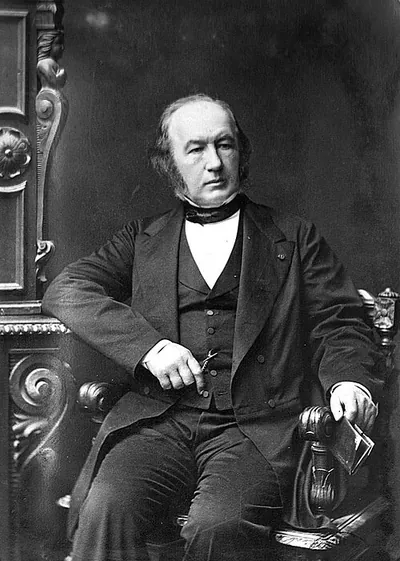 Claude Bernard1813–1878 · Biology
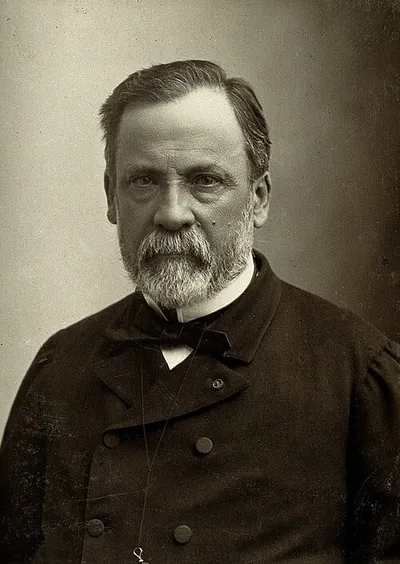 Louis Pasteur1822–1895 · Biology
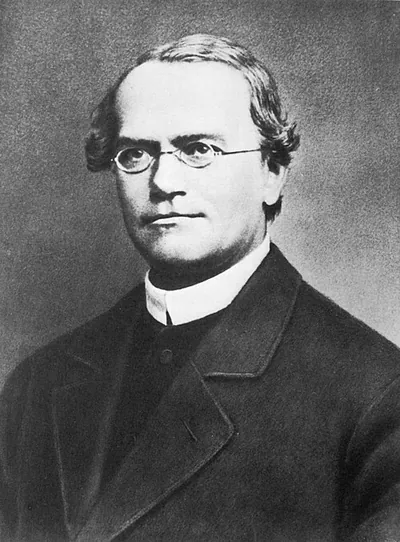 Gregor Mendel1822–1884 · Biology
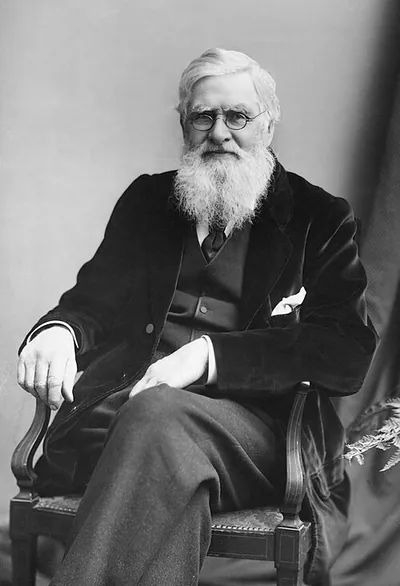 Alfred Russel Wallace1823–1913 · Biology
