Ivan Bardin
Soviet metallurgist who helped develop the basic oxygen steelmaking process · 1883–1960
- Born
- November 13, 1883
- Died
- January 7, 1960
- Country
- Soviet Union, Russian Empire
- Section
- Engineering and construction
- Awards
- Abel Prize
Biography
Ivan Pavlovich Bardin (1883-1960) was a Soviet metallurgist who spent his career solving the main engineering problems of his country's iron and steel industry in the first half of the twentieth century. His work ranged from designing steelworks to improving the way steel was made, and his name is linked to the introduction of modern techniques in a sector that was central to Soviet industrialisation.
He graduated from the Kiev Polytechnic Institute in 1910 and that same year began working at steelworks in southern Russia, in the towns of Yuzovka and Yenakiyevo. He also spent time in the United States, where he could observe other production methods at first hand. This early industrial experience gave him a clear picture of the bottlenecks that slowed steel production.
Between 1929 and 1936 he was one of the construction managers of the Kuznetsk integrated iron and steelworks, today known as Novokuznetsk, one of the great projects of the Soviet drive to industrialise. From 1937 he held senior posts in the administration of the country's steel industry, eventually becoming a deputy minister for ferrous metallurgy. In 1939 he directed the Institute of Metallurgy of the USSR Academy of Sciences, and from 1944 he led the Central Research Institute of Ferrous Metallurgy, which has carried his name since 1960.
His scientific interests fell into several areas: designing new, large, fully mechanised steelworks; creating standard metallurgical equipment; speeding up processes with oxygen; and finding multiple uses for new kinds of raw materials. Within the oxygen work he championed the basic oxygen process, a way of making steel by blowing oxygen into molten pig iron, which quickly burns off impurities. He also took part in introducing continuous casting, in which molten steel solidifies without interruption into bars or slabs rather than being poured into individual moulds.
His career was also academic and political. He joined the USSR Academy of Sciences in 1932 and became its vice-president in 1942. He served as a deputy in the Supreme Soviet across its first to fifth convocations. He received state prizes in 1942 and 1949, the Lenin Prize in 1958 for work on continuous casting, and the title Hero of Socialist Labour in 1945. From 1943 to 1959 he chaired the department of economics and management at the Moscow Institute of Steel and Alloys.
His legacy lies mainly in the plants and methods he helped bring into use, and in the research institute that bears his name, where work on improving steelmaking continued for decades.
Main contributions
- 1929Kuznetsk integrated ironworks: a steel complex, today Novokuznetsk, whose construction he directed between 1929 and 1936.
- 1944Central Research Institute of Ferrous Metallurgy: a research centre he led from 1944, named after him since 1960.
- 1958Continuous casting: a technique in which molten steel solidifies without interruption into bars or slabs, earning him the Lenin Prize.
- Basic oxygen process: a way of making steel by blowing oxygen into molten iron to remove impurities. The exact date is not given in the sources consulted.
Teachers and students
Their contemporaries
While Ivan Bardin was alive (1883–1960)…
Alive at the same time
Discovered or invented in those years
- 1884CarA road vehicle with four wheels and its own engine, mainly built to carry people.
- 1903AirplaneA fixed-wing aircraft, heavier than air, powered by engines or rockets, that stays aloft because its wings generate lift.
- 1925TelevisionA system that sends moving pictures and sound over distance and shows them on a receiver, the television set.
- 1925Quantum mechanicsPhysical theory describing how matter and light behave at atomic and subatomic scales, where energy is exchanged in minimal packets and results are expressed as probabilities.
- 1931Big BangA cosmological model describing how the universe expanded from an early state of extreme density and temperature, about 13.8 billion years ago.
- 1945ComputerA programmable machine that takes in data, processes it by following stored instructions, and produces results, able to switch tasks simply by running different software.
 Karl von Terzaghi1883–1963 · Engineering and construction
 Eugène Freyssinet1879–1962 · Engineering and construction
 Stephen Timoshenko1878–1972 · Engineering and construction
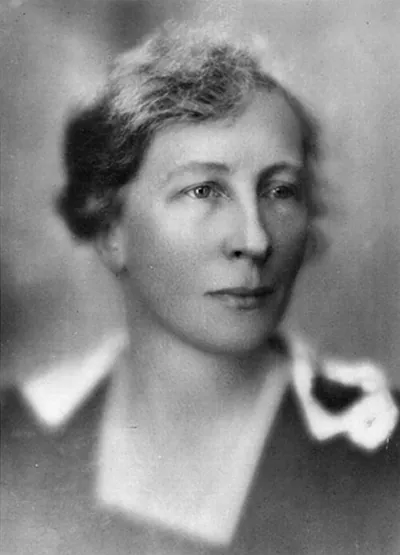 Lillian Moller Gilbreth1878–1972 · Engineering and construction
 Pier Luigi Nervi1891–1979 · Engineering and construction
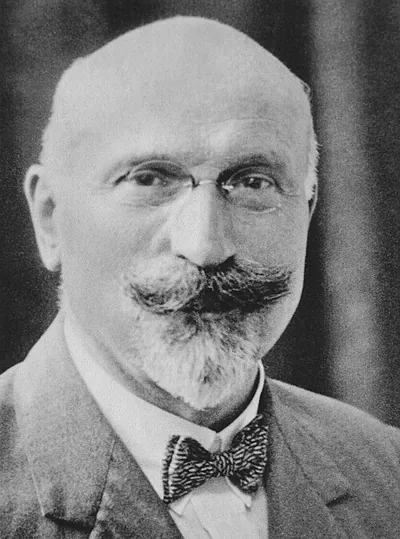 Robert Maillart1872–1940 · Engineering and construction