
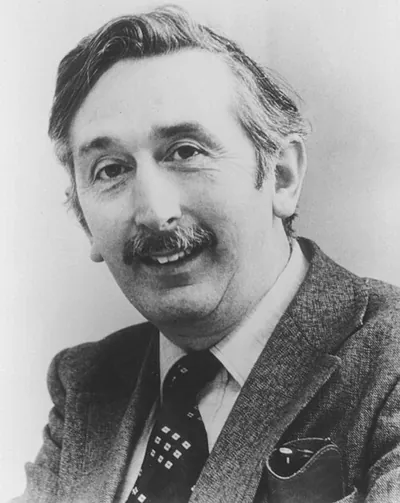
Ivan Ivanovich Artobolevski
Russian mechanical engineer and scientist specialising in the theory of mechanisms and machines · 1905–1977
- Born
- October 9, 1905
- Died
- September 21, 1977
- Country
- Soviet Union, Russian Empire
- Section
- Engineering and construction
- Awards
- Abel Prize
Biography
Ivan Ivanovich Artobolevsky (Moscow, 1905 – 1977) was a Soviet mechanical engineer and scientist who worked on the theory of mechanisms and machines, the study of how the moving parts inside a machine travel and transmit forces to one another. Elected a full member of the Soviet Academy of Sciences in 1946, he built foundations for analysing complex mechanisms at a time when Soviet industry and engineering were expanding quickly.
He was born in Moscow into a family of clergy. His father, Ivan Alekseyevich Artobolevsky, was a priest and theologian of the Russian Orthodox Church; he was executed during Stalin's repressions and, decades later, was canonised as a martyr in 2000. Artobolevsky trained at the Timiryazev Moscow Agricultural Academy, graduating in 1926, and a year later also completed the Faculty of Physics and Mathematics at Moscow State University. From then on he combined teaching at several higher-education institutions with research.
Between 1932 and 1949 he was a professor at Moscow State University, where he began in the department of theoretical mechanics. In 1941, together with Boris Bulgakov, he founded the department of applied mechanics, which he headed until 1944, and he also led the university's mechanics and mathematics faculty. From 1937 he worked at the Institute of Mechanical Engineering too, and from 1942 he taught at the Moscow Aviation Institute. He was elected a corresponding member of the Academy of Sciences in 1939 and became a full academician in 1946.
His work centred on mechanisms, assemblies of jointed parts that convert one kind of motion into another, such as those that turn a crank or drive a moving piece in a machine. He proposed a classification of spatial mechanisms, those whose parts move in three dimensions, and developed methods for analysing their structure, their kinematics (the study of motion without regard to force) and their kinetostatics (the study of forces in equilibrium). He wrote the first Soviet monograph on these spatial mechanisms, published in 1937. He also studied multi-link mechanisms, long chains of connected parts, and worked on the dynamics of machines, pairing theory with laboratory experiments. His books, including a four-volume work on mechanisms and a study of the synthesis of planar mechanisms, were translated into many languages.
He also played an institutional role. During the Second World War he chaired a scientific society of Soviet mechanical engineers. After the war he held posts in the Knowledge Society, a popular-science organisation, of which he became chairman in 1966. He also served as a deputy of the Supreme Soviet of the USSR and took part in international bodies: he was vice-president of the World Federation of Scientific Workers and, in 1969, the first president of the International Federation for the Theory of Machines and Mechanisms (IFToMM), which he had helped to found. His honours included the James Watt International Gold Medal of the British Institution of Mechanical Engineers in 1967 and the title Hero of Socialist Labour in 1969.
His legacy is chiefly theoretical and methodological. The classifications and analytical methods he developed remain reference points for those who design mechanisms, and the international federation he led still brings together researchers in the field.
Main contributions
- 1937Theory of spatial mechanisms: the first Soviet monograph on mechanisms whose parts move in three dimensions.
- 1939Structure, kinematics and kinetostatics of multi-link planar mechanisms: methods for analysing complex jointed chains.
- 1939Synthesis of planar mechanisms, a two-part work on how to design mechanisms that move in a plane.
- 1944Synthesis of mechanisms: a general study of designing mechanisms from the motion required.
- 1947Mechanisms, a four-volume work collecting the analysis and design of these systems.
- 1955Theory of mechanisms for generating hyperbolic curves from conic sections, published in the Academy's journal.
Teachers and students
Studied under:
Taught:
Trivia and anecdotes
A martyred father
His father, an Orthodox priest, was executed during Stalin's repressions and canonised as a martyr in 2000.
A prize named after a mathematician
In 1946 he received the Chebyshev Prize, awarded by the Academy of Sciences in honour of the mathematician Pafnuty Chebyshev.
Their contemporaries
While Ivan Ivanovich Artobolevski was alive (1905–1977)…
Alive at the same time
Discovered or invented in those years
- 1916Black holeA region of space where gravity is so strong that nothing, not even light, can escape once it crosses a certain boundary.
- 1925TelevisionA system that sends moving pictures and sound over distance and shows them on a receiver, the television set.
- 1925Quantum mechanicsPhysical theory describing how matter and light behave at atomic and subatomic scales, where energy is exchanged in minimal packets and results are expressed as probabilities.
- 1931Big BangA cosmological model describing how the universe expanded from an early state of extreme density and temperature, about 13.8 billion years ago.
- 1945ComputerA programmable machine that takes in data, processes it by following stored instructions, and produces results, able to switch tasks simply by running different software.
- 1969InternetA global network of interconnected computer networks that communicate using the TCP/IP protocol suite.
 Eduardo Torroja1899–1961 · Engineering and construction
 Buckminster Fuller1895–1983 · Engineering and construction
 Borys Paton1918–2020 · Engineering and construction
 Pier Luigi Nervi1891–1979 · Engineering and construction
 Godfrey Hounsfield1919–2004 · Engineering and construction
