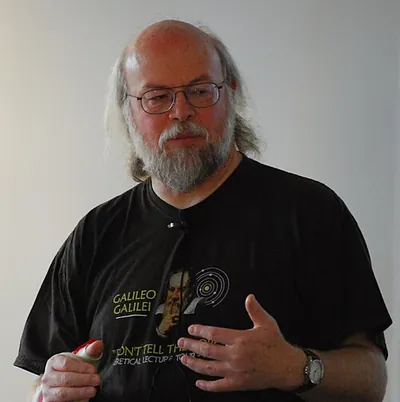
James Gosling
Canadian computer scientist, creator of the Java programming language · 1955
- Born
- May 19, 1955
- Country
- Canada
- Section
- Computing
Biography
James Gosling (born in Calgary, Canada, in 1955) is a computer scientist best known as the founder and lead designer of the Java programming language, one of the most widely used tools in software development over the past decades. His work belongs to a period when personal computers and company networks were beginning to coexist, and when programmers needed ways to write software that could run on different machines without being rewritten each time. His name is also linked to graphical window systems and other programming tools.
Gosling was born in Calgary, in the Canadian province of Alberta, to Joyce Morrison and Dave Gosling. He attended William Aberhart High School in his home city and, while still at school, wrote part of the software that analysed data from the ISIS 2 satellite for the University of Calgary physics department. It was an early taste of working with scientific data and applying programming to real problems.
He earned a bachelor's degree in computer science at the University of Calgary and then moved to Carnegie Mellon University in the United States, where he took a master's degree and a doctorate in the same field. His doctoral thesis, titled The Algebraic Manipulation of Constraints, was supervised by Raj Reddy. During these years he worked on several software projects. He wrote a version of the Emacs text editor known as Gosling Emacs, or Gosmacs, built a spreadsheet-style calculator called sc in 1981, and created a version of Unix for a computer with sixteen processors. Unix is an operating system widely used on servers and workstations, and a processor is the component that carries out a program's instructions.
In 1984 he joined Sun Microsystems, an American company that made workstations and servers, and stayed for twenty-six years. There he designed NeWS, an early windowing system for Unix that became a less widely used rival to the X Window System, mainly because Sun did not release it under an open source licence. He also co-wrote a bundling tool called shar, which is described in detail in a classic book on the Unix programming environment by Brian Kernighan and Rob Pike.
Java grew out of an internal Sun project. Gosling has said that the idea for a virtual machine came from a task in which he had to move software from a PERQ computer to a VAX, translating one machine's intermediate code into the other's assembler and emulating the hardware. A virtual machine is a program that imitates a computer so that code can run without depending on the real hardware. Its roots also go back to his graduate student days, when he built a p-code virtual machine for the lab's DEC VAX so that his professor could run programs written in UCSD Pascal. The underlying principle was that a program written once could run on any machine that ran the same virtual machine, a property usually called architecture neutrality. Java was introduced in 1994. Gosling is generally credited with its original design, and he also implemented its first compiler and virtual machine. The language was nonetheless a team effort within Sun, and the credit is often shared.
Gosling left Sun on 2 April 2010, after Oracle had acquired the company. He cited reduced pay, status and decision-making power, a change in his role, and ethical concerns. He later took a sharply critical line towards Oracle in interviews, particularly during the Oracle v. Google case over Android. While he said Oracle was in the right on the central point, he condemned Google's treatment of Sun. He did, however, welcome the court's conclusion that application programming interfaces cannot be protected by copyright.
In March 2011 he joined Google. Six months later he followed his colleague Bill Vass to Liquid Robotics, a startup making autonomous ocean vehicles. After Boeing acquired that company in late 2016, he moved to Amazon Web Services in May 2017 as a Distinguished Engineer. He has also advised the Scala company Lightbend and served on boards and advisory roles at other firms. On 2 July 2024 he announced that he had officially retired.
His recognition includes election to the United States National Academy of Engineering in 2004, for the conception and development of Java's architecture and for his contributions to windowing systems. In 2007 he was made an Officer of the Order of Canada, the country's second highest civilian honour, and in 2015 he received the IEEE John von Neumann Medal. His legacy lies in the spread of Java across countless applications, from business systems to mobile devices, and in the principle that a program can run on any machine thanks to an intermediate layer that standardises it.
Main contributions
- 1981sc, a spreadsheet-style calculator he developed in that period.
- 1983Doctorate from Carnegie Mellon University with a thesis on the algebraic manipulation of constraints.
- 1984NeWS, a windowing system for Unix that served as an alternative to the X Window System.
- 1994Java, a programming language whose programs can run on different computers thanks to a virtual machine.
- 2015IEEE John von Neumann Medal for his contributions to computing.
Teachers and students
Trivia and anecdotes
An idea born from moving software
By his own account, the idea for Java's virtual machine came from trying to port programs from a PERQ computer to a VAX.
Featured in a classic book
He co-wrote the shar bundling tool, which is covered in detail in the Kernighan and Pike book on the Unix programming environment.
Their contemporaries
While James Gosling was alive (1955–)…
Alive at the same time
Discovered or invented in those years
- 1957Artificial satelliteAn artificial satellite is a human-made object placed in orbit around a celestial body, usually Earth, to collect information, relay signals, or carry out a specific task.
- 1969InternetA global network of interconnected computer networks that communicate using the TCP/IP protocol suite.
- 1971EmailA network service that lets users send and receive digital messages through addressed mailboxes, much like postal mail but electronic.
- 1973Mobile phoneA handheld wireless phone that lets people make and receive calls while moving across a cellular network area.
- 1989World Wide WebA system of linked documents and resources, connected by hyperlinks and accessed over the Internet with web browsers.
- 1990Web browserA program that lets people access the web by fetching a page's files from a server and displaying them on screen as an interactive page.
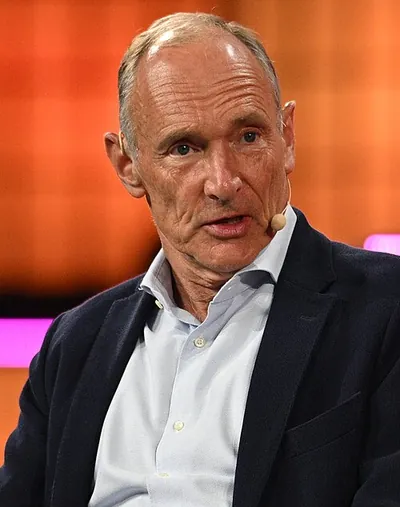 Tim Berners-Lee1955 · Computing
 Guido van Rossum1956 · Computing
 Shafrira Goldwasser1958 · Computing
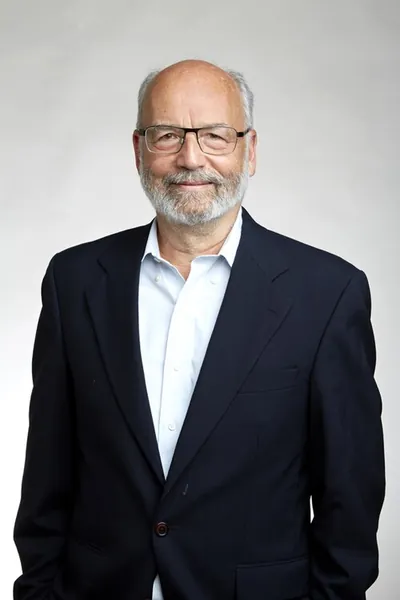 Adi Shamir1952 · Computing
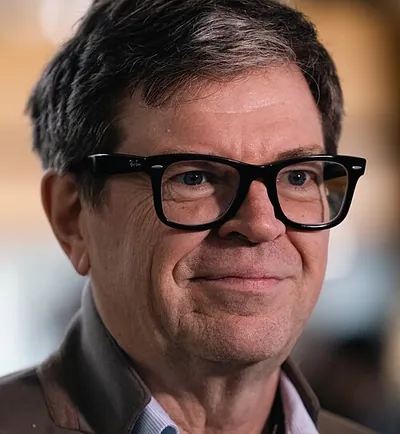 Yann LeCun1959 · Computing
 Steve Wozniak1950 · Computing
