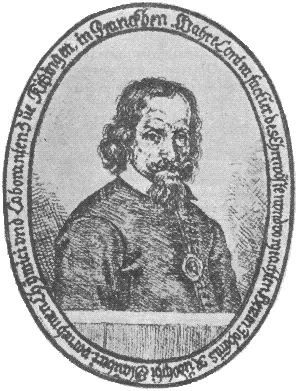
Johann Rudolf Glauber
German chemist and pharmacist, discoverer of sodium sulfate, known as Glauber's salt, and considered one of the first chemical engineers · 1604–1670
- Born
- March 10, 1604
- Died
- March 16, 1670
- Country
- Prince-Bishopric of Würzburg
- Section
- Chemistry
Biography
Johann Rudolf Glauber (Karlstadt, 1604 - Amsterdam, 1670) was a German chemist and pharmacist who worked in the first half of the seventeenth century, a period when alchemy and practical medicine still overlapped. He is remembered above all for sodium sulfate, known as Glauber's salt, and as one of the first people to see chemistry as a trade that could support large-scale production. That is why he matters: he linked the laboratory, the pharmacy and the manufacture of chemical products.
He was born in 1604 in Karlstadt, in Franconia, the son of a barber from a modest background and one of a large family. He attended the town's grammar school, where he learned Latin, and soon began training as a pharmacist. He never went to university, and in his writings he proudly says that he never attended a higher school and never wished to, and that he did not regret plunging his hands into the coals as a young man to learn the hidden secrets of nature. He also learned to make mirrors, a craft that gave him experience with glass and metals.
His early years were spent travelling. Sources place him in Vienna in 1625, and then in Salzburg, Giessen, Wertheim, Kitzingen, Basel, Paris, Frankfurt, Cologne and Amsterdam. The dates of each stay do not fully agree between sources, so they should be read as approximate. At Giessen he served as court apothecary and, by 1644, as head of the royal pharmacy, a post he left because of the disruption of the Thirty Years War. In Amsterdam he built a business making medicines and chemicals that brought him great wealth, but also bankruptcy in 1649, which some authors link to his move to Wertheim.
His family life had its ups and downs. He married Helena Cornelius in 1641, and they had eight children; one son, Johannes, probably helped him with the engraved illustrations in his books. One source also mentions an earlier wife from whom he separated, alleging infidelity, though little is known about that marriage. In 1656 he settled permanently in Amsterdam, where he worked as an apothecary.
His work centred on salts and acids. Around 1648 he improved the making of nitric acid by heating potassium nitrate with concentrated sulfuric acid. He is also credited with producing concentrated hydrochloric acid from sulfuric acid and common salt, although the date of 1625 given by some sources is disputed. His sodium sulfate, which he called sal mirabilis or wonderful salt, brought him fame: it was an effective and fairly safe laxative at a time when purging the digestive tract was a common treatment. Glauber also described the chemical garden, crystal formations that grow when certain salts are placed in a solution of potassium silicate, and prepared several metal chlorides. He was a prolific writer, with roughly forty books, among them Dess Teutschlands Wohlfahrt, in which he argued that chemical industries could help Germany recover after the war.
He was also drawn into disputes. He wrote defences against Christoff Farner, whom he accused of lies and slander, in the Apologia of 1655 and the Zweyte Apologia of 1656. In 1660 he fell seriously ill, an illness often blamed on years of exposure to heavy metals such as mercury, arsenic and antimony. According to one source, a fall from a wagon in 1666 left him bedridden for the rest of his life. Unable to work, he sold his laboratory and part of his library in 1668 to support his family. He died in Amsterdam on 16 March 1670.
His legacy is twofold. His improvements to furnaces and distillation equipment make him an early pioneer of chemical engineering. He was also probably the first chemist who could live entirely from the fruits of his knowledge. In the Westerkerk in Amsterdam, the last place he lived, an urban monument now describes his life and work, and a lunar crater bears his name.
Main contributions
- 1625Production of concentrated hydrochloric acid from sulfuric acid and common salt; the date is disputed among sources.
- 1646Description of the chemical garden, crystals that grow when salts are placed in a solution of potassium silicate.
- 1648Improved process for making nitric acid by heating potassium nitrate with concentrated sulfuric acid.
- 1655Discovery of sodium sulfate, the salt named after him, a laxative widely used in his day.
- 1656Dess Teutschlands Wohlfahrt, a work proposing the chemical industry as a route to Germany's economic recovery.
- 1669Opera omnia, a collected edition of his works in seven volumes.
Trivia and anecdotes
Learning without university
Glauber took pride in never attending university and in learning through hands-on experience in laboratories.
Medicine for the poor
According to one source, he was known for treating poor people free of charge.
A crater on the Moon
A lunar crater carries Glauber's name in his memory.
Their contemporaries
While Johann Rudolf Glauber was alive (1604–1670)…
Alive at the same time
Discovered or invented in those years
- 1608TelescopeAn optical instrument that gathers electromagnetic radiation, mainly visible light, to see distant objects in far more detail than the naked eye can.
- 1614LogarithmA mathematical function giving the exponent to which a fixed base must be raised to produce a given number.
- 1654ProbabilityA numerical measure, between 0 and 1, of how likely an event is to occur.
- 1662BusA motor vehicle built to carry many passengers at once on urban and intercity roads, usually along a fixed route and for a fare.
- 1665CellThe smallest unit of matter that can be considered alive: a compartment enclosed by a membrane that holds genetic material and carries out the functions of life on its own.
- 1669PhosphorusA non-metallic chemical element, with symbol P and atomic number 15, essential to life and widely used in fertilisers, matches and detergents.
 Robert Boyle1627–1691 · Chemistry
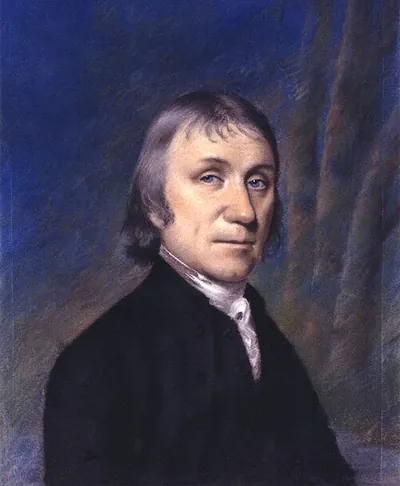 Joseph Priestley1733–1804 · Chemistry
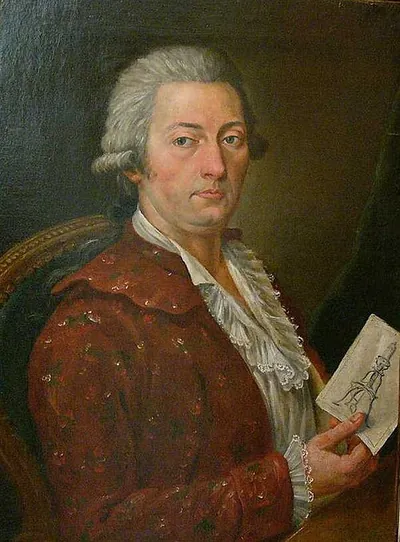 Carl Wilhelm Scheele1742–1786 · Chemistry
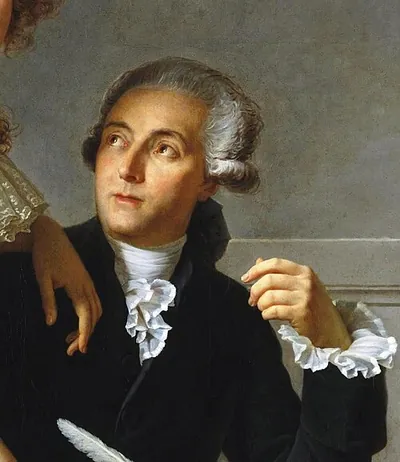 Antoine Lavoisier1743–1794 · Chemistry
 John Dalton1766–1844 · Chemistry
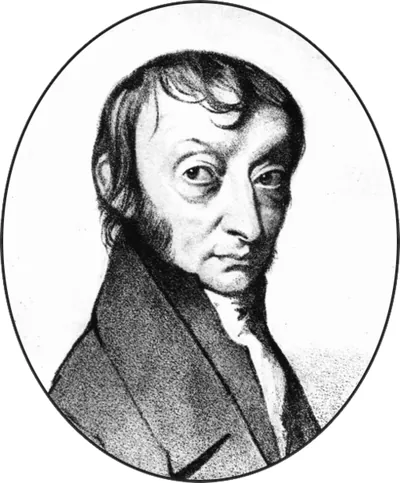 Amedeo Avogadro1776–1856 · Chemistry
