
Joseph-Louis Lagrange
Italian-born mathematician, physicist and astronomer who worked in Prussia and France and founded Lagrangian mechanics · 1736–1813
- Born
- January 25, 1736
- Died
- April 10, 1813
- Country
- France, Kingdom of Sardinia
- Section
- Mathematics
Extended biography
Early years and training
Joseph-Louis Lagrange was born in Turin on 25 January 1736, the firstborn of eleven children, though he was the only one to reach adulthood. He was of Italian and French descent: his paternal great-grandfather was a French cavalry captain who had settled in Savoy. His father was a lawyer who held a post handling the king's military funds and public works, but he had lost much of the family fortune in speculation before his son grew up. The young Lagrange was expected to become a lawyer, and he accepted this without much resistance. At university he loved Latin, and he found Greek geometry rather dull.
His mathematical vocation appeared late, at about seventeen, and by chance. He came across a paper by the astronomer Edmond Halley, dating from 1693, on mathematical analysis. He threw himself into the subject alone, without a teacher, and after a year of nonstop work he was already a skilled mathematician. This self-discipline would mark his whole life.
In the mid-1750s he became an assistant professor of mathematics at the Royal Military Academy in Turin, where artillery officers were trained. He taught calculus and mechanics so that the Piedmontese army could apply the ballistic theories of Benjamin Robins and Leonhard Euler. His time there was difficult. Alessandro Papacino D'Antoni, the academy's commander and a well-known artillery theorist, judged him a problematic teacher: his style was highly abstract, and he showed little interest in artillery practice or fortification engineering. One of his pupils was François Daviet de Foncenex, a soldier and mathematician who later specialised in dimensional analysis.
The calculus of variations
Lagrange's breakthrough came while he was still very young. For centuries mathematicians had debated isoperimetric problems, which ask for the shape that makes some quantity as large or as small as possible, such as the curve that encloses the greatest area for a given perimeter. Around 1754, when he was about eighteen, Lagrange worked on the tautochrone, the curve down which a ball reaches the bottom in the same time whatever its starting height. From this he built a general method for finding maxima and minima of quantities that depend on whole functions rather than on single numbers.
Between 1754 and 1756 he wrote several letters to Euler describing his results. Euler immediately recognised the generality and power of the new method. A widely repeated story says that Euler held back a paper of his own that covered some of the same ground, so that the young Italian could finish his work and claim the invention. Historians have questioned how disinterested that gesture really was, so the story should be treated with caution. What is documented is that Euler suggested the name of the new field, the calculus of variations.
In simple terms, the calculus of variations asks which path, among infinitely many possible ones, makes a quantity such as travel time or energy cost as small as possible. Lagrange published his method in two memoirs to the Turin Society, in 1762 and 1773. In 1757 he took part, with the chemist Giuseppe Angelo Saluzzo and the physicist Giovanni Francesco Cigna, in founding a society that later became the Turin Academy of Sciences. His early work filled the five volumes of its transactions, the Miscellanea Taurinensia. They include a study of the theory of sound propagation, in which he pointed out a mistake attributed to Newton, and a complete solution of the problem of a string vibrating sideways, in which he showed that earlier solutions by Brook Taylor, D'Alembert and Euler were not fully general.
Twenty years in Berlin
His reputation drew offers from the leading scientific centres. As early as 1756 Euler and Maupertuis tried to bring him to the Berlin Academy, and he shyly declined. Around 1765 D'Alembert spoke on his behalf to Frederick of Prussia and wrote asking him to leave Turin for a far more prestigious post. Lagrange refused again, saying that Berlin would not suit him while Euler was there. When Euler left for Saint Petersburg in 1766, the king himself wrote to Lagrange, expressing his wish that the greatest king in Europe should have the greatest mathematician in Europe at his court. This time Lagrange accepted. On the recommendation of Euler and D'Alembert, he succeeded Euler as director of mathematics at the Berlin Academy of Sciences.
The next two decades were remarkably productive. He contributed some two hundred papers to the academies of Berlin, Turin and Paris, and most were of a high standard. Apart from periods of illness he produced about one paper a month. Among the most important was a paper of 1771 on how many astronomical observations should be combined to give the most probable result, an early version of ideas now central to the handling of measurement errors.
His private life in Berlin was less settled. In 1767 he married his cousin Vittoria Conti, and the marriage was unhappy. She died in 1783 after years of illness, and Lagrange fell into deep depression. His health was also fragile. He had suffered from a nervous disorder around 1761 that left him prone to severe bouts of melancholy. To cope, he adopted a strict routine. He treated his mind and body almost like machines, tested how much work he could do before exhaustion, set himself a definite task each evening for the next day, and wrote a short review after finishing each topic to find weaknesses in the proofs. He usually planned his papers before writing them and rarely needed to correct them.
The Mécanique analytique
Lagrange's best-known work was largely written in Berlin. His Mécanique analytique, first published in 1788, rebuilt Newtonian mechanics on a different footing. To see why this mattered, consider the difficulty it addressed. In traditional mechanics one had to follow the motion of every part of a system, as D'Alembert and Euler had done, and this became unwieldy when the parts were linked together, as in a jointed machine.
Lagrange proposed describing the system with a sufficient number of variables, now called generalised coordinates, equal in number to its degrees of freedom, meaning its independent ways of moving. A simple pendulum, for example, can be described by a single angle. With these variables one expresses the kinetic energy, the energy of motion, and the potential energy, the energy stored in position, and the equations of motion follow by differentiation. In modern language, a single function, now called the Lagrangian, yields all the equations of dynamics. The principle of virtual work, which he had studied earlier, became the foundation of the whole structure.
The book's influence was immense. William Rowan Hamilton called it a scientific poem, and Lagrange himself boasted that it contained not a single diagram. Finding a publisher was hard until Legendre persuaded a Paris firm to issue it. Its methods remain central to theoretical physics, from the mechanics of complex systems to modern quantum field theory. In 1810 Lagrange began a complete revision of the work, but he finished only about two-thirds of it before his death.
Astronomy and the Lagrange points
A large part of Lagrange's output concerned astronomy, the main field where mechanics was applied in his day. One of his early papers, from 1764, explained why the Moon always shows the same face to the Earth. He solved this problem using the principle of virtual work, and the solution contained the seed of generalised equations of motion, which he proved formally in 1780.
His best-known contribution in this area came in 1772. While trying to solve the three-body problem, such as the Earth, Sun and Moon attracting one another, for which no simple general formula exists, he found special solutions in which the bodies keep a fixed arrangement. These are the Lagrange points, positions where a small object can stay in a stable relation to two large bodies. Trojan asteroids, which share Jupiter's orbit, and Trojan satellites of Saturn have been found at such points, and the L2 point of the Sun-Earth system, where some space observatories operate, carries his name.
He also studied the stability of planetary orbits in 1776, the motion of the nodes of a planet's orbit in 1774, and the attraction of ellipsoids in 1773, a topic that built on Maclaurin's work. In 1773 he also introduced the concept of potential. For a body, the potential at a point is the sum of the mass of each element divided by its distance from that point. He showed that if the potential outside a body is known, the attraction in any direction can be found at once. This tool became indispensable in later physics.
His papers on comets were significant too, though his method for finding a comet's orbit from three observations was rarely used in practice. His system for calculating perturbations, the small deviations caused by other bodies, proved far more influential and formed the basis of much later research. The Paris Academy of Sciences set specific astronomical problems as prize subjects, and Lagrange won the prize in each case he entered, including the 1766 problem on the motion of Jupiter's satellites.
Algebra, number theory and analysis
Although he is remembered mainly for mechanics, Lagrange was a first-rank pure mathematician. In algebra he studied how to solve equations of any degree. His papers of 1770 and 1771 showed that the known methods for quadratic, cubic and quartic equations were expressions of one common principle. The approach fails for degrees above four, because it requires solving a further equation of even higher degree, but it proved foundational for group theory and later for the work of Galois. Another result, now called Lagrange's theorem, states that the order of a subgroup of a finite group divides the order of the group. It remains a cornerstone of that subject.
In number theory he proved that every positive integer is a sum of four squares, a claim stated without proof by Bachet. He also proved Wilson's theorem, which says that a number n greater than one is prime if and only if (n − 1)! + 1 is divisible by n, and he supplied proofs of several results stated by Fermat that no one had yet demonstrated. His work also contains a method for solving linear differential equations by variation of parameters, which is still taught in university courses.
In his treatise Théorie des fonctions analytiques, published in 1797, he tried to put calculus on a foundation that avoided infinitely small quantities, which many philosophers regarded as unrigorous. His idea was to develop functions as algebraic series and derive their properties from that. The attempt was not fully successful, but its ideas influenced Cauchy, Jacobi and Weierstrass. Later, in the preface to the second edition of the Mécanique analytique, he defended the use of infinitesimals as a reliable shortcut, provided their results were checked by other means.
He also contributed to analytic geometry, reducing quadric surfaces to canonical forms, and to partial differential equations, with a long series of papers between 1772 and 1785. His lectures at the École Polytechnique led to the Résolution des équations numériques of 1798, which explained how to approximate the roots of an equation using continued fractions.
Paris, the Revolution and final years
In 1786, after Frederick's death, he accepted the invitation of Louis XVI to move to Paris, although he had also received offers from Spain and Naples. He was received with great honour, and special apartments were prepared for him in the Louvre. At first he suffered another bout of melancholy. For more than two years a printed copy of his Mécanique, the book he had worked on for about twenty-five years, lay unopened on his desk. What roused him was curiosity about the course of the French Revolution, a curiosity that soon turned into alarm.
In 1792 he married for a second time, to Renée-Françoise-Adélaïde Le Monnier, then twenty-four, the daughter of an astronomer friend. Accounts agree that the marriage was a happy one. During the Terror, Lavoisier secured an exemption for Lagrange, who was named in the October 1793 decree ordering foreigners to leave France, although Lagrange had been preparing to flee. Lavoisier was guillotined in 1794, and Lagrange remarked that a moment had been enough to cut off that head and a hundred years would not produce another like it. Lagrange was never in real danger, and the successive revolutionary governments, and later Napoleon, gave him honours.
His role in the reform of weights and measures was decisive. He was offered the presidency of the commission charged with the reform, and after Lavoisier's death he was largely responsible for steering the choice of the metre and the kilogram, with decimal subdivisions, a decision the commission adopted in 1799. In 1794 he became a professor at the École Polytechnique, where his lectures were orderly and carefully prepared, though not all students appreciated them. Fourier, who attended in 1795, noted his feeble voice and strong Italian accent. In 1795 he also held a chair at the École Normale, which lasted only four months. That same year he became one of the ten founding members of the Bureau des Longitudes. Napoleon made him a senator in 1799 and a count of the Empire, and in 1808 he received the Legion of Honour. Lagrange died in Paris on 10 April 1813, two days after Napoleon had awarded him the Grand Cross of the Imperial Order of the Reunion, and he was buried in the Panthéon.
Legacy
By the time of his death Lagrange was an established figure, and his name survives in many concepts: the Euler-Lagrange equations of the calculus of variations, Lagrange multipliers for problems with constraints, the Lagrangian, Lagrange's theorem in group theory, the Lagrange interpolation formula in finite differences, the Lagrange points of the three-body problem, and a lunar crater. The asteroid 1006 Lagrangea also commemorates him. In Turin, a street named after him stands where his birthplace is, and Paris has a street bearing his name in its fifth arrondissement. His name is also among the seventy-two French scientists honoured on the Eiffel Tower.
Perhaps his greatest legacy is the change of approach he proposed. Before him, mechanics was taught as a collection of laws about forces and trajectories. With the Mécanique analytique, Lagrange showed that the whole discipline could be derived from a few general principles, and that the same techniques worked for very different systems. This way of thinking, expressed in abstract mathematical language, prepared the ground for nineteenth- and twentieth-century physics.
As a person, his contemporaries described him as shy and nervous, averse to controversy, and willing to let others take credit. His careful preparation of his work and his ordered way of life show how discipline can support creativity. He should not be idealised, however. He was a weak teacher for many students, and his work rested on an extraordinary capacity for abstraction that often left practical applications to others, such as Laplace, who developed them afterwards.
Quotes
“No diagrams will be found in this work. The methods that I explain require neither geometrical, nor mechanical, constructions or reasoning, but only algebraical operations in accordance with regular and uniform procedure.”
“I considered the reading of great treatises on pure analysis to be completely useless: too large a number of methods pass before our eyes only once. It is in applied works that one must study them; there their usefulness is judged and the way to make use of them is evaluated.”
“Newton was the greatest genius that ever existed, and the most fortunate, for we cannot find more than once a system of the world to establish.”
“It took them only an instant to cut off that head, but France may not produce another like it in a century.”
Main contributions
- 1755Assistant professor at the Military Academy in Turin, where he taught calculus and mechanics to future officers.
- 1762Calculus of variations: a method for finding maxima and minima of quantities that depend on functions, the basis of the Euler-Lagrange equations.
- 1770Proof that every positive integer that is not a square can be written as a sum of four squares.
- 1770Variation of parameters, a method for solving linear differential equations.
- 1772Lagrange points: positions in the three-body problem where a small object can stay in balance relative to two larger bodies.
- 1788Mécanique analytique: a treatise that recast Newtonian mechanics using generalised coordinates and the principle of virtual work.
- 1797Théorie des fonctions analytiques: an attempt to ground calculus without using infinitely small quantities.
- 1799Decisive influence on the choice of the metre and kilogram with decimal subdivisions in the reform of weights and measures.
Teachers and students
Studied under:
Taught:
Trivia and anecdotes
A strict work routine
He is said to have planned the next day's task every night and wrote a short review after finishing each topic to check his proofs.
A remark about Lavoisier
After Lavoisier was guillotined in 1794, Lagrange said that it took only a moment to cut off that head and a century would not produce another like it.
Their contemporaries
While Joseph-Louis Lagrange was alive (1736–1813)…
Alive at the same time
Discovered or invented in those years
- 1766HydrogenThe lightest and most abundant chemical element in the universe, atomic number 1, which under normal conditions is a colourless, odourless and highly flammable gas.
- 1772NitrogenChemical element with atomic number 7, a colourless, odourless gas that makes up about 78% of Earth's air and is an essential part of proteins and nucleic acids.
- 1774OxygenA colorless, odorless gas, symbol O and atomic number 8, that forms the dioxygen in air and is essential for respiration in most living things.
- 1781UranusThe seventh planet from the Sun, an ice giant discovered by William Herschel in 1781, the first planet found with a telescope.
- 1803AtomThe basic unit of a chemical element: a nucleus of protons and usually neutrons surrounded by a cloud of electrons.
- 1811MoleculeAn electrically neutral group of at least two atoms held together by chemical bonds in a defined arrangement.
 Gaspard Monge1746–1818 · Mathematics
 Pierre-Simon Laplace1749–1827 · Mathematics
 Adrien-Marie Legendre1752–1833 · Mathematics
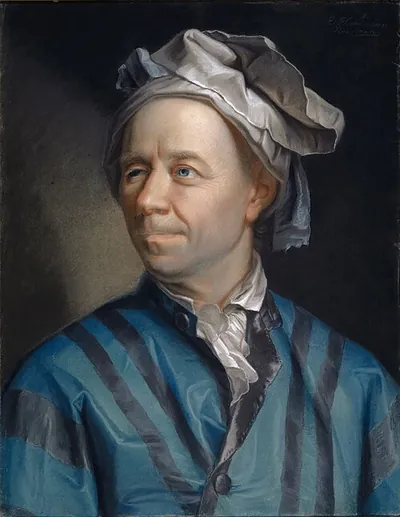 Leonhard Euler1707–1783 · Mathematics
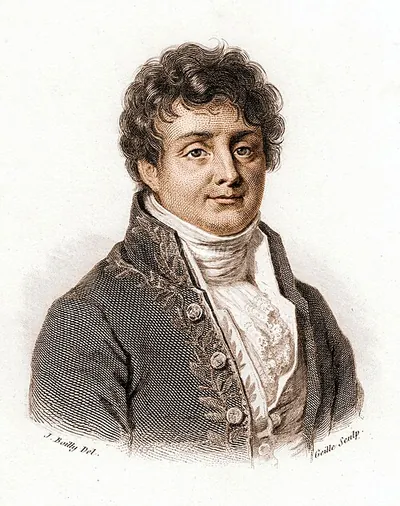 Joseph Fourier1768–1830 · Mathematics
 Daniel Bernoulli1700–1782 · Mathematics
