
Juliane Koepcke
German-Peruvian zoologist and mammalogist, sole survivor of the LANSA Flight 508 crash · 1954
- Born
- October 10, 1954
- Country
- Germany, Peru
- Section
- Biology
Biography
Juliane Koepcke is a German-Peruvian zoologist who studies mammals, especially bats. She is best known as the only survivor of LANSA Flight 508, which broke apart in mid-air over the Peruvian Amazon on 24 December 1971. Her story reached audiences around the world and made her a symbol of endurance, while her later career as a researcher of tropical wildlife gave her a very different kind of public life.
She was born in Lima on 10 October 1954, the only child of the German zoologists Maria von Mikulicz-Radecki and Hans-Wilhelm Koepcke, who were working at the Natural History Museum in the Peruvian capital at the time. At fourteen she moved with her parents to Panguana, a research station deep in the Amazon rainforest, where she learned how to find her way through the jungle and get by on what it provided. Educational authorities disapproved of the long absence from school and required her to return to Lima to sit her exams at the Deutsche Schule Alexander von Humboldt. She graduated on 23 December 1971.
Her mother had planned to fly back to Panguana in the middle of December, but Juliane wanted to attend her graduation ceremony. They agreed to stay in Lima and travel on Christmas Eve. Nearly every flight was full, and the only seat left was on a LANSA aircraft, an airline with a poor reputation, as her father pointed out when he urged his wife to avoid it. They booked anyway. Partway through the journey, lightning struck the plane, which began to disintegrate before plunging toward the ground. Juliane was still strapped into her seat when it fell into the dense forest.
According to accounts of the crash, she landed among the treetops, and the foliage cushioned her descent. Her injuries were serious: a broken collarbone, a deep cut on her right arm, an eye injury, a torn knee ligament and a concussion. Some experts have suggested that her seat, attached to the two beside it, may have slowed her fall like a parachute, and that the rising air of the storm and the thick vegetation also helped. These remain hypotheses rather than settled facts. Estimates vary, but around thirteen or fourteen passengers are believed to have survived the initial impact, only to die while waiting for rescue.
For roughly ten days she fought to stay alive. She followed a stream, reasoning that it would lead her to larger rivers and eventually to people, and in some stretches she had to swim. She endured insect bites and an infestation of fly larvae in her injured arm, which she tried to clean with fuel, a risky remedy. Eventually she reached a hunters' hut. When the hunters returned, they took her by canoe to a more populated area and from there by plane to Pucallpa, where she was reunited with her father.
Once she had recovered, she helped search teams find the wreckage and the bodies of the victims. Her mother's body was found on 12 January 1972. Juliane moved to Germany, where she fully recovered and studied biology at the University of Kiel, graduating in 1980. She then earned a doctorate at Ludwig Maximilian University of Munich and returned to Peru to research mammals. Her thesis on a colony of bats in the tropical rainforest of Peru was published in 1987.
In 1989 she married Erich Diller, an entomologist who studies parasitic wasps. After her father died in 2000, she took over running the Panguana station, and later she worked as a librarian at the Bavarian State Collection of Zoology in Munich. In 2011 she published her autobiography, Als ich vom Himmel fiel, which won the Corine Literature Prize. In 2019 the Peruvian government honoured her with the Order of Merit for Distinguished Services.
Her story has inspired books and films, including the loosely fictionalised Italian film Miracles Still Happen (1974) and Werner Herzog's documentary Wings of Hope (1998), in which she tells the events in her own words. Her legacy combines the account of an extreme experience with a career devoted to the science of bats and the protection of the rainforest.
Main contributions
- 1987Publication of her thesis on a colony of bats in the tropical rainforest of Peru, a field study of how these animals live.
- 1998Werner Herzog's documentary Wings of Hope, in which she recounts her experience and returns to the crash site.
- 2000Directing the Panguana research station in the Peruvian rainforest, founded by her parents.
- 2011Publication of her autobiography Als ich vom Himmel fiel, which won the Corine Literature Prize.
Trivia and anecdotes
A missed flight
Filmmaker Werner Herzog was due to be on the same plane, but a last-minute change of plans kept him off it. Decades later he made a documentary about her story.
A loosely told film
The 1974 film Miracles Still Happen was inspired by the crash but took considerable liberties with it. English actress Susan Penhaligon played Juliane.
Their contemporaries
While Juliane Koepcke was alive (1954–)…
Alive at the same time
Discovered or invented in those years
- 1957Artificial satelliteAn artificial satellite is a human-made object placed in orbit around a celestial body, usually Earth, to collect information, relay signals, or carry out a specific task.
- 1969InternetA global network of interconnected computer networks that communicate using the TCP/IP protocol suite.
- 1971EmailA network service that lets users send and receive digital messages through addressed mailboxes, much like postal mail but electronic.
- 1973Mobile phoneA handheld wireless phone that lets people make and receive calls while moving across a cellular network area.
- 1989World Wide WebA system of linked documents and resources, connected by hyperlinks and accessed over the Internet with web browsers.
- 1990Web browserA program that lets people access the web by fetching a page's files from a server and displaying them on screen as an interactive page.
 Svante Pääbo1955 · Biology
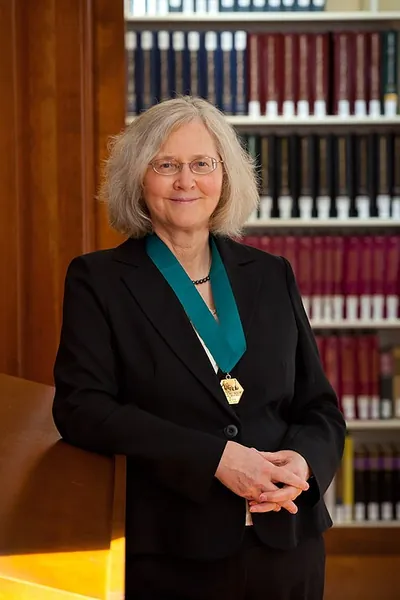 Elizabeth Blackburn1948 · Biology
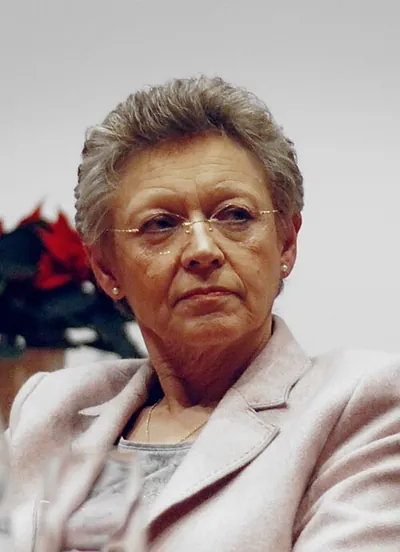 Françoise Barré-Sinoussi1947 · Biology
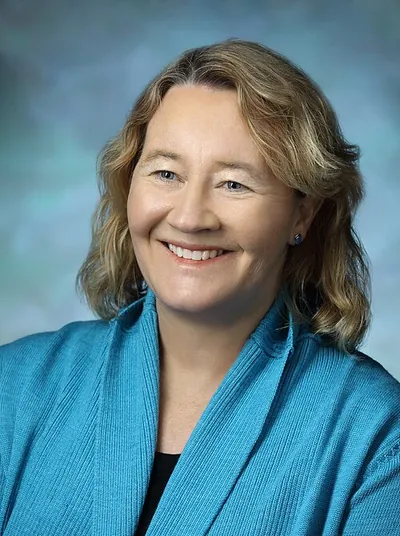 Carol Greider1961 · Biology
 Martin Chalfie1947 · Biology
 Shinya Yamanaka1962 · Biology
