
Koichi Wakata
Japanese engineer and astronaut with JAXA, veteran of five spaceflights and the first Japanese commander of the International Space Station · 1963
- Born
- August 1, 1963
- Country
- Japan
- Section
- Astronomy and space
Biography
Koichi Wakata (born 1 August 1963 in Ōmiya, Saitama) is a Japanese engineer and astronaut who spent nearly two decades in spaceflight with the Japan Aerospace Exploration Agency (JAXA). He matters because he became one of the most experienced Japanese astronauts: five missions, close to a year spent in space in total, and in 2014 the command of the International Space Station (ISS), a first for a Japanese astronaut. His career shows how international partnership let Japan take a direct part in building and running the station.
Wakata studied at Kyushu University, earning a bachelor's degree in aeronautical engineering in 1987, a master's in applied mechanics in 1989 and a doctorate in aerospace engineering in 2004. Before joining the space agency he worked as a structural engineer at Japan Airlines, where he checked the strength of aircraft parts. He is also a pilot rated for multi-engine and instrument flight and has logged more than 2,100 hours in a range of aircraft, experience that later helped him in spacecraft operations.
In 1992 the National Space Development Agency of Japan, the predecessor of JAXA, selected him as an astronaut candidate, and he trained at NASA's Johnson Space Center in Houston. Before his first flight he held several ground assignments. During STS-85 he served as assistant payload operations director for the Manipulator Flight Demonstration, a robotic arm meant for the Japanese Experiment Module. Later he became a robotics instructor astronaut for NASA. In 2006 he commanded the tenth NASA NEEMO mission, a seven-day undersea stay in the Aquarius laboratory off the coast of Florida, where crews practise working in an isolated and hostile setting. That same year he began training as a flight engineer for the Russian Soyuz spacecraft.
His first flight was STS-72 in 1996, aboard the American space shuttle. The crew retrieved the Space Flyer Unit, a satellite launched from Japan ten months earlier, and deployed and recovered the OAST-Flyer, while testing assembly techniques later used on the station. During that mission Wakata and fellow astronaut Dan Barry became the first people to play the board game Go in space, using a set designed by Wai-Cheung Willson Chow.
In 2000, on STS-92, he became the first Japanese astronaut to take part in building the station. The crew used Discovery's robotic arm to attach the Z1 truss and the PMA3 pressurized mating adapter, readying the station for its first resident crew. Nine years later, in March 2009, he flew again on STS-119, which delivered the S6 truss segment. While the shuttle returned home without him, Wakata stayed aboard as a flight engineer for Expeditions 18, 19 and 20. He was the first Japanese astronaut to take part in a long-duration stay on the station, and the first person to serve on five different crews without returning to Earth. He came home in July 2009 on STS-127, which completed the Japanese Experiment Module, Kibo.
His second long stay began in November 2013 on the Soyuz TMA-11M spacecraft. During those months the crew handled a failure in one of the station's external cooling circuits and oversaw the arrival of several cargo vehicles, including the first Cygnus. During the same mission he took part in the first conversations between a person and Kirobo, a small companion robot, in space. In the last two months of Expedition 39 he served as station commander, the first Japanese astronaut to do so. The mission ended in mid-May 2014 after 187 days, 21 hours and 43 minutes in continuous orbit, a record for a Japanese astronaut that stood until 2021.
His fifth mission came in 2022 aboard SpaceX Crew-5, after his earlier assignment to Boeing's Starliner was changed because of delays. Launch took place on 5 October 2022 after several postponements. On 20 January 2023 he made his first spacewalk with NASA astronaut Nicole Mann, lasting seven hours and 21 minutes. They installed a mounting kit for the IROSA 1A solar array, intended to increase the station's power capacity.
Wakata retired from JAXA at the end of March 2024 and soon joined Axiom Space as an astronaut and chief technical officer for the Asia-Pacific region. He is married to Stefanie von Sachsen-Altenburg of Bonn, Germany, and has a son. His legacy combines flight engineering with international teamwork: he helped assemble the station, commanded it, and opened the way for later Japanese astronauts. The minor planet 6208 Wakata is named after him.
Main contributions
- 1996Retrieval of the Space Flyer Unit on STS-72: the first Japanese mission specialist to recover equipment in orbit, testing assembly techniques for the station.
- 1996The first game of Go played in space, with Dan Barry, using a board designed for the flight.
- 2000Installation of the Z1 truss and PMA3 adapter on STS-92: the first Japanese astronaut to help assemble the International Space Station.
- 2009Flight on STS-119 and a long-duration stay as flight engineer in Expeditions 18, 19 and 20, spending 138 days aboard the station.
- 2013The first conversation between a person and the Kirobo robot in space, during the Soyuz TMA-11M mission.
- 2014Commander of the International Space Station during the last two months of Expedition 39, the first Japanese astronaut to hold that post.
- 2014A record of 187 days, 21 hours and 43 minutes of continuous time in space for a Japanese astronaut, held until 2021.
- 2023His first spacewalk, with Nicole Mann, to install a mounting kit for the IROSA 1A solar array.
Trivia and anecdotes
Experiments suggested by the public
During his stay on the station he carried out experiments proposed by the public, such as flying a « magic carpet », folding laundry and doing push-ups in microgravity.
Underwear in space
As part of one experiment he wore the same pair of special underpants for a month without washing them, a test as curious as it was low-tech.
An asteroid named after him
The minor planet 6208 Wakata was named in his honour, a tribute from the astronomy community.
Their contemporaries
While Koichi Wakata was alive (1963–)…
Alive at the same time
Discovered or invented in those years
- 1969InternetA global network of interconnected computer networks that communicate using the TCP/IP protocol suite.
- 1971EmailA network service that lets users send and receive digital messages through addressed mailboxes, much like postal mail but electronic.
- 1973Mobile phoneA handheld wireless phone that lets people make and receive calls while moving across a cellular network area.
- 1975Global warmingThe long-term rise in Earth's average surface temperature, driven mainly by greenhouse gases released through human activity.
- 1989World Wide WebA system of linked documents and resources, connected by hyperlinks and accessed over the Internet with web browsers.
- 1990Web browserA program that lets people access the web by fetching a page's files from a server and displaying them on screen as an interactive page.
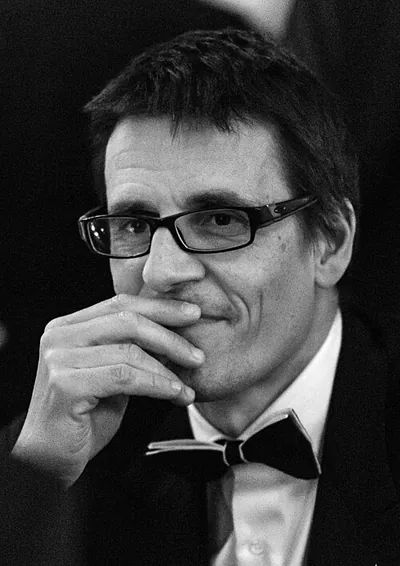 Didier Queloz1966 · Astronomy and space
 Saul Perlmutter1959 · Astronomy and space
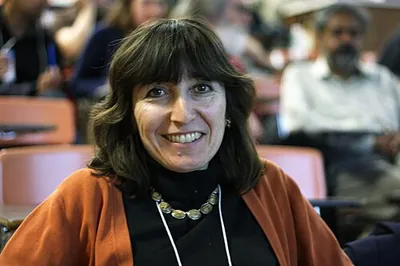 Wendy Freedman1957 · Astronomy and space
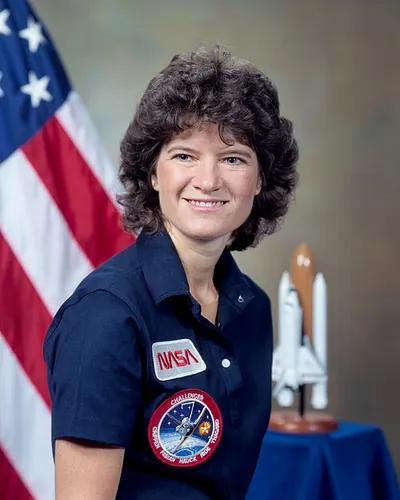 Sally Ride1951–2012 · Astronomy and space
 Russell A. Hulse1950 · Astronomy and space
 Michel Mayor1942 · Astronomy and space
