Leon Moisseiff
Latvian-born American civil engineer, a leading designer of suspension bridges in the United States in the 1920s and 1930s · 1872–1943
- Born
- November 13, 1872
- Died
- September 3, 1943
- Country
- United States
- Section
- Engineering and construction
Biography
Leon Moisseiff was a civil engineer, born in Latvia and working in the United States, who stood among the leading designers of suspension bridges in America during the 1920s and 1930s. He worked in an era of rapid industrial growth, when steel was beginning to replace concrete and stone in large construction projects. Today he is remembered mainly for the Tacoma Narrows Bridge, whose collapse in 1940 became one of the best-known failures in the history of engineering.
He was born in Riga, then part of the Russian Empire, into a Jewish family. He began his schooling there and spent three years at the Baltic Polytechnic Institute. At the age of 19, in 1891, he emigrated with his family to the United States because of his political activities. There he earned a degree in civil engineering from Columbia University in 1895. In his early twenties he also took part in Jewish cultural life: writing under the pseudonym “M. Leontieff,” he helped launch a monthly Yiddish cultural and literary magazine, Di Fraye Gezelshaft, with the support of several anarchist contributors.
His career began in New York, where he won national recognition as one of the designers of the Manhattan Bridge over the East River. He also assisted the chief engineer Ralph Modjeski with the Benjamin Franklin Bridge across the Delaware River. He was among the early advocates of bridges built entirely of steel, a material that began to replace concrete and stone in the 1920s.
His most influential contribution was what became known as “deflection theory.” A suspension bridge bends slightly under the weight of its deck and the traffic it carries; this theory held that the longer a bridge was, the more flexible it could be without losing strength. Charles Alton Ellis expanded these ideas and applied them to the design of the Golden Gate Bridge, where Moisseiff served as a consulting engineer. When Ellis was dismissed from the project, Moisseiff declined to speak up for him, an episode that damaged his standing among colleagues.
The Tacoma Narrows Bridge, which crosses the Puget Sound in Washington State, was the first bridge he designed as lead engineer. He called it “the most beautiful bridge in the world.” Four months after it opened in 1940, it collapsed in a strong windstorm. Its swaying had earned it the nickname Galloping Gertie. Film of the collapse shows an uncontrolled twisting motion, combined with waves running along the deck. Today it is shown to engineering, architecture and physics students as an example of aeroelasticity, the way wind and a structure’s shape can interact until the structure fails.
Moisseiff died of a heart attack in 1943. In 1941 the U.S. Public Roads Administration had brought him in as a consultant to an advisory board on suspension bridges, but his failing health kept him from taking an active part. His son believed that the Tacoma failure contributed to his death. Although he had designed many other famous spans, the Tacoma collapse overshadowed them all, and his name came to stand for the dangers of overconfidence in design.
His legacy is twofold. The disaster pushed engineers to research further and to improve the design and safety of suspension bridges. In 1947 the American Society of Civil Engineers, together with board members, established an award in his name for an outstanding paper on structural design, which has been presented every year since. Earlier, in 1933, he had received the Louis E. Levy Medal from the Franklin Institute.
Main contributions
- 1933Suspension Bridges Under the Action of Lateral Forces: a paper on how sideways forces affect suspension bridges, published in the transactions of the American Society of Civil Engineers.
- 1940Tacoma Narrows Bridge: his first design as lead engineer, opened in 1940 and collapsed four months later.
- 1947Moissieff Award: an award from the American Society of Civil Engineers for the best paper on structural design, created after his death.
- Deflection theory: the idea that longer suspension bridges can be more flexible without losing safety.
- Manhattan Bridge: one of the designs he worked on across the East River in New York.
- Benjamin Franklin Bridge: a collaboration with Ralph Modjeski on the project across the Delaware River.
Trivia and anecdotes
A Yiddish pseudonym
According to the references, in his youth he edited a Yiddish cultural magazine under the pseudonym “M. Leontieff.”
A mediator in a strike
In 1914 the union leader Benjamin Schlesinger asked him to help persuade clothing manufacturers in Philadelphia to reach an agreement before a major strike.
A nickname with history
The Tacoma Narrows Bridge was nicknamed Galloping Gertie because of the way it swayed, a name still remembered today.
Their contemporaries
While Leon Moisseiff was alive (1872–1943)…
Alive at the same time
Discovered or invented in those years
- 1876TelephoneA device that carries the human voice over distance by turning sound into electrical signals and back into sound at the other end of the line.
- 1884CarA road vehicle with four wheels and its own engine, mainly built to carry people.
- 1903AirplaneA fixed-wing aircraft, heavier than air, powered by engines or rockets, that stays aloft because its wings generate lift.
- 1925TelevisionA system that sends moving pictures and sound over distance and shows them on a receiver, the television set.
- 1925Quantum mechanicsPhysical theory describing how matter and light behave at atomic and subatomic scales, where energy is exchanged in minimal packets and results are expressed as probabilities.
- 1931Big BangA cosmological model describing how the universe expanded from an early state of extreme density and temperature, about 13.8 billion years ago.
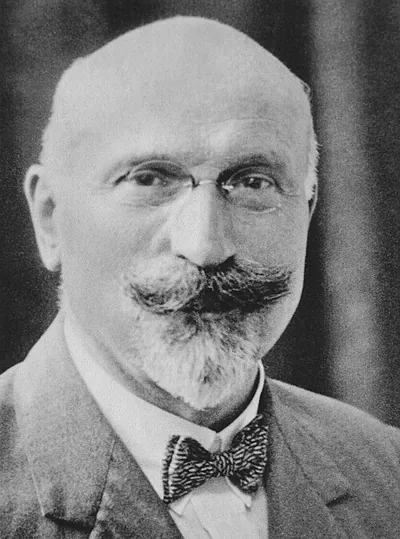 Robert Maillart1872–1940 · Engineering and construction
 Sakichi Toyoda1867–1930 · Engineering and construction
 Stephen Timoshenko1878–1972 · Engineering and construction
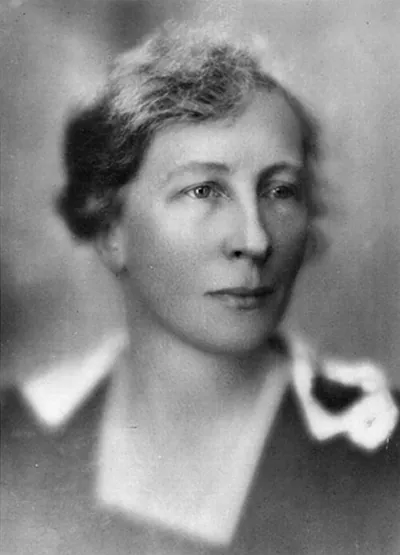 Lillian Moller Gilbreth1878–1972 · Engineering and construction
 Eugène Freyssinet1879–1962 · Engineering and construction
 Karl von Terzaghi1883–1963 · Engineering and construction