
Marsha Ivins
American former astronaut and aerospace engineer, veteran of five Space Shuttle missions · 1951
- Born
- April 15, 1951
- Country
- United States
- Section
- Astronomy and space
Biography
Marsha Ivins is an American former astronaut and aerospace engineer who flew five Space Shuttle missions between 1990 and 2001. Her career spans the late Shuttle era, when the orbiter carried experiments and helped build the International Space Station, and it shows how engineers who designed cockpit instruments could also become crew members.
Born on April 15, 1951, in Baltimore, Maryland, she finished high school at Nether Providence in Wallingford, Pennsylvania, in 1969. In 1973 she earned a Bachelor of Science in aerospace engineering from the University of Colorado Boulder. She also trained as a pilot: she holds licenses to fly single-engine land airplanes and commercial gliders, and she is certified as a flight instructor. Records give her about 7,000 hours in civil aircraft.
In 1974 she joined NASA's Lyndon B. Johnson Space Center in Houston, where she worked mainly on the orbiter's displays, controls and machinery. She is credited with designing the Orbiter Heads-Up Display, or HUD, a screen that projects flight data into the pilot's forward view so that the crew can keep watching the outside while approaching and landing.
In 1980 she was assigned as a flight engineer for the shuttle training aircraft and as co-pilot of NASA's Grumman Gulfstream I administrative plane. In 1984 she was selected as an astronaut candidate, training as a mission specialist, a crew role focused on experiments and systems rather than on flying the orbiter itself.
Her first flight, STS-32, lifted off from Kennedy Space Center in Florida on January 9, 1990, aboard Columbia. During the eleven-day mission the crew released a Syncom satellite and retrieved the Long Duration Exposure Facility, a platform of experiments that had spent years in orbit. STS-46 in 1992, flown on Atlantis, deployed the European EURECA satellite and carried out the first test flight of the Tethered Satellite System, a satellite connected to the shuttle by a long cable. STS-62 in 1994 was a 14-day flight devoted to microgravity research: materials science, protein crystal growth and the behavior of space structures. STS-81 in 1997 was the fifth shuttle docking with Russia's Mir station and the second exchange of U.S. astronauts; over five days of joint operations, more than three tons of food, water, equipment and samples moved between the two craft. STS-98 in 2001 delivered the U.S. laboratory module Destiny to the International Space Station, and three spacewalks completed its installation. Across her five flights she logged about 55 days in space.
Ivins retired from NASA on December 31, 2010. After her last flight she served as a veteran astronaut supporting the shuttle, the station and the Constellation program. Her best-known engineering contribution remains the HUD, an example of how a display designed on the ground can change the way a crew flies.
Main contributions
- 1990STS-32: deployment of a Syncom satellite and retrieval of the Long Duration Exposure Facility.
- 1992STS-46: deployment of the EURECA satellite and first test flight of the Tethered Satellite System.
- 1994STS-62: 14-day mission of microgravity research on materials and protein crystals.
- 1997STS-81: docking with the Mir station and transfer of more than three tons of cargo between the two craft.
- 2001STS-98: delivery of the Destiny laboratory module to the International Space Station.
- Orbiter Heads-Up Display (HUD): a screen that shows flight data in the pilot's forward view during approach and landing.
Trivia and anecdotes
A platform recovered from orbit
On STS-32 the crew retrieved an experiment platform weighing about 21,400 pounds, roughly 9,700 kilograms, after years of exposure to space.
Three tons between two stations
During STS-81, over five days of operations linked to Mir, more than three tons of food, water, equipment and samples were moved between the two spacecraft.
Three spacewalks to install Destiny
Assembling the Destiny module on STS-98 required three spacewalks, carried out while the shuttle stayed docked to the station for seven days.
Their contemporaries
While Marsha Ivins was alive (1951–)…
Alive at the same time
Discovered or invented in those years
- 1957Artificial satelliteAn artificial satellite is a human-made object placed in orbit around a celestial body, usually Earth, to collect information, relay signals, or carry out a specific task.
- 1969InternetA global network of interconnected computer networks that communicate using the TCP/IP protocol suite.
- 1971EmailA network service that lets users send and receive digital messages through addressed mailboxes, much like postal mail but electronic.
- 1973Mobile phoneA handheld wireless phone that lets people make and receive calls while moving across a cellular network area.
- 1989World Wide WebA system of linked documents and resources, connected by hyperlinks and accessed over the Internet with web browsers.
- 1990Web browserA program that lets people access the web by fetching a page's files from a server and displaying them on screen as an interactive page.
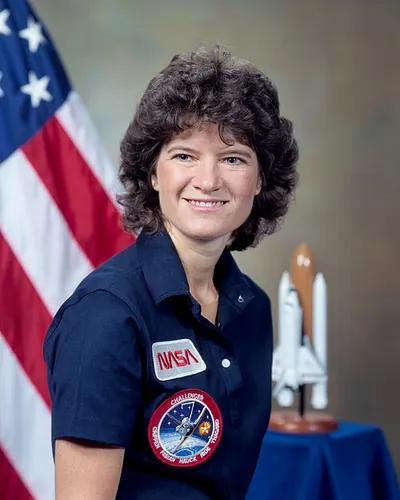 Sally Ride1951–2012 · Astronomy and space
 Russell A. Hulse1950 · Astronomy and space
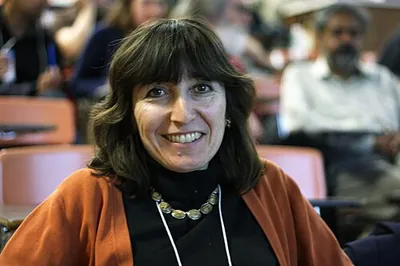 Wendy Freedman1957 · Astronomy and space
 Saul Perlmutter1959 · Astronomy and space
 Michel Mayor1942 · Astronomy and space
 Joseph Hooton Taylor1941 · Astronomy and space
