
Maurice Kendall
British statistician and mathematician, creator of Kendall's tau correlation coefficient · 1907–1983
- Born
- September 6, 1907
- Died
- March 29, 1983
- Country
- United Kingdom
- Section
- Mathematics
Biography
Sir Maurice George Kendall (born in Kettering, Northamptonshire, in 1907; died 1983) was a British mathematician and statistician whose name is attached to one of the most widely used measures of correlation, Kendall's tau. He worked between the two world wars and in the decades that followed, when statistics was turning from a descriptive tool into a central instrument for economics, agriculture and social research. His importance lies both in his theoretical work and in the way he made these methods available to governments, businesses and universities.
He was the only child of John Roughton Kendall, an engineering worker, and Georgina Brewer. As a boy he survived cerebral meningitis, an infection that was often fatal at the time. He grew up in Derby and studied mathematics at St John's College, Cambridge, where he played cricket and chess alongside future champions and with Jacob Bronowski, who later became a well-known popular science writer. After graduating in 1929 he joined the British civil service at the Ministry of Agriculture. There he became interested in applying statistics to farming questions; one of his first papers to the Royal Statistical Society studied crop productivity using factor analysis, a technique that looks for hidden variables behind the joint behaviour of many measurements. He was elected a Fellow of the Society in 1934.
In 1938 and 1939 he began working, with Bernard Babington-Smith, on random number generation. They built one of the first mechanical devices that produced random digits, and devised a set of tests to judge whether a sequence of digits could be considered random. In 1939 they published 100,000 digits, more than twice the number Tippett had published in 1927. The table remained in wide use until 1955, when the RAND Corporation published a million random digits produced by a machine of similar design, checked with Kendall's tests.
In 1937 he helped the ageing statistician G. Udny Yule revise his textbook, Introduction to the Theory of Statistics, long known as "Yule and Kendall". The two had met by chance in 1935 and stayed close until Yule's death in 1951; Yule was godfather to Kendall's second son. In these years Kendall also began studying the rank correlation coefficient, which measures how far two ordered lists tend to agree. It led to a monograph on rank correlation in 1948. During the war he worked by day as assistant general manager of the British Chamber of Shipping and by night as an air-raid warden, yet still produced the first volume of The Advanced Theory of Statistics in 1943, followed by a second in 1946.
After the war he turned to time series analysis, the study of data recorded over time. Using the limited computing power of the period, he showed that raw sample periodograms, a standard way of estimating how a signal's energy is spread across frequencies, were unreliable. In 1949 he accepted the second chair of statistics at the London School of Economics, where he also directed a new research techniques division part-time. In 1953 he published a paper suggesting that daily share price movements behaved randomly, equally likely to rise as to fall. These findings troubled some financial economists and set off a debate that eventually fed into the random walk hypothesis and the efficient-market hypothesis, both still widely discussed.
In 1961 he left the university to run a consultancy firm, and that same year began a two-year term as president of the Royal Statistical Society. In 1972 he became director of the World Fertility Survey, sponsored by the International Statistical Institute and the United Nations, which studied birth rates in developed and developing countries. He led it until 1980, when illness forced him to retire. He was knighted in 1974 for his services to statistical theory and received a United Nations medal in 1980 for the survey. A fellow of the British Academy, he died in 1983 as honorary president of the International Statistical Institute. His legacy lives on in Kendall's tau, in his random digit tables and in textbooks that trained generations of statisticians.
Main contributions
- 1934Factor analysis of crop productivity: a study of farm yields using a technique that finds hidden variables shared by many measurements.
- 1939Table of 100,000 random digits: a collection published with Babington-Smith, more than twice Tippett's, and widely used until 1955.
- 1939Statistical randomness tests: a set of criteria for deciding whether a sequence of digits behaves like chance.
- 1943The Advanced Theory of Statistics, volume one: a reference treatise completed with a second volume in 1946.
- 1948Monograph on rank correlation: development of the coefficient now named after him, Kendall's tau, which compares the order of two lists.
- 1953Study of share prices: he suggested that daily stock movements behaved like a random process.
- 1957Multivariate Analysis: a textbook presenting methods for studying several related variables at once.
Teachers and students
Trivia and anecdotes
Manager by day, warden by night
During the war he combined a management post at the British Chamber of Shipping with night-time air-raid warden duties.
Surviving meningitis
As a child he survived cerebral meningitis, a disease that was frequently fatal at the time.
Their contemporaries
While Maurice Kendall was alive (1907–1983)…
Alive at the same time
Discovered or invented in those years
- 1916Black holeA region of space where gravity is so strong that nothing, not even light, can escape once it crosses a certain boundary.
- 1925TelevisionA system that sends moving pictures and sound over distance and shows them on a receiver, the television set.
- 1925Quantum mechanicsPhysical theory describing how matter and light behave at atomic and subatomic scales, where energy is exchanged in minimal packets and results are expressed as probabilities.
- 1931Big BangA cosmological model describing how the universe expanded from an early state of extreme density and temperature, about 13.8 billion years ago.
- 1945ComputerA programmable machine that takes in data, processes it by following stored instructions, and produces results, able to switch tasks simply by running different software.
- 1969InternetA global network of interconnected computer networks that communicate using the TCP/IP protocol suite.
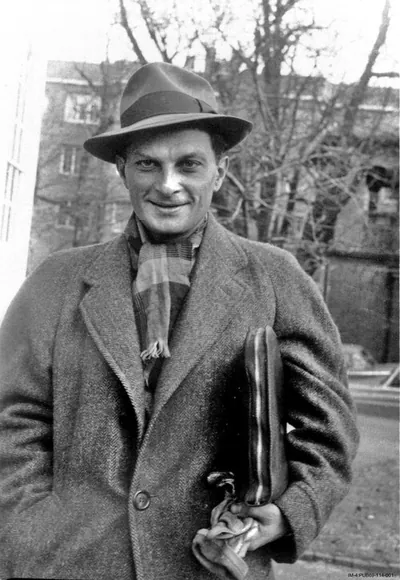 Stanisław Ulam1909–1984 · Mathematics
 Andrey Kolmogorov1903–1987 · Mathematics
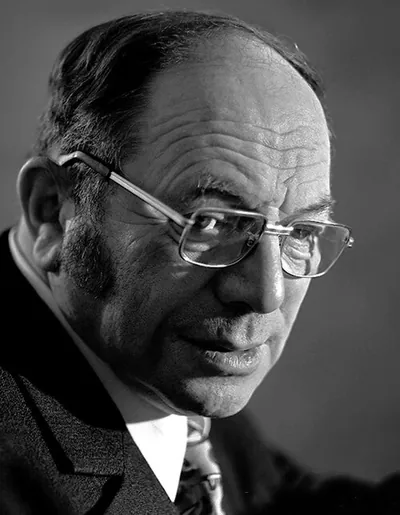 Leonid Kantorovich1912–1986 · Mathematics
 Paul Erdős1913–1996 · Mathematics
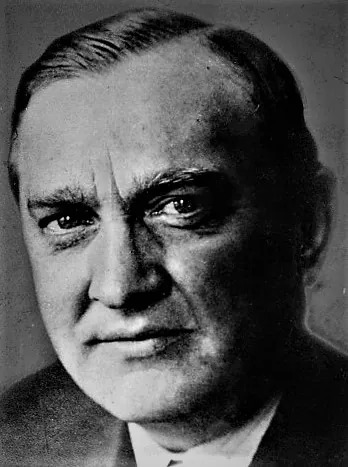 Stefan Banach1892–1945 · Mathematics
 Benoit Mandelbrot1924–2010 · Mathematics
